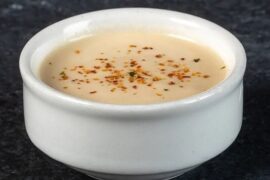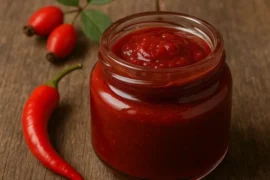
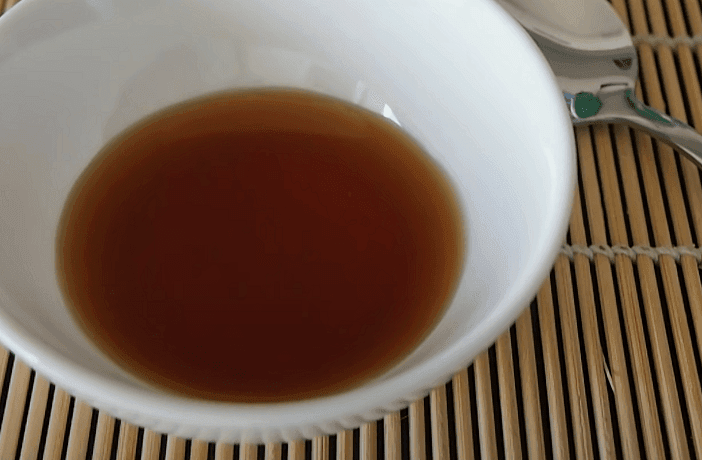
A simple, delicious sweet and sour sauce to pair with any kind of sushi or Chinese food, a sauce created to suit Western palates as a companion to two of the most popular foreign cuisines in Chile. It’s ready in 15 minutes and yields six servings.
Sweet and sour sauce is made mainly from water and sugar, with a measure of apple cider vinegar or rice vinegar, soy sauce, and ketchup, a foolproof, very simple recipe.
How to Make Sweet and Sour Sauce for Sushi?
Sweet and sour sauce is a preparation designed to accompany all kinds of Asian dishes, made mainly from water and sugar, with a measure of apple cider vinegar or rice vinegar, soy sauce, and ketchup, a foolproof, very simple recipe.
Nutritional Information
Each serving of sweet and sour sauce for sushi contains approximately 140 kcal, 34 g of carbohydrates, 0 g of fat, 0 g of protein, 0 g of fiber, 33 g of sugars, 0 mg of cholesterol, and 290 mg of sodium. (*) Values may vary depending on the ingredients and portion sizes used.
Homemade Sweet and Sour Sauce Recipe
Preparation: 10 minutes
Cooking: 5 minutes
Servings: 6 people
Ingredients
- 200 g (7 oz) white sugar
- 200 ml water
- 100 ml vinegar
- 3 tablespoons soy sauce
- 2 tablespoons ketchup
- 2 tablespoons cornstarch

Instructions
- In a medium pot, add the sugar and water, heat over medium heat, and whisk with a hand whisk until fully dissolved and the water turns clear again.
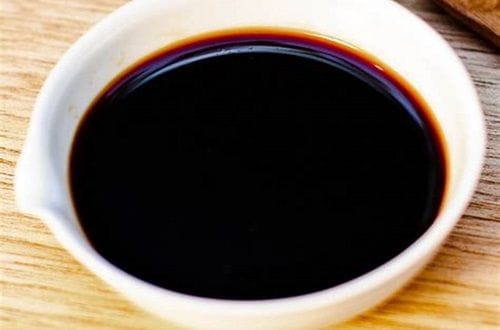
- Stir in the apple cider vinegar, soy sauce, and ketchup, continue whisking gently until you get a smooth blend, mix in the cornstarch and combine everything again, bring to a boil, and remove from the heat.

- Pour the still-hot mixture into a clean glass container, let cool to room temperature, and store in the refrigerator until ready to serve alongside sushi or Chinese food.
Additional Tips
Add Grated Ginger for Extra Depth
½ teaspoon of grated ginger boosts the flavor and adds a citrusy, spicy nuance that balances the sweetness, enhancing the sauce’s Asian profile without altering its texture.
Dissolve the Cornstarch Separately First
To avoid lumps and achieve a silky texture, mix the cornstarch with 2 tablespoons of cold water before adding it to the pot, to guarantee a perfect dissolve.
Adjust Sweetness with Citrus, Not Just Sugar
Rather than cutting sugar alone to reduce sweetness, add a splash of lime juice at the end. The fresh acidity cuts through the sweetness more effectively than simply reducing sugar.
| Original Ingredient | Substitute | Notes |
|---|---|---|
| Apple cider vinegar | Rice vinegar | Milder and more aromatic, closer to an authentic Asian profile |
| Apple cider vinegar | Distilled white vinegar | Reduce the quantity slightly since its acidity is sharper |
| Ketchup | Tomato paste + a pinch of sugar | Milder tomato flavor, adjust sweetness to taste |
| Cornstarch | All-purpose flour | Use double the amount and cook a bit longer |
Frequently Asked Questions (FAQs)
1. How can I make the sauce less sweet?
To cut the sweetness, keep the vinegar amount the same (100 ml) but reduce the white sugar to 150 g and add 1 or 2 tablespoons of lime juice at the end. The citrus adds a fresher acidity that helps balance the sweetness.
2. Can I substitute apple cider vinegar for something else?
Yes. Rice vinegar (milder and more aromatic) is the best alternative if you want a more authentic profile. You can also use distilled white vinegar, but reduce the amount slightly since its acidity is sharper.
3. What do I do if the sauce turns out lumpy?
If the sauce has lumps after cooking, the easiest fix is running it through a blender or using an immersion blender until perfectly smooth. To prevent lumps in the first place, fully dissolve the cornstarch in a small amount of cold water before adding it to the hot sauce.
4. How can I add a spicy kick?
For a spicy touch, add ¼ teaspoon of dried chili flakes (cacho de cabra chili or regular chili flakes) or a splash of Sriracha in step 2 along with the ketchup.
What Is Rice Vinegar?
Rice vinegar is a type of vinegar made from fermenting rice, which is first cooked with water and then inoculated with a bacterial strain called “acetobacter” to convert the rice’s sugars into acetic acid.
Did You Know?
Sweet and sour sauce for sushi isn’t a traditional Japanese sauce at all, but rather a Western adaptation believed to have been created in the United States in the mid-20th century, whose popularity then spread around the world.