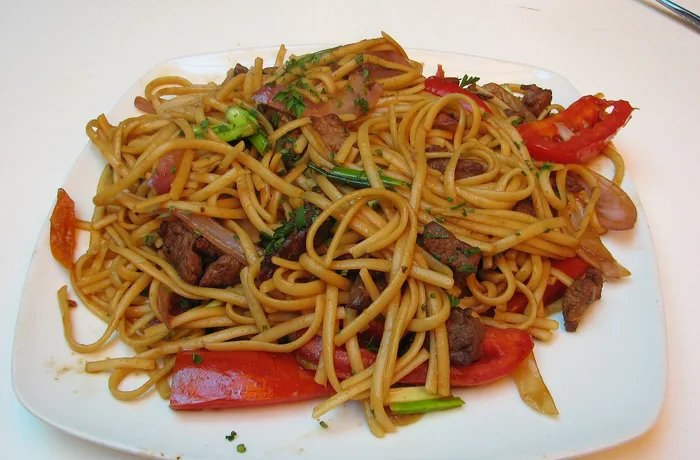
Tallarín saltado is a Peruvian chifa dish of long noodles stir-fried in a wok with strips of beef, red onion, tomato, ají amarillo (a fruity Peruvian yellow chili) and sillao, the Peruvian name for soy sauce, finished with fresh scallions. It takes about 50 minutes and serves 4 as a one-plate lunch or dinner.
It shares its base with Peruvian lomo saltado, but the noodles replace the french fries and rice and soak up the juices from the pan. In Chile it arrived with Peruvian restaurants, where it usually shares the menu with arroz chaufa, the Peruvian Chinese-style fried rice.
How to Make Peruvian Beef Noodle Stir-Fry?
Everything happens in the wok over maximum heat in just a few minutes. The beef is seared in small batches so it browns without releasing water, the vegetables are stir-fried only briefly so they stay crisp, and the noodles, cooked al dente, go in at the end so they absorb the soy sauce without falling apart.
Nutritional Information
Each serving of tallarín saltado (one 450 g / 16 oz serving) contains approximately 710 kcal, 41 g of protein, 25 g of total fat (5 g of saturated fat), 75 mg of cholesterol, 80 g of carbohydrates, 6 g of sugars and 1,200 mg of sodium. These values are estimates and may vary depending on ingredients and portion sizes.
Homemade Peruvian Beef Noodle Stir-Fry Recipe
Preparation: 20 minutes
Cooking: 30 minutes
Servings: 4 servings
Ingredients
- 400 g (14 oz) tallarines (long flat pasta such as fettuccine or linguine)
- 500 g (1.1 lb) beef strip loin (lomo liso) or beef round (posta rosada)
- 1 large red onion
- 2 firm tomatoes, cut into wedges
- 1 ají amarillo (Peruvian yellow chili), seeded and cut into strips
- 2 garlic cloves, minced
- 1 teaspoon grated fresh ginger
- 4 tablespoons sillao (soy sauce)
- 2 tablespoons red wine vinegar
- 3 scallions, chopped
- 4 tablespoons vegetable oil
- Fine salt
- Black pepper
Instructions
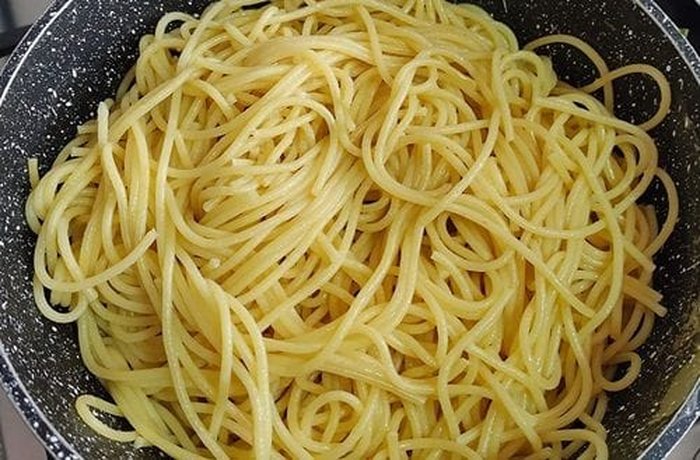
- Cook the noodles in plenty of boiling salted water for 1 minute less than the package says, so they can finish cooking in the wok without going soft. Drain them, rinse under cold water to stop the cooking and toss them with 1 tablespoon of oil so they do not stick. Set aside while you make the stir-fry.
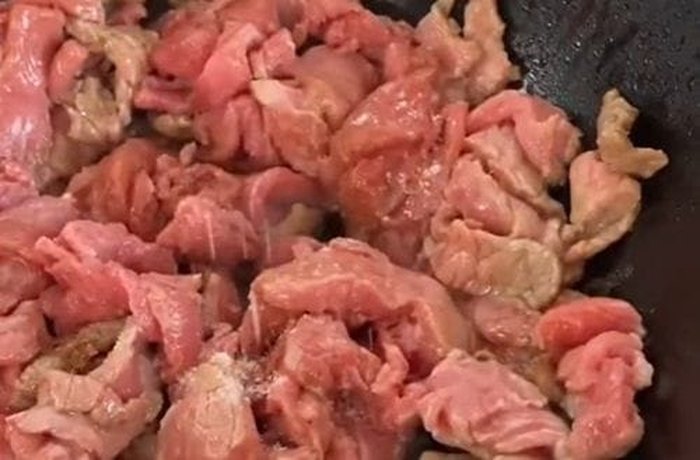
- Cut the beef into strips 1 cm (⅜ inch) thick and 5 cm (2 inches) long, pat them dry with paper towels and season with salt and pepper. Heat the wok over maximum heat with 1 tablespoon of oil until it smokes and stir-fry half of the beef for 1 to 1½ minutes, without moving it at first. Remove it, repeat with another tablespoon of oil and the rest of the beef, and set aside.
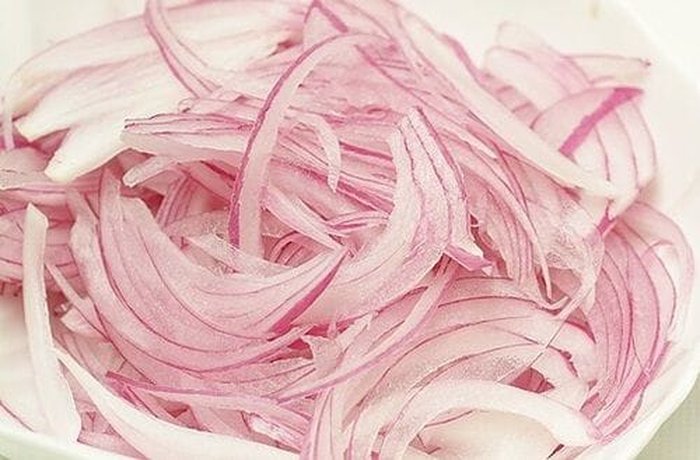
- In the same wok, with the last tablespoon of oil, stir-fry the minced garlic and grated ginger for 20 seconds, then add the red onion, cut into thick lengthwise slices, and the ají amarillo strips and stir-fry for 1 minute over high heat. Add the tomato wedges and stir-fry 30 seconds more, just until they are hot, so they keep their shape and do not break down into the sauce.
- Return the beef to the wok and pour the soy sauce and vinegar down the hot side of the wok so they reduce for a moment and perfume the stir-fry. Add the noodles and stir-fry for 2 minutes, lifting them with tongs or two spatulas so they are evenly coated with sauce. Adjust the salt carefully, because the soy sauce already adds plenty.
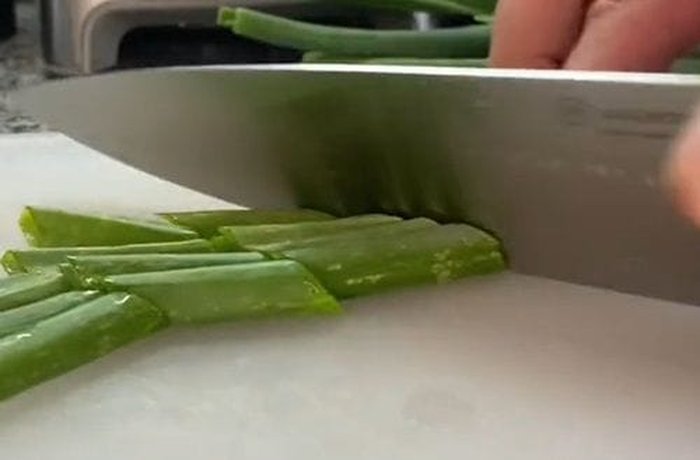
- Turn off the heat, add the chopped scallions and toss just once so they keep their green color. Serve right away in deep plates, because the noodles keep absorbing the juices of the stir-fry and the dish dries out if it waits more than a few minutes before reaching the table.
Additional Tips
Why Stir-Fry the Beef in Batches?
If all the beef goes in at once, the wok loses heat, the meat releases its juices and ends up cooked in liquid, gray and tough. In batches of about 250 g (9 oz) with the wok smoking hot, the surface browns in seconds through the Maillard reaction and the inside stays juicy. Patting the strips dry with paper towels before stir-frying helps them brown right away and keeps the oil from spattering.
Which Noodles Should You Use?
Chifa restaurants use Chinese egg noodles, but at home durum wheat tallarines or spaghetti give very good results and are sold in any grocery store. The key is to cook them 1 minute less than the package says and cool them, because they will finish cooking in the wok. Overcooked noodles break when stir-fried and turn pasty once mixed with the soy sauce.
How to Cut the Salt Without Losing Flavor
The soy sauce accounts for most of the sodium in the dish, so avoid salting the beef too heavily when you season it. One option is to use a low-sodium soy sauce and boost the flavor with the vinegar, ginger and ají amarillo, which add acidity, aroma and a gentle heat. Adding the scallions at the end, off the heat, also helps keep them fresh.
The cut decides how tender the dish turns out, since the beef spends very little time over the heat.
| Cut | What to expect | Time per batch |
|---|---|---|
| Tenderloin (filete) | The most tender and the most expensive | 1 minute |
| Strip loin (lomo liso) | Tender, flavorful and free of sinew | 1 to 1½ minutes |
| Ribeye (lomo vetado) | Juicier thanks to its marbling | 1½ minutes |
| Beef round (posta rosada) | Lean and affordable, slice against the grain | 1 to 1½ minutes |
Frequently Asked Questions (FAQs)
1. What Is the Difference Between Lomo Saltado and Tallarín Saltado?
Both start from the same stir-fry of beef, red onion, tomato, ají amarillo and soy sauce. Lomo saltado is served with french fries and white rice on the side, while in tallarín saltado the noodles are tossed inside the wok and soak up the juices, which turns it into a one-plate meal.
2. What Is Sillao?
Sillao is the name used in Peru for soy sauce, a fermented seasoning made from soybeans, wheat and salt that spread with Chinese immigration. It is used in almost every chifa dish and in Creole stir-fries such as lomo saltado. In Chile, any good-quality dark soy sauce does the same job.
3. Can You Make Tallarín Saltado with Chicken?
Yes, with boneless breast or thigh cut into strips of the same size. Chicken needs more time than beef, about 3 to 4 minutes per batch, until no pink remains in the center. The rest of the recipe stays the same, although it is best to use a little less vinegar because chicken has a milder flavor.
4. Can You Make Tallarín Saltado Without a Wok?
Yes, with a large heavy-bottomed skillet that holds heat well. Because its surface cools down faster than a wok, stir-fry the beef in three batches instead of two and add the noodles in two parts. What matters is that the skillet is very hot before each ingredient goes in.
What Is Peruvian Beef Noodle Stir-Fry?
Tallarín saltado is a Peruvian chifa noodle stir-fry made with strips of beef seared over very high heat, red onion, tomato wedges, ají amarillo, garlic, ginger, soy sauce and a splash of red wine vinegar, tossed with long noodles and finished with scallions. It uses the same technique as lomo saltado, but the noodles are mixed into the wok instead of being served with fries and rice.
History of Peruvian Beef Noodle Stir-Fry in Chile
Chifa cooking was born from the mix of techniques brought by Chinese immigrants, most of them Cantonese, who arrived in Peru from the mid-nineteenth century, and local ingredients. Wok stir-frying met ají amarillo, tomato and red onion, and that combination produced dishes such as arroz chaufa and tallarín saltado.
In Chile these dishes became popular with the arrival of Peruvian restaurants, and today they are on the menu at many places that serve home-style food.
Did You Know?
The word chifa is usually explained as an adaptation of the Cantonese chi fan, which means to eat rice or to eat a meal. In Peru it names both the restaurants that serve Chinese-Peruvian food and the cooking style itself, and it is used the same way in Chile.
How to adapt this recipe to a vegan or vegetarian version?
How to adapt this recipe to a gluten-free version?
How to adapt this recipe to a keto (ketogenic) version?
Recommended
- Chilean beef chop suey, another wok-seared beef dish
- Chinese-Chilean Mongolian beef stir-fry
- Chilean arroz chaufán, Chinese-style fried rice
- Homemade Chilean fried wontons for a starter