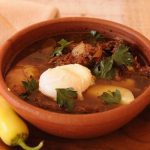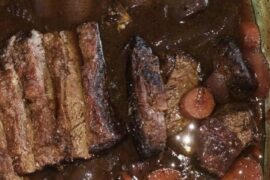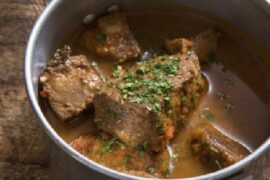

Chilean charquicán is a thick beef and vegetable stew — potato, pumpkin, corn, green beans, and ground or diced beef — topped with a fried egg whose runny yolk acts as a natural sauce. A Mapuche-origin one-pot dish, ready in 50 minutes and serving 4 people.
Nutritional Facts
Each serving of charquicán contains approximately 450 kcal, 40 g of carbohydrates, 22 g of total fats (5 g of saturated fats), 22 g of proteins, 6 g of fiber, 6 g of sugars, 215 mg of cholesterol, and 480 mg of sodium.
How to Make Charquicán
There are also versions of Chilean charquicán made with seaweed, such as the one described by the poet Pablo de Rokha, called “luchicán,” a typical dish for Easter in La Serena that replaces beef or charqui with toasted luche seaweed, or “charquiyuyo,” prepared with cochayuyo seaweed.
Prep Time: 20 minutes
Cook Time: 30 minutes
Servings: 4
Ingredients
- 150 g ground beef or diced beef
- 150 g pumpkin, cut into cubes
- 150 g mixed vegetables
- 4 large potatoes
- 4 eggs
- 3 tablespoons of oil
- 3 basil leaves
- 2 tablespoons of tomato sauce
- 1 finely chopped garlic clove
- 1 tablespoon of oregano
- 1 teaspoon of chili powder
- ½ onion, chopped
- Salt
- Pepper

Instructions
- Wash and peel the potatoes, and cut them into medium-sized cubes. Rinse and set aside. In a large pot with warm water, add the potatoes and pumpkin, add a tablespoon of salt, bring to a boil, and cook for about 15 to 20 minutes until they are well cooked. Strain and reserve the cooking water separately.

- In a medium pot, reserve the mixed vegetables, cover with cold water, bring to a boil, and cook for about 5 minutes or until tender. Set aside. In a medium pan, add a tablespoon of oil, sauté the onion and garlic, stirring for about 3 minutes, add the beef, oregano, chili powder, chopped basil leaves, salt, and pepper to taste, add the tomato sauce, mix everything well with a wooden spoon, and cook for another 5 minutes.

- Gradually add the cooking water from the potatoes and pumpkin and mix until you achieve the desired consistency (more liquid or thicker, to taste); incorporate the cooked mixed vegetables and the onion and beef mixture, and gently stir to integrate everything. Serve the charquicán with a fried egg on a deep plate and top with a freshly prepared fried egg.
Mastering the Charquicán Technique
Save the Liquid Gold
Never discard the cooking water from the potatoes and pumpkin. This starchy water is what binds the stew into its creamy, cohesive consistency without artificial thickeners. Add it back gradually until you reach the desired thickness.
The Sabor Sauté
When sautéing the onion and garlic, let the chili powder and oregano hit the hot oil for a minute before adding the beef. This blooms the spices, releasing their essential oils and giving the stew its vibrant color and deeper aroma.
Texture over Mash
The secret is visual balance. The potatoes and pumpkin should be soft enough to bind the dish — but don’t over-mash them into a purée. Visible cubes of beef alongside the bright colors of corn and green beans define a proper charquicán.
The Perfect Crown
The fried egg is not a garnish — it’s a sauce. Ensure the whites are fully cooked with crispy edges (encaje), while the yolk remains runny. Broken over the hot stew, it creates a rich, velvet-like layer that ties all the flavors together.
Charquicán Variations
| Version | Protein | Notes |
|---|---|---|
| Classic | Ground or diced beef | Standard home-style preparation |
| Premium (picada style) | Finely diced sirloin or tri-tip | Better texture, more defined bite |
| Vegetarian | Mushrooms or extra beans | Works well with extra pumpkin |
| Luchicán | Toasted luche seaweed | La Serena Easter tradition |
| Charquiyuyo | Cochayuyo seaweed | Mineral-rich coastal variation |
Frequently Asked Questions (FAQ)
1. Should I use ground or diced beef?
Both work! Ground beef is the quick, home-style standard. However, using finely diced beef (like tri-tip or top sirloin) provides a more “premium” texture and is often the choice for traditional Chilean picadas.
2. Can I make a vegetarian or vegan version?
Absolutely. You can replace the beef with sautéed mushrooms or extra beans or follow the “charquiyuyo” tradition by using cochayuyo (seaweed). This version is packed with minerals and provides a unique “sea-inspired” flavor profile.
3. What is “Luchicán”?
It is a coastal variation, popular during Easter in La Serena, where beef is replaced with toasted luche seaweed. It’s a fantastic way to enjoy the dish while following traditional fasting customs.
4. How do I prevent it from getting too dry?
As the stew sits, the potatoes will continue to absorb moisture. If you aren’t serving it immediately, keep extra cooking water on hand to loosen the consistency right before it hits the plate.
5. Can I use fresh basil instead of dried?
Fresh basil is always superior. Finely chop the leaves and add them at the very end of the beef sauté to preserve their bright, summer-like aroma.
History and Origin of Charquicán
Charquicán is a dish that is said to have originated from the belief of the Spaniards who originally arrived in Chile that charqui was a raw meat despite being dehydrated, and they preferred to cook it before consumption.
Did You Know?
The origin of its name, charquicán, is thought to come from the fusion of the Quechua “ch’arqui” (dried) and Mapudungun “cancan” (roasted), which translates to “dried roasted meat.”