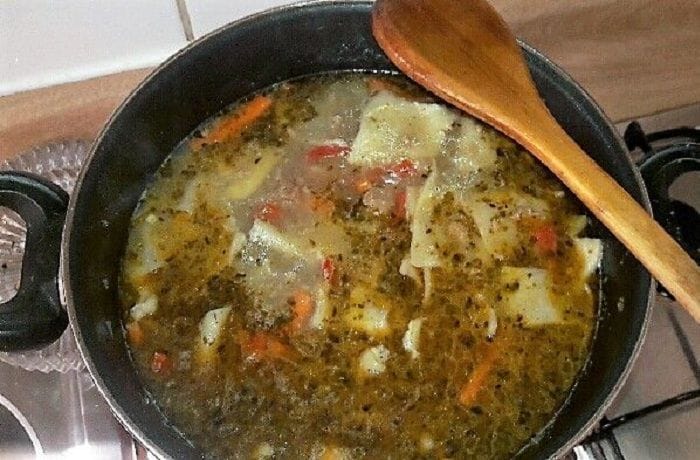
Pantrucas, pancutras, or pancuchas are names derived from the Mapudungun word “pangkutra,” which means soup with flour dough. It is a delicious, nutritious, and easy-to-prepare soup, perfect for winter in southern Chile.
Nutritional Information
Each serving of Chilean pantrucas soup contains approximately 350 kcal, 16 g of protein, 14 g of total fat (4 g saturated fat), 38 g of carbohydrates, 4 g of sugar, and 720 mg of sodium.
How to make Chilean Pantrucas?
Pancutras, or Pantrucas, are a typical dish of the Mapuche people in Chilean and Argentine Patagonia. They are tasty, affordable, and provide lots of calories for colder days.
Preparation: 40 minutes
Cooking: 20 minutes
Servings: 6 people
Ingredients
- 200 g ground beef
- 1 liter beef broth
- 100 g flour (not self-rising)
- 50 ml warm water
- 15 ml oil
- 5 g paprika
- 3 g cumin
- 3 eggs
- 2 peeled and diced potatoes
- 2 chopped garlic cloves
- 1 sliced carrot
- 1 small diced onion
- 1 teaspoon oregano
- ½ sliced red bell pepper
- Chopped cilantro or parsley
- Salt
- Pepper
Instructions
- In a large pot, add oil, heat over high heat, add chopped garlic and onions, reduce heat and sauté until they become translucent, about 5 minutes. Add the ground beef and cook over medium heat for about 2 more minutes.
- Add sliced carrot and bell pepper, oregano, cumin, paprika, salt, and pepper to taste, and mix well to combine flavors.
- Add peeled and diced potatoes and beef broth, cover the pot, and cook for about 5 minutes over medium heat.
- To make the Pantrucas dough, in a medium bowl combine sifted flour, eggs, and warm water. Mix well until a smooth and uniform dough forms. Roll out the dough with a rolling pin and cut into small squares of 3 or 4 centimeters.
- Add the Pantrucas dough to the soup and cook over medium heat for about 10 minutes. Add whole eggs without beating and cook for another 2 minutes.
- Serve the Pantrucas (Pancutras) hot in a deep clay plate and garnish with chopped cilantro or parsley.
Extra Tips
- For thicker and more rustic pantrucas, replace part of the warm water in the dough with a small amount of broth; this enhances flavor and improves elasticity without making the dough sticky.
- If you prefer lighter soup, reduce the amount of beef and increase the vegetables—carrot, onion, and bell pepper absorb flavors well and keep the broth balanced.
Frequently Asked Questions (FAQ)
Can I use chicken instead of beef?
Yes. Chicken breast or thighs work perfectly. Just replace the beef broth with chicken broth and cook the meat until tender before adding the dough squares.
Why did my pantrucas dissolve in the soup?
This usually happens when the dough contains too much water or hasn’t been kneaded enough. The dough should be firm and smooth, not sticky, and cut into even pieces for consistent cooking.
Can I make the dough ahead of time?
Yes. The dough can be prepared up to 6 hours in advance. Keep it wrapped tightly in plastic to prevent it from drying out. Roll and cut just before cooking.
How can I thicken the broth naturally?
As the dough cooks, it naturally thickens the soup. If you want it even thicker, mash a couple of cooked potato cubes directly into the broth.
Can pantrucas be stored and reheated?
Yes, but the dough pieces continue to absorb liquid over time. Store in the refrigerator for up to 2 days, and add a splash of broth or water when reheating to restore the original consistency.
History and Origin
Pantrucas have deep roots in the traditional cooking of the Mapuche people of southern Chile and Argentine Patagonia. The name comes from the Mapudungun word “pangkutra,” which refers to a soup thickened with pieces of flour dough. Originally, this was a practical, hearty meal prepared during colder months, combining simple, accessible ingredients such as broth, wild herbs, and homemade dough.
Did You Know?
This dish became particularly popular during periods of economic hardship in Chile, as it allowed families to stretch basic ingredients into a nourishing meal.
How to adapt this recipe to a vegan or vegetarian version?
How to adapt this recipe to a gluten-free version?
How to adapt this recipe to a keto (ketogenic) version?
Recommended
- Homemade Chilean Hallullas Bread
- Chilean Seafood Empanadas Recipe
- Chilean Calzones Rotos Recipe
- Chilean Original Chorrillana Recipe