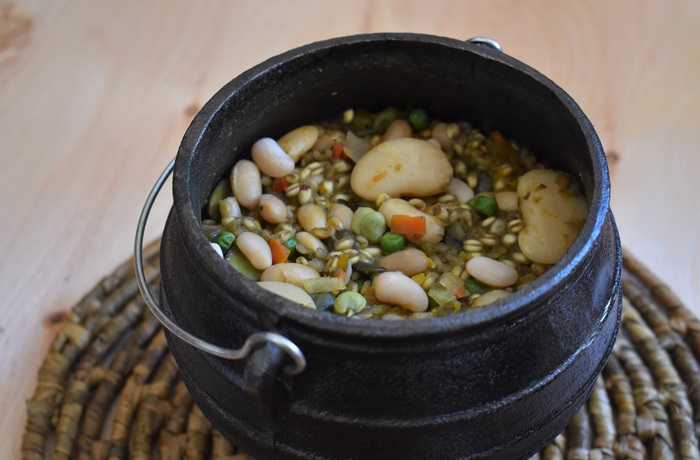
Pisku is a thick Mapuche stew made by slow-cooking dried beans and soaked wheat kernels (mote) with broad beans, peas, and a sofrito of onion, garlic, and paprika—a complete plant-based dish that concentrates protein and fiber from multiple legumes in a single pot. It is a nutritious and hearty meal that has even been included in the Junaeb school feeding program.
Nutritional facts
Each serving of pisku contains approximately 380 kcal, 70 g of carbohydrates, 2 g of fats, 20 g of proteins, 15 g of fiber, 5 g of sugars, and 300 mg of sodium.
Original Mapuche Pisku Recipe
Pisku is a thick stew that combines legumes, grains, and vegetables, often mixing beans, wheat kernels (mote), broad beans, peas, lentils, corn, Swiss chard, onions, green beans, pumpkin, and carrots in various combinations depending on the season.
Preparation: 45 minutes
Cooking: 60 minutes
Servings: 4 people
Ingredients
- 450 g beans
- 450 g wheat kernels (mote)
- 300 g cooked peas
- 150 g peeled broad beans
- 3 liters of water
- 1 large onion
- 1 preserved tomato
- 1 clove garlic, minced
- 1 teaspoon paprika
- Ají cacho de cabra (optional)
- Mint leaves
- Fresh cilantro
- Salt
Preparation
- Peel and finely chop the onion, then sauté in a pan with oil over medium heat for about 10 minutes. Add the garlic, paprika, preserved tomato, mix well, and cook for another 10 minutes, stirring constantly. Set aside.
- Wash and drain the soaked beans overnight. Place them in a large pot with boiling water and cook for about 45 minutes or until tender.
- Wash the wheat kernels (mote) and add them to the beans after 25 minutes of boiling. Optionally, add a deseeded ají cacho de cabra.
- Once the beans are cooked, add the peeled broad beans, cooked peas, and the sautéed mixture. Add chopped mint leaves and fresh cilantro, mix well, and serve immediately while hot.
Additional tips
Soaking beans and mote
Always soak beans for at least 8 hours before cooking and discard the soaking water. Wheat kernels (mote) benefit from 4 to 6 hours of soaking as well. This reduces cooking time and improves the digestibility of both, reducing the complex sugars responsible for bloating.
Building a deep sofrito
The sofrito—sautéed onion, garlic, paprika, and preserved tomato—is the flavor base of pisku. Cook it slowly for at least 20 minutes over low heat. Rushing this step produces a raw, sharp flavor; patience here builds the sweet, deep base the stew needs.
Seasonal vegetable additions
Pisku accepts a wide range of additions depending on what is available: Swiss chard, green beans, pumpkin, corn, and carrots all work well. Add harder vegetables (pumpkin, carrots) with the beans; add leafy greens (Swiss chard, cilantro, mint) in the last 5 minutes to preserve their color and aroma.
Pisku legume and grain options
| Legume or grain | Cook time | Texture in stew | Protein per 100 g |
|---|---|---|---|
| Beans | 45 min | Creamy | 22 g |
| Mote (wheat kernels) | 60 min | Chewy | 13 g |
| Broad beans | 20 min | Buttery | 26 g |
| Lentils | 25 min | Soft | 25 g |
| Peas | 15 min | Delicate | 14 g |
Frequently Asked Questions (FAQ)
1. Do I need to soak the beans and wheat kernels overnight?
Yes. Beans require at least 8 hours of soaking to reduce cooking time and improve digestibility. Discard the soaking water and use fresh water for boiling. Wheat kernels (mote) also benefit from 4 to 6 hours of soaking before being added to the pot.
2. Can I make pisku without mote (wheat kernels)?
Yes. Wheat kernels can be replaced with pearl barley or additional beans. The dish loses some of its characteristic chewy texture but remains nutritionally complete.
3. What is the difference between pisku and charquicán?
Charquicán includes dried meat (charqui) and is built around a single starchy vegetable base (usually potato or pumpkin), with a consistency closer to a mash. Pisku is bean and grain-forward, fully plant-based in its original form, and has a brothier, more liquid texture.
4. Is pisku suitable for vegetarians?
Yes, the original Mapuche recipe is fully plant-based. Meat is not part of the traditional preparation. For a vegan version, simply ensure the oil used for the sofrito is vegetable-based.
History and Origin of Pisku
Pisku is a pre-Columbian preparation from Mapuche culinary tradition, predating Spanish colonization. Its name derives from Mapudungun, and it was historically prepared by combining available legumes and grains—mainly beans and mote—into a single nutrient-dense pot, reflecting the Mapuche practice of using the whole harvest without waste. After Spanish colonization in the 16th and 17th centuries, new vegetables such as pumpkin, carrots, and broad beans were incorporated, enriching the original recipe. Today, pisku is recognized as part of Chile’s living Mapuche culinary heritage and has been included in the Junaeb school feeding program, ensuring its continuation in modern Chilean cuisine.
Did you know?
Pisku is an ancestral dish of Mapuche culture, passed down through generations as part of their culinary heritage.