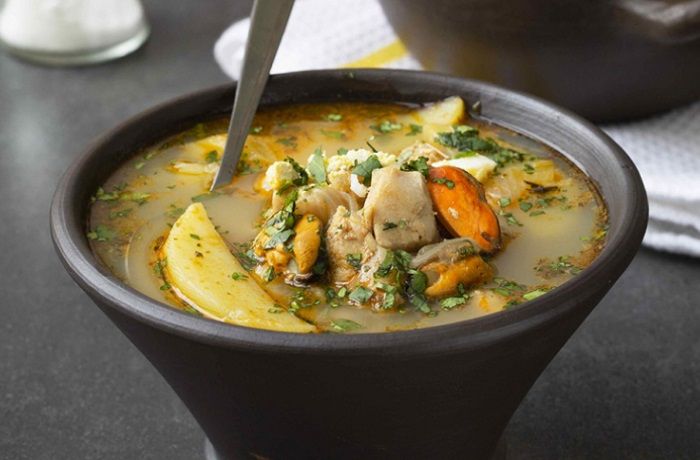
Chilean mussel soup is a quick, warming seafood dish — mussels simmered with potatoes, rice, carrot, white wine, and paprika in a light broth. Ready in 60 minutes, each serving provides approximately 250 calories.
Ideal for cold days and equally effective as a restorative after a celebration, this soup works with fresh, canned, or frozen mussels and comes together in a single pot.
How to Make Homemade Mussel Soup?
Fresh mussels are ideal for this recipe, but canned or frozen mussels work without any problem. The key is adding the mussels at the very end — just 5 minutes of boiling is enough. Overcooking makes them rubbery and diminishes their flavor.
Nutritional Information
Each serving of Chilean mussel soup contains approximately 250 calories, 28 g of carbohydrates, 8 g of fats, 12 g of proteins, 4 g of fiber, 5 g of sugars, and 400 mg of sodium.
Homemade Mussel Soup Recipe
Prep Time: 30 minutes
Cook Time: 30 minutes
Servings: 4
Ingredients
- 200 g Chilean mussels
- 150 ml white wine
- 4 potatoes, sliced
- 3 tablespoons rice
- 2 liters water
- 1 carrot, sliced
- 1 celery stalk with leaves
- 1 clove garlic, chopped
- 1 teaspoon paprika
- ½ onion, sliced
- ½ bell pepper, sliced
- Olive oil
- Fresh cilantro, chopped
- Merkén (optional)
- Salt
- Pepper

Instructions
- In a large pot, heat a splash of olive oil over medium-high heat. Add the onion and sauté for 3 to 4 minutes, stirring with a wooden spoon.
- Add the bell pepper, chopped garlic, carrot, and paprika. Season with salt and pepper, stir to combine, then add the white wine, potatoes, rice, and water to cover all ingredients. Cover the pot and bring to a boil for about 15 minutes.
- Add the mussels and bring back to a boil for 5 minutes, ensuring everything is cooked through. Taste and adjust seasoning if needed.
- Serve immediately in wide, deep bowls, garnished with freshly chopped cilantro and optionally a pinch of merkén. A small glass of white wine complements the dish well.
Additional Tips
Use fresh mussels when available — discard any that stay closed after cooking
Fresh mussels give the richest flavor and most tender texture. Before cooking, discard any that are already open and do not close when tapped — these are dead and unsafe to eat. After cooking, discard any that have not opened — they should not be forced open and eaten.
Cook the sofrito fully before adding the liquids
Sautéing the onion, garlic, bell pepper, carrot, and paprika for a full 4 to 5 minutes before adding the wine and water builds the flavor base of the broth. Rushing this step results in a flat, watery soup. The vegetables should be visibly softened and fragrant before any liquid is added.
Add the mussels only in the last 5 minutes
Mussels cook very quickly — 5 minutes at a steady boil is all they need. Adding them earlier while the potatoes and rice are still cooking results in rubbery, overcooked shellfish. If using pre-cooked canned mussels, add them in the last 2 minutes just to heat through.
| Ingredient | Substitution and result |
|---|---|
| Chilean mussels | New Zealand green mussels or Mediterranean mussels — available frozen worldwide; slightly larger |
| White wine | Fish stock or vegetable stock — alcohol-free option; adds depth without the acidity of wine |
| Rice | Orzo pasta or small pasta — similar thickening effect; reduce cooking time by 5 minutes |
| Potatoes | Sweet potato — slightly sweeter flavor; holds its shape equally well in the broth |
| Cilantro | Flat-leaf parsley — milder and less assertive; works well for those who dislike cilantro |
Frequently Asked Questions (FAQs)
1. Can I use canned or frozen mussels?
Yes. Canned mussels should be drained and rinsed before adding to the soup in the last 2 minutes of cooking — they are already cooked and only need to be heated through. Frozen mussels should be thawed in the refrigerator overnight and patted dry before use. Add them in the last 5 minutes as you would fresh mussels.
2. Why is the broth thin rather than thick?
This is a soup (sopa), not a chowder. The rice and potatoes add body but the result is intentionally brothy and light. If you prefer a thicker consistency, blend one ladle of the cooked potato and broth, stir it back into the pot, and cook for 2 more minutes before adding the mussels.
3. How do I know when the mussels are fully cooked?
Fresh mussels are cooked when their shells have opened wide and the flesh inside is firm and opaque. Any mussels that remain closed after 5 minutes of boiling should be discarded. Canned and frozen pre-cooked mussels are ready as soon as they are heated through.
4. Can I make this soup ahead of time?
The broth, potatoes, and rice can be prepared up to 24 hours in advance and refrigerated. Add the mussels only when reheating just before serving — mussels deteriorate quickly and should never be reheated more than once. Bring the broth to a boil, add the mussels, and serve within 5 minutes.
What Are Chilean Mussels (Choritos)?
Chilean mussels (Mytilus chilensis), known locally as choritos, quilmahues, or mejillones, are bivalve filter-feeders native to the Chilean and Peruvian Pacific coast, found from Callao to the Beagle Channel. Chile is one of the world’s largest mussel producers, with aquaculture concentrated in the Los Lagos region. Mussels are farmed using raft and longline culture systems, or harvested wild from intertidal zones. Choritos are smaller and more delicate in flavor than the New Zealand green mussel, with a tender texture ideal for soups and stews.
History of Mussel Soup in Chile
Mussel consumption along the Chilean coast predates European contact by thousands of years — archaeological evidence from shell middens (conchales) confirms that coastal indigenous communities relied on shellfish including mussels as a dietary staple. The modern soup version, with potatoes, rice, and white wine, reflects the European influence on Chilean cooking from the 16th century onward, when Spanish colonizers introduced wine-based cooking techniques and root vegetables. Today, mussel soup is firmly part of the Chilean winter repertoire and is traditionally associated with recovery after festive celebrations.

Did you know?
Mussels are among the most sustainable seafood options available. They require no feed, no freshwater, and no fertilizer to grow — they filter naturally occurring plankton from seawater. Farmed mussels actually improve water quality by removing excess nutrients. Chilean choritos (Mytilus chilensis) are found throughout the Pacific from Callao, Peru, to the Beagle Channel at the southern tip of South America.