
A classic of national bakery and a favorite of many, Chilean marraqueta bread, also known as “pan batido” or “pan francés” depending on the region of the country, has a century-old history that only reaffirms its popularity, as today its production accounts for 70% of daily bread consumption throughout the country.
Nutritional Facts
Each serving of Chilean marraqueta bread contains approximately 320 calories, 10 g of proteins, 1 g of total fats, 0 mg of cholesterol, 66 g of carbohydrates, 1 g of total sugars, and 850 mg of sodium.
How to Make Marraqueta Bread
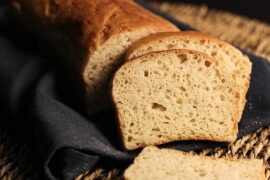
Marraqueta is characterized by being a light bread made only from flour, water, and yeast, without fat, similar to the French baguette or the Spanish barra, with a crunchy texture and a rather neutral flavor.
Prep Time: 90 minutes
Cook Time: 30 minutes
Servings: 6
Ingredients
- 1 kg of flour
- 600 ml of lukewarm water
- 3 teaspoons of salt
- 2 tablespoons of dry yeast
- 1 teaspoon of sugar
Instructions
- Add some warm water to a large cup, add 15 grams of dry yeast or 45 grams of fresh yeast and sugar, stir to dissolve, and let it rest for 10 minutes in a warm place. In a large bowl, sift the flour and salt, make a well in the center, and add the yeast mixture and the remaining water.
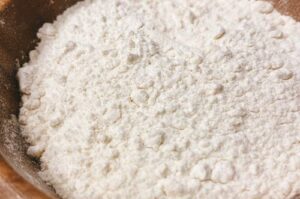
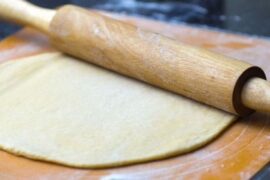
- Mix everything with your hands or a wooden spoon until you get a uniform, smooth, and semi-soft mixture. Knead for about 10 minutes, and transfer the dough to a greased bowl. Cover with a clean cloth and let it ferment (rise) for about 30 minutes. Divide the dough into portions of approximately 100 grams each.
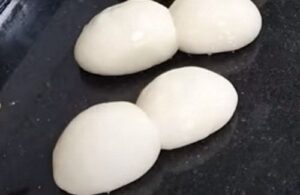
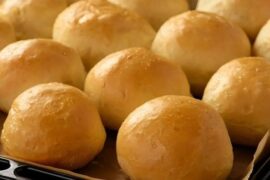
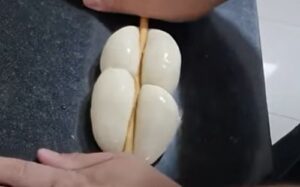
- Roll each piece into a ball with the palm of your hand and gently knead into a circular shape. Place on a clean surface and let them rest covered for another 30 minutes. Gather two portions of dough and knead gently to give an elongated appearance; divide the dough in half perpendicularly with a long and thin object, giving the classic appearance of marraqueta bread.
- Arrange the loaves on a buttered tray, brush with a little oil, and let them rest again for another 30 minutes. Preheat the oven to about 220°C (428°F) for about 15 minutes. Place the loaves in the oven and bake for about 20 minutes until they are lightly browned on the surface. Remove and cool on a rack. Serve the marraqueta bread hot or cold, alone, with butter, or with your preferred accompaniment.
Additional Tips
- The secret to the marraqueta’s glass-like crust is steam. During the first 10 minutes of baking at 220°C, place a tray of boiling water at the bottom of the oven. This keeps the dough’s surface moist, allowing it to expand fully and gelatinizing the surface starches for a shiny, crispy exterior. Remove the water tray for the final 20 minutes to allow the crust to crisp fully.
- When activating dry yeast, ensure the water is exactly lukewarm (approximately 30°C to 35°C). If the water is too hot, it kills the yeast; too cold, and the 30-minute rise will be insufficient. The yeast is properly activated when it begins to foam within 5–10 minutes. If it does not foam, start over—the yeast is dead or the water temperature was wrong.
- When gathering two 100 g portions to form the twin loaves, ensure the seam is at the bottom. Use a thin dowel or the handle of a wooden spoon to press the perpendicular line firmly through the center — this creates the surface tension that allows the bread to pop open symmetrically in the oven, producing the characteristic four-segment appearance. The press must be firm and decisive.
| Ingredient | Substitute | Notes |
|---|---|---|
| Dry yeast | Fresh yeast (45 g) | Use 3× the amount of dry yeast |
| All-purpose flour | Bread flour (W350+) | Stronger gluten; better crust structure |
| Vegetable oil (brushing) | Beaten egg wash | Slightly richer color when baked |
| Sugar (yeast food) | Honey (½ tsp) | Adds slight caramel note to crust |
Frequently Asked Questions (FAQs)
1. Why is it called “Pan Batido” in some places?
This name is popular in Valparaíso and refers to the traditional way the dough was “beaten” or whipped during the kneading process to incorporate air, resulting in a lighter crumb.
2. Can I make this without the sugar in the dough?
The 1 teaspoon of sugar isn’t for sweetness; it’s food for the yeast. It helps fermentation start quickly during the 10-minute activation phase and aids crust browning via the Maillard reaction.
3. Why did my marraqueta come out hard and dense?
This usually happens if the oven temperature was too low or if you missed the steam step. A low temperature dries out the bread before it can rise properly. Ensure your oven is fully preheated to 220°C.
4. How long does it stay fresh?
Because it contains no preservatives or fats, marraqueta is best eaten within hours of baking. If you have leftovers, toast them to revive that signature crunch.
5. Is marraqueta bread vegan?
Yes. The base recipe of flour, water, salt, and yeast is naturally vegan. Just be sure to use vegetable oil when brushing the loaves before the final rest.
History of Marraqueta in Chile
The most widely accepted story attributes the marraqueta to French immigrant brothers with the surname “Marraquette,” who arrived at the port of Valparaíso in the 19th century. They adapted French baguette-making techniques to create a bread that could be easily divided into four portions—the perfect communal food for Chilean families. From Valparaíso, the recipe spread throughout Chile and was standardized by local bakers at the 100 g per half-loaf format that remains consistent across Chilean panaderías today. The marraqueta became so central to Chilean identity that its share of daily bread production has remained at 70% for decades, despite the introduction of dozens of alternative bread types.
Did You Know?
Its origin remains a mystery, although the most widespread version is that it would have been developed in Valparaíso by a pair of French immigrant brothers with the last name “Marraquette,” a city where it would have originally become popular and then spread throughout Chile.