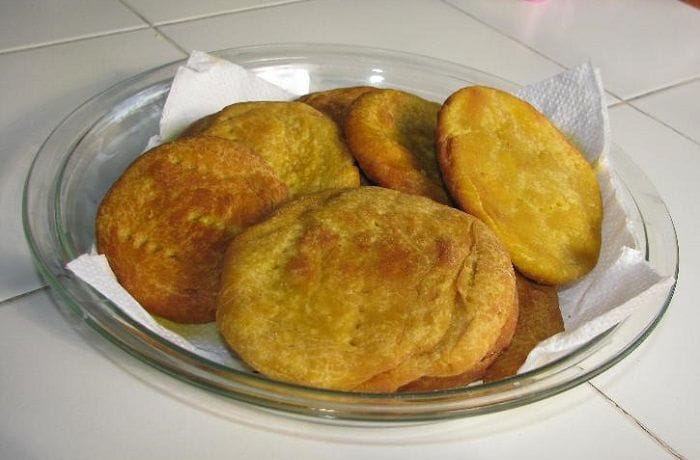
Mapuche potato sopaipillas are round, unleavened flatbreads made with mashed potato, whole wheat flour, and salt — baked in the oven or fried, with no yeast or added sugar. Each portion provides approximately 400 calories.
Mapuche potato sopaipillas, also known as “pan de papas” (potatoes bread) are a traditional food in the Mapuche diet, although they are less commonly made today, they are still highly appreciated by those who are familiar with them.
How to make Mapuche Potato Sopaipillas?
Traditionally, Mapuche sopaipillas were made using round, large, purple potatoes with white flesh. However, nowadays, they are commonly prepared with Desirée potatoes, mainly due to their widespread availability.
Nutritional Information
Each serving of Mapuche potato sopaipillas contains approximately 400 calories, 55 g of carbohydrates, 12 g of fats, 7 g of proteins, 4 g of fiber, 2 g of sugars, and 220 mg of sodium.
Mapuche Potato Sopaipillas recipe
Prep Time: 30 minutes
Cook Time: 40 minutes
Servings: 4
Ingredients
- 6 large potatoes
- 120 g of whole wheat flour
- 30 g of oil for frying
- Salt
Preparation
- Peel and wash the potatoes (Yaganas or Desirée), cut them in half, and place them in a large pot. Cover them with cold water, add a teaspoon of salt, and bring to a boil over medium-high heat. Cook for about 15 to 20 minutes until they are tender. Let them cool.
- Mash the potatoes into a fine puree using a potato masher or fork. Incorporate the lard and whole wheat flour. Knead until everything is well integrated, without adding extra water, yeast, or salt.
- Preheat the oven to 200°C (392°F) for at least 10 minutes.
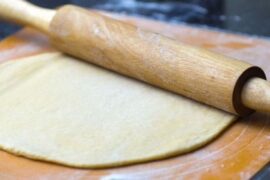
- Shape the dough into round, flat loaves similar to hallullas, using your hands. Prick them with a fork and place them on a clean kitchen towel.
- Bake in the preheated oven for about 15 minutes until they are lightly golden. Optionally, you can also fry them in hot vegetable oil.
- Mapuche potato sopaipillas are served warm and can be sliced. They can be enjoyed with margarine, butter, cheese, caramel spread, and more. If fried, they are served similarly to traditional sopaipillas.
Tips for Making Mapuche Sopaipillas
Adjust flour to your potato type
Depending on the type of flour used, adjust the ingredient quantities to achieve a homogeneous and firm dough. Desirée potatoes release more moisture than purple varieties, so you may need to add a little more flour.
Oil temperature is critical when frying
When making fried Mapuche sopaipillas, ensure that the oil temperature is at least 180°C (356°F). If the oil is too cold, the sopaipillas will absorb excess fat and turn heavy rather than light and crisp.
Serve warm for best texture
Mapuche potato sopaipillas are best served warm, sliced open, and accompanied by fresh butter, cheese, or caramel spread. If fried, drain on paper towels before plating to remove excess oil.
| Preparation option | What to expect |
|---|---|
| Baked at 200°C (15 min) | Lighter, drier crumb — closest to the traditional wood-oven method |
| Fried at 180°C | Crispy golden exterior — drain on paper towels before serving |
| Oil too cold when frying | Sopaipillas absorb fat and turn greasy — always preheat to 180°C |
| Dough too sticky | Add flour 1 tablespoon at a time until firm and non-sticky |
| Frozen and reheated | Oven at 180°C until warm — texture holds well up to 3 months frozen |
Frequently Asked Questions (FAQs)
1. What makes Mapuche sopaipillas different from regular sopaipillas?
Regular Chilean sopaipillas are made with pumpkin puree, while Mapuche sopaipillas use mashed potato as the base. They are also thicker, less sweet, and traditionally baked rather than fried.
2. Can I use any type of potato?
Traditionally, large purple potatoes with white flesh were used. Today, Desirée potatoes are the most common substitute. Avoid floury varieties that release too much water, as they make the dough sticky and hard to shape.
3. Do I need yeast or baking powder?
No. Mapuche sopaipillas use no leavening agents. Their texture comes entirely from the potato starch and the kneading process. Adding yeast would change the traditional texture completely.
4. Can Mapuche sopaipillas be frozen?
Yes. Once baked and cooled, they can be stored in an airtight bag in the freezer for up to 3 months. Reheat in the oven at 180°C until warm throughout — no need to thaw first.
History of Mapuche Potato Sopaipillas
The term “sopaipa” derives from the Arabic “supaipa,” meaning “bread soaked in oil,” arriving in Chile through the Spanish colonial influence from the 18th century onward. The Mapuche people adapted the concept using their staple crop — the potato — long before wheat flour was widely available in Araucanía. These potato flatbreads became a cornerstone of Mapuche daily nutrition, particularly during harvest seasons when potatoes were abundant. Today, the recipe is kept alive by Mapuche communities in southern Chile and by those who seek to preserve pre-Columbian culinary traditions.
Did you know?
Traditionally, Mapuche potato sopaipillas were cooked in wood-fired ovens, in hot ashes, or fried in horse fat.