
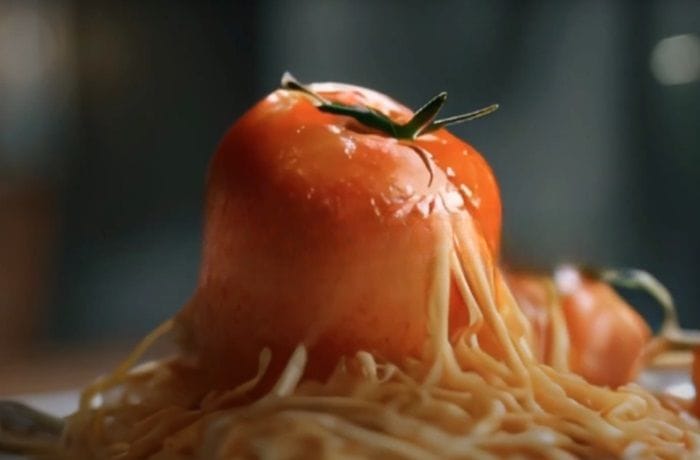
Artificial Intelligence (AI) can be an extremely useful tool in many aspects of our daily lives, including gastronomy. It allows us, for example, to generate ideas based on the ingredients we have on hand or answer basic questions about culinary techniques and cooking temperatures.
Traditional Recipes with History
When it comes to traditional gastronomy—the kind with history, identity, and memory—relying on AI-generated recipes has proven to be a way to culturally undermine certain preparations and perpetuate the errors that abound across the internet.
And in case you were wondering, all the references used in this article are based on completely real scenarios produced by some of the most popular AI agents, such as ChatGPT, Perplexity, or Gemini.
1. It Reflects Internet Biases
The training of these models is based on massive amounts of web content, which is already full of biases. These stem from the inability of search engines like Google to identify truly relevant content, not to mention the dominance of Anglo-Saxon or French cuisine, Westernized versions of recipes, and unsubstantiated food fads.
It is well known that many AI assistants not only feed on massive sources but also, when they lack precise information, invent and create nonexistent relationships. Instead of correcting what was already wrong or indicating that it doesn’t have the answer, it amplifies and distorts it even further.
2. It Invents and Hallucinates
AI is designed to predict the most probable next word, not to guarantee the truth of what it writes. This is why, when it lacks sufficient information or when sources are contradictory, it simply fills the gaps with “plausible inventions” or “creative writing.”
This leads to instructions like “cooking pasta directly in milk to achieve a creamy texture” or “using cloves if you don’t have cumin.” We aren’t even talking about a “bad chef” here, but a system that confuses quantity with quality and prioritizes what is frequent on the web, even if it’s wrong.
3. It Doesn’t Understand Context
AI has no awareness of seasonality, geography, or cultural context. It might suggest making a strawberry strudel in the middle of a Patagonian winter or tell you to use fresh ginger for a 19th-century Chilean peasant recipe.
Its gaze is global, yes, but also profoundly disconnected from traditions and what is correct in those contexts. It “creates” recipes that sound good but cannot be executed with any sense of respect for the time and place where the cooking happens.
4. It Has No Real Opinion
Unlike a traditional cookbook, where an author tests, adjusts, and stands by their proposal, AI recipes are merely linguistic simulations. There is no testing, no sensory validation, no subtle adjustments, and no real experience behind them.
Everything it offers is, at best, a guess that homogenizes toward mediocrity. In practice, this translates into doughs that don’t rise, stocks that taste like nothing, or poorly seared meats. Worse still, it lacks the ability to provide clear clues as to what went wrong or how to avoid it next time.
5. It Responds Like an Expert
One of the subtlest risks is the authoritative tone used. The AI will answer things with such familiarity and confidence that it seems to be channeling the voice of a great chef or our wise grandmothers.
But behind that confidence lies an enormous weakness. It has no criteria, no culinary judgment, and no empirical experience. It only repeats language patterns with high probability, even when it is completely mistaken.
6. It Confuses Measurements and Proportions
By pulling data from many sources without validating them, it often mixes measurement systems (grams, cups, ounces). It also has a clear tendency to use English notation (which uses decimal points instead of commas), proposing absurd quantities that mainly confuse inexperienced cooks.
From recipes using half a kilo of sugar for four servings to those calling for a tablespoon of yeast for a 100-gram dough, these errors ruin preparations and reflect a basic lack of judgment.
7. It Dilutes Cultural Essence
Traditional cooking is not just a collection of ingredients and steps; it is identity, memory, technique, and context. Because AI mixes recipes from different sources without distinguishing origins or processes, it ends up generating confusing hybrids.
It can turn a rustic peasant bread into a type of brioche or merge elements from different recipes under the same name when used in different countries, creating false culinary narratives that are then reproduced as if they were legitimate.
8. It Can Be Dangerous to Your Health
In areas like fermentation, raw meats, or canning, AI can give inaccurate or outright dangerous advice regarding food safety. This includes the risks of fermenting certain foods at room temperature or failing to warn about the proper cooking of complex ingredients.
Unfortunately, this is much more common than people think. By using a confident tone based on information sources selected primarily for advertising interests, those without experience may be following directions that pose a health risk.
9. It Has No Taste, Smell, or Intuition
In real cooking, one adjusts on the fly based on quantity, temperature, or the appliances available. A real cook knows the order of a sofrito based on the dish, when a dough needs more liquid based on feel, or when the bottom of the rice is starting to catch based on the smell.
AI cannot replace that sensitivity—that direct connection with what is being cooked. And when it fails, it cannot help you correct it; it will simply repeat the same thing with new words or confuse things even more.
10. It Doesn’t Recognize Content Creators
Much of the content it generates is based on thousands of texts and recipes published by real people. But because it doesn’t cite or give credit, it reproduces these ideas as if they were its own.
In the case of traditional recipes, this is especially problematic because it makes the origin invisible and erases the cultural value of those who have collected or inherited these practices—many of which are almost disappearing even in oral tradition. It is, without a doubt, a form of appropriation without recognition.
Summary
AI can be useful for solving a quick meal or finding inspiration on a busy day. But when it comes to heritage cooking—the kind passed down through generations that defines a culture—artificial intelligence is neither neutral nor innocent.
On the contrary, it reproduces errors, disguises inventions as certainties, and creates a new layer of misinformation over a tradition that has already been miscounted many times.
That is why, instead of trusting recipes generated by an algorithm, it is better to listen to those who have cooked their whole lives, read books by serious authors, and keep culinary memory alive through experience and respect.