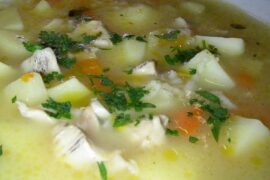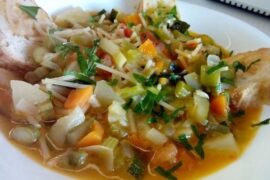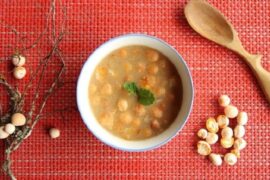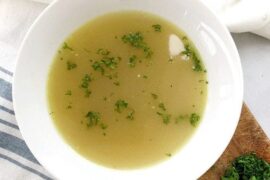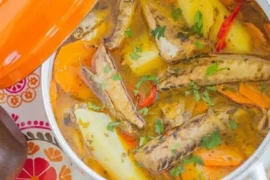

Chilean lamb chanfaina is a traditional country stew — lamb liver slow-cooked for an hour until tender, then diced and simmered with onion, tomato, potato, pumpkin, green beans, and rice in its own rich broth, ready in 90 minutes. Originally from Spain and deeply rooted in Chilean rural cooking, each serving delivers around 400 calories and the complex, earthy flavor of slow-braised offal and seasonal vegetables that defines this dish.
How to Make Lamb Chanfaina?
Chanfaina is built around the extended cooking of lamb liver — an ingredient that requires patience but rewards it with a tender, deeply flavored result. The liver is cooked whole for an hour, then diced and returned to a vegetable stew alongside its cooking broth, which becomes the sauce. The result is a complete one-pot meal in the tradition of Chilean country cooking, where nothing from the animal is wasted.
Nutritional Information
Each serving of lamb chanfaina contains approximately 400 calories, 40 g of carbohydrates, 15 g of fats (5 g saturated), 25 g of protein, 5 g of fiber, 5 g of sugars, 100 mg of cholesterol, and 800 mg of sodium.
Homemade Lamb Chanfaina Recipe
Preparation: 30 minutes
Cooking: 90 minutes
Servings: 4 people
Ingredients
- 500 g lamb liver (or lamb meat)
- 200 g green beans
- 100 g pumpkin
- 4 large potatoes
- 4 onions, sliced
- 3 tomatoes, chopped
- 1 carrot, chopped
- 1 garlic clove, chopped
- 1 bay leaf
- ½ green bell pepper
- ½ cup of rice
- Paprika
- Aliño completo (Chilean spice blend)
- Salt
- Pepper
Instructions
- Wash the lamb liver and place it in a large pot. Cover with plenty of cold water, add a teaspoon of salt, and cook uncovered over medium heat for one hour or until fully tender when tested with a fork.
- Remove the liver from the water. Cut it into 1 cm cubes and set aside. Reserve the cooking broth — it becomes the base of the stew.
- In a large pot, heat a little oil over medium heat. Add the sliced onion, bell pepper, and chopped carrot, and sauté for a few minutes until the onion is translucent.
- Add the chopped garlic, bay leaf, aliño completo, paprika, salt, and pepper, and mix well. Incorporate the diced liver, chopped potatoes, green beans, and pumpkin. Add the reserved cooking broth to cover everything, adding water if necessary. Adjust seasoning, cover, and cook over medium heat for about 10 minutes until the potato and pumpkin are halfway cooked.
- Add the rice, stir, and cook covered for another 10 minutes until the rice and vegetables are fully cooked. Serve the lamb chanfaina hot in a wide, deep bowl.
Additional Tips
Cook the liver for the full hour — undercooked liver is bitter and unpleasant
Lamb liver is a dense organ meat that requires prolonged cooking to become tender and lose the sharp, bitter, ferrous taste associated with undercooked offal. Cook the whole liver uncovered in gently boiling salted water for a full 60 minutes — the opening of the pot allows some of the volatile compounds responsible for the strong flavor to escape with the steam. Test doneness by inserting a thin skewer: it should slide through without resistance and the juices should run clear. A properly cooked liver will be firm but not rubbery when cut into cubes.
Reserve the cooking broth — it becomes the richest part of the stew
The water in which the lamb liver was cooked absorbs significant flavor, collagen, and iron compounds during the hour of simmering. Do not discard it — strain it and use it as the primary liquid for the stew. The liver broth produces a darker, more complex, more deeply flavored chanfaina than using fresh water or stock. Adding aromatics to the initial liver cooking (celery, bay leaf, garlic, a sprig of thyme) enriches the broth further and produces an even better stew base.
Add rice last and monitor closely — it absorbs the broth and thickens rapidly
Rice in a soup or stew context absorbs liquid at a much faster rate than rice cooked in a measured amount of water. After adding the rice to the chanfaina, stir every 2 to 3 minutes and check the broth level — the rice can absorb all available liquid within 12 minutes, leaving a very thick, paste-like consistency if unattended. If the chanfaina becomes too thick before the rice is fully cooked, add a cup of hot water and stir to incorporate. The final consistency should be thick but still pourable — not solid.
| Ingredient | Substitution and result |
|---|---|
| Lamb liver | Beef liver — slightly stronger flavor; same cooking technique; increase time to 75 minutes |
| Pumpkin (zapallo) | Butternut squash — similar sweetness and texture; cook for the same time |
| Rice | Fideos (thin pasta) — add in final 8 minutes; produces a lighter, less starchy stew |
| Green beans | Fresh peas or broad beans — add in the final 5 minutes; sweeter result |
Frequently Asked Questions (FAQs)
1. What is chanfaina and where does it come from?
Chanfaina is a stew made with lamb or goat offal — primarily liver and kidneys — cooked with vegetables and sometimes rice or bread. It originated in Spain (specifically associated with Extremadura and Salamanca) and was brought to Latin America by Spanish colonizers, where it took root in the rural cooking traditions of Chile, Peru, Argentina, and Bolivia. In Chile, chanfaina is particularly associated with country cooking in the central and southern regions where lamb farming is common — it represents the tradition of using every part of the animal, wasting nothing from a slaughter.
2. Why does lamb liver taste so different from beef liver?
Lamb liver has a milder, sweeter, less intensely ferrous flavor than beef liver, which makes it more approachable for people who find beef liver too strong. The difference is partly metabolic — younger animals (lamb) have less accumulated iron and fewer metabolic byproducts in their liver — and partly size-related: a lamb liver is much smaller than a beef liver and has a finer grain. Both benefit from long cooking with aromatic vegetables to moderate the natural bitterness, but lamb liver generally requires less adjustment.
3. Can I make chanfaina with regular lamb meat instead of liver?
Yes — the title of this recipe includes “lamb meat” as the ingredient, and many families prepare chanfaina with lamb shoulder or leg cut into cubes rather than organ meat. The technique differs slightly: regular lamb meat should be browned before adding to the stew for maximum flavor, and the cooking time in the initial step is reduced to 30 minutes (until the meat is tender). The resulting dish is milder and more universally palatable but loses the specific character that offal contributes to the traditional recipe.
4. Is chanfaina healthy?
Lamb liver is one of the most nutritionally dense foods available — it is extremely high in vitamin A, iron, zinc, B vitamins (especially B12), and folate. However, it is also high in cholesterol (100 mg per serving in this recipe), which is why it should not be consumed in excess. For most healthy adults, occasional consumption of offal is nutritionally beneficial; people with high cholesterol or gout should consume it in moderation. The vegetable and rice components of chanfaina provide fiber, complex carbohydrates, and additional micronutrients that make this a genuinely balanced dish.
What Is Chilean Lamb Chanfaina?
Chilean lamb chanfaina — chanfaina de cordero — is a traditional country stew made from slow-cooked lamb liver diced and simmered in its own broth with onion, tomato, potato, pumpkin, green beans, and rice. It belongs to the broad family of offal stews that exist across Spanish-speaking Latin America under various names, and represents the Chilean rural tradition of whole-animal cooking — using every part of the animal from a slaughter. Chanfaina is particularly associated with rural communities in the central and southern Chilean regions where lamb farming is concentrated, and it remains a staple of home cooking in these areas as well as a sought-after dish in traditional Chilean restaurants.
History of Chanfaina in Chile
Chanfaina is a preparation that arrived in Chile with the Spanish colonial presence — it was already an established dish in Extremadura, Castile, and other regions of Spain where lamb and goat farming were central to rural economies. Spanish settlers brought their offal cooking traditions to Chile, where they found abundant lamb in the newly established estancias and haciendas of the central and southern regions. The word chanfaina has a curious etymology: it is believed to derive from “sanfoina,” a variant of the Latin “symphonia” (musical concert or accompaniment), reflecting the medieval European custom of giving dishes whimsical names unrelated to their ingredients. In Chile, chanfaina became embedded in rural country cooking (cocina de campo) as a practical, nutritious preparation that made full use of the organ meats from slaughtered animals. Today it is considered part of Chile’s gastronomic heritage and appears at traditional food festivals celebrating Chilean rural cuisine.
Did You Know?
The term chanfaina has a very curious origin — it is a variation of the old word “sanfoina,” which derives from the Latin “symphonĭa” (concert or musical accompaniment). The name’s musical etymology reflects the medieval European tradition of giving colorful, poetic names to humble dishes, a practice that produced many of the most memorable names in Spanish culinary vocabulary. In Chile, the dish has been adopted so thoroughly into rural cooking tradition that its Spanish origin is often forgotten — it is considered simply Chilean country food.