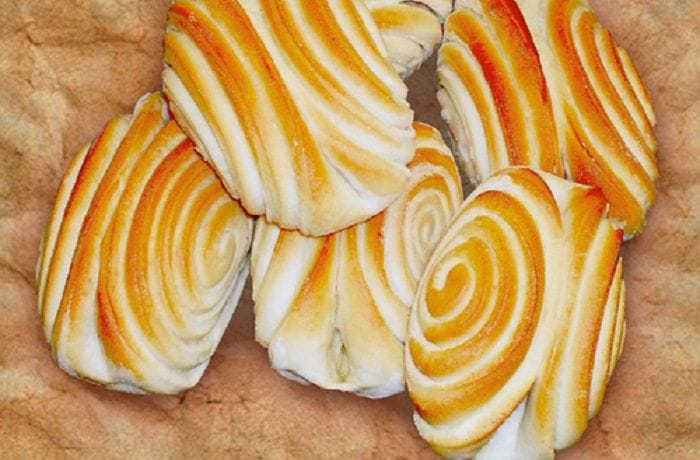
Chilean bocado de dama — also called Macarena bread or pan milagroso (Miracle bread) — is a small enriched bread with a soft white crumb and a distinctive spiral structure formed by rolling and pressing the dough. This recipe yields 8 rolls and takes about 2 hours including rising time.
Nutritional Facts
Each serving of Chilean “Bocado de Dama” bread contains approximately 220 kcal, 30 g of carbohydrates, 9 g of fats, 5 g of proteins, 1 g of fiber, 1 g of sugars, 30 mg of cholesterol, and 150 mg of sodium. (*)
(*)Estimated values are based on one large bowl serving, including all proteins and one potato.
How to Make “Bocado de Dama” Bread?
Macarena bread, or “Bocado de Dama,” is a medium-sized bread with soft shapes, characterized by a spiral distribution of refined dough and overlapping layers, with a white and appetizing crumb.
Preparation: 75 minutes
Baking: 30 minutes
Servings: 8 breads
Ingredients
- 500 g of wheat flour
- 150 ml of water
- 35 g of butter
- 10 g of salt
- 5 g of baking powder
- ½ teaspoon of sugar
- 1 medium egg
- Vegetable Oil

Instructions
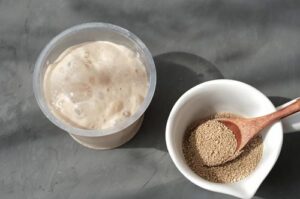
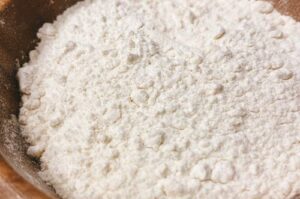
- In a bowl with warm water, add the baking powder and sugar, let it rest for 5 minutes, and stir until dissolved. In a large bowl, sift the flour, add the salt, and stir. Create a well in the center and add the yeast mixture and room-temperature butter.
- Knead all the ingredients for about 10 minutes, adding more water if necessary until you obtain a firm, smooth, and homogeneous consistency. Form a ball, cover it with a kitchen cloth, and let it rise for 60 minutes. Transfer the dough to a floured, smooth surface.
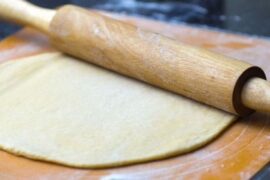
- Roll out the mixture to form a rectangular distribution of approximately ½ centimeter thick, and cut the edges with a sharp knife to level the profile. Brush oil over the entire surface of the dough, flatten one of the edges with your fingers, and gently roll the dough from the opposite edge to the end, sealing it.
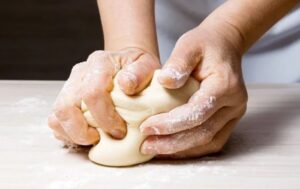
- Trim the ends of the rolled dough and cut it into segments about 5 cm wide (3 fingers). Separate the rolls, and on each of them, flatten the center of the dough perpendicularly to the direction of the roll using the handle of a wooden spoon or a skewer brushed with oil.
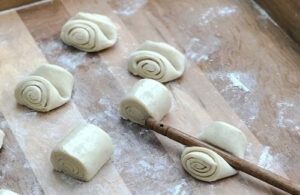
- Butter a baking sheet and distribute the breads on it, keeping the same distance as their size. Cover with a cloth and let them rest for about 10 minutes. Preheat the oven to 180°C (356°F) for at least 10 minutes. Beat the egg and brush each of the breads with the mixture.
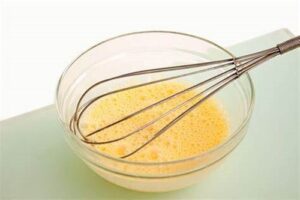
- Bake in the preheated oven for about 20 to 30 minutes until they are lightly golden and sound hollow when tapped with your fingers. Cool on a rack. Serve the “Bocado de Dama” bread, preferably warm, on its own or with butter or your choice of jams.
Additional Tips for Perfect Bocado de Dama
Light Oil on the Dough Surface
Use only a very thin film of oil before rolling. Keep the tension uniform as you roll and seal the final edge tightly — if the seam isn’t sealed well, the spiral will unfold during the second proofing, losing the bread’s signature look.
Oil the Pressing Tool
Dip the wooden spoon handle or skewer in oil before pressing the center crease. This prevents sticking and ensures a clean, defined groove — the hallmark of a proper bocado de dama.
Bocado de Dama – Serving and Filling Guide
| Serving | Filling | Occasion |
|---|---|---|
| Classic (plain) | Butter or pebre | Onces, breakfast |
| With mantecoso cheese | Soft yellow cheese | Traditional afternoon tea |
| With manjar | Dulce de leche | Sweet snack or dessert |
| Ham and cheese | Ham + gouda | Quick lunch |
| Avocado and tomato | Fresh toppings | Elevated breakfast |
Frequently Asked Questions (FAQ)
1. What is the best way to substitute baking powder if I don’t have it?
You can use fresh yeast. Use approximately three times the amount of fresh yeast (about 15 g in this recipe). Dissolve it in the warm water and sugar mixture just as you would with the dry powder.
2. How do I ensure the characteristic spiral shape holds during baking?
The key is a strong initial roll and proper sealing. Also, do not over-proof the cut rolls in the second rest period (the 10-minute rest). If they proof too much, the layers will lose definition when the center is pressed down.
3. Can I prepare the dough in advance and refrigerate it?
Yes, you can refrigerate the dough after the initial 60-minute rise. Punch the air out, place it in an oiled bowl, cover it tightly, and refrigerate for up to 12 hours. Let it come to room temperature for 30 minutes before rolling it out for the spiral cutting process.
4. What is the ideal flour type for “Bocado de Dama”?
A standard all-purpose wheat flour (AP flour) is suitable. Because this dough is slightly enriched with fat (butter), a medium-protein flour works well to keep the crumb soft and not overly chewy.
5. How should I store this bread to keep it soft?
Like most soft, non-crusty breads, “Bocado de Dama” is best consumed the day it’s baked. To store leftovers, place them in a sealed plastic bag once completely cool and keep them at room temperature for up to 3 days.
History of “Bocado de Dama”
It is believed that “Bocado de Dama,” or Macarena bread, is an originally Chilean product that developed during the colonial era, especially prepared for aristocratic ladies and consumed at tea time. Its name, “Bocado de Dama,” is said to come from the custom of consuming these exclusive products using only three fingers, a practice of the ladies of the time.
Did You Know?
Currently, this bread is considered “endangered,” and one of its most famous advocates has been the Spanish master baker Josep Pascual, who regularly praises its uniqueness, stating that “it’s one of those breads that enchant, that doesn’t exist anywhere else on the planet,” which is why he now teaches it in his classes throughout Europe.