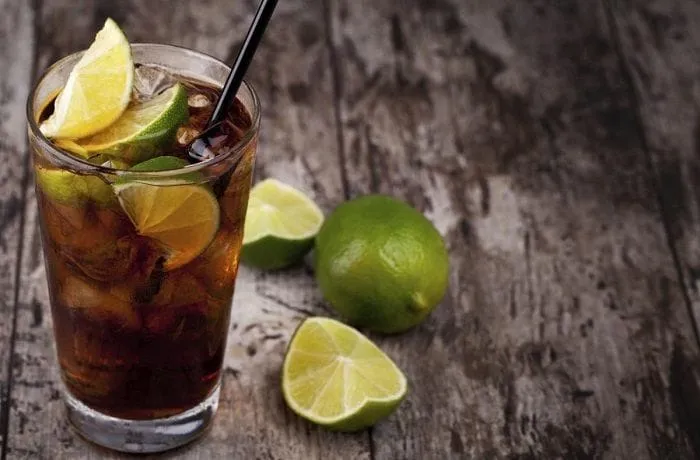
Chilean piscola is a two-ingredient cocktail: Chilean pisco poured over ice in a tall glass, topped with cola — almost always Coca-Cola — and optionally garnished with quarters of limón de pica (a small, intensely aromatic lime from the Atacama Desert town of Pica). The standard ratio is one part pisco to three or four parts cola. It is the most consumed mixed drink in Chile and is known informally as the “combinado nacional” — the national mix. Since 2003, February 8th has been officially designated Chile’s National Piscola Day.
The piscola requires no technique, no equipment, and no preparation beyond ice and the two ingredients. Its dominance in Chilean drinking culture reflects the same factors as other canonical spirit-and-cola combinations worldwide: simplicity, consistency, and the specific flavor match between the spirit and the mixer.
How to Make a Chilean Piscola?
Always pour the pisco first, then add the cola slowly down the side of the glass. Pouring cola over ice before adding the pisco accelerates carbonation loss; pouring it over the pisco last and tilting the glass preserves the bubbles and requires less stirring. Use the coldest cola available — room-temperature cola goes flat almost immediately on contact with the ice.
The limón de pica is not a standard ingredient but an optional garnish that adds a brief citrus note to the first sip. If limón de pica is unavailable outside Chile, a thin slice of key lime is the closest substitute. Regular lemon changes the flavor profile significantly and is not recommended.
Nutritional Information
Per serving (50 ml pisco 40° + 200 ml cola): approximately 230 kcal, 0 g protein, 0 g total fat, 30 g carbohydrates, 30 g sugars, 20 mg sodium. The caloric content comes almost entirely from the alcohol in the pisco (7 kcal per gram of pure alcohol) and the sugar in the cola. A piscola made with zero-sugar cola reduces the carbohydrate content to approximately 70 kcal per serving.
Chilean Piscola Cocktail Recipe
Prep time: 5 minutes | Servings: 1
Ingredients
- 50 ml Chilean pisco (35° to 40° for a classic piscola; up to 46° for a stronger version)
- 200 ml Coca-Cola, very cold
- Ice cubes
- Limón de pica, quartered (optional garnish)
Instructions
- Fill a tall glass generously with ice cubes. If using limón de pica, add the quarters at this stage, pressing them lightly against the ice so they release a small amount of juice.
- Pour the pisco over the ice. Tilt the glass slightly and pour the cold cola slowly down the inside edge to preserve carbonation. Stir once gently with a cocktail stirrer and serve immediately.
Additional Tips
How to adjust the strength of a piscola?
The standard ratio is 1:4 (one part pisco to four parts cola) for a light piscola that is easy to drink over an evening. Increase to 1:3 for a medium-strength version with more pisco character. A 1:2 ratio is the maximum before the pisco flavor begins to overpower the cola completely — at this concentration, use a lower-proof pisco (35° to 37°) to avoid an overly harsh result. Higher-proof piscos (43° to 46°) are best used at 1:4 or 1:5 ratios; their higher alcohol concentration means a smaller volume delivers the same effect.
How to make a piscola for a group?
For a large batch, maintain the 1:4 ratio and mix in a large pitcher: 250 ml pisco to 1 litre of cola, poured over a large block of ice rather than cubed ice. A block melts more slowly and dilutes the drink less over the course of an evening. Add the cola last and stir only once — over-stirring a carbonated drink in a pitcher flattens it within minutes. Serve immediately into ice-filled glasses.
How to make a piscola with zero sugar?
Substitute the regular cola with Coca-Cola Zero or any zero-sugar cola — the flavor difference is minimal in a drink where the pisco provides the primary aromatic character. This reduces the caloric content from approximately 230 kcal to 70 kcal per serving (the remaining calories come from the alcohol in the pisco). The carbonation level and sweetness profile of zero-sugar colas are slightly different from regular cola, which is most noticeable at a 1:2 or 1:3 ratio; at 1:4 or higher, the difference is negligible.
Pisco-Based Cocktails and Combinations Comparison
| Cocktail | Base spirit | Mixer | Citrus |
|---|---|---|---|
| Piscola (this recipe) | Chilean pisco | Cola | Limón de pica (optional) |
| Pisco sour | Chilean or Peruvian pisco | Lemon juice + sugar + egg white | Lemon (essential) |
| Canelita / Mistela | Aguardiente or pisco | Cinnamon syrup + hot water | None |
| Pihuelo | Wine | Toasted flour + water | None |
Frequently Asked Questions (FAQs)
1. What is the ideal pisco-to-cola ratio for a piscola?
The most common ratio in Chile is 1:3 (one part pisco to three parts cola), though it ranges from 1:1 for a strong version to 1:5 for a very light one. Higher-proof piscos (40° or above) need less volume to achieve balance. In social gatherings, the 1:4 ratio is the most widespread because it is easy to drink over extended periods without becoming too strong.
2. What type of pisco is best for making piscola?
A clear pisco of 35° to 40° is the standard choice — its neutral profile does not compete with the sweetness of the cola and it is the most economical option. For more complexity, a pisco especial or reservado of 40° or above adds fruity and floral notes that are perceptible even when mixed. Aged piscos have too strong a character for mixing with cola without losing their nuance and are best consumed neat.
3. Can I use a cola other than Coca-Cola?
Yes. Any cola works; differences in sweetness and caffeine between brands are noticeable but not decisive. Pepsi produces a slightly sweeter piscola. Outside colas, pisco with sparkling water and a squeeze of limón de pica is a lighter, less sweet version. The key in all cases is using the mixer very cold and pouring it last to preserve carbonation.
4. When is Chile’s National Piscola Day celebrated?
Chile’s National Piscola Day is celebrated every February 8th, established in 2003 by the Chilean pisco industry. The date was selected for its positioning in the Southern Hemisphere summer — the peak season for cold drinks and outdoor gatherings where pisco consumption is highest. It has no specific historical basis beyond commercial promotion.
5. What is the difference between piscola and cuba libre?
Both mix a spirit with cola over ice, but the base alcohol and the role of citrus differ. Piscola uses Chilean pisco and limón de pica as an optional garnish. Cuba libre uses Caribbean rum and lime juice as a fixed, integral flavor component. Pisco is more floral and gentle than rum, making piscola lighter and easier to drink over an evening. Cuba libre has a stronger, more assertive character from the rum and the pronounced lime acidity.
What Is Chilean Piscola?
Piscola is Chile’s most consumed cocktail — a combination of Chilean pisco and cola that functions as the country’s equivalent of the cuba libre, rum and coke, or jack and coke that dominate mixed-drink culture in other countries. The name is a portmanteau of pisco and cola. It is prepared identically across Chile: pisco over ice, topped with cola, with no standard recipe beyond the ratio, which each person adjusts to their preference. It appears at family gatherings, asados, parties, and bars nationwide and is consumed year-round, with peak consumption in the summer months of December through March.
History of Piscola in Chile
Pisco production in Chile dates to the sixteenth century, when Spanish missionaries planted vines in the Atacama and Elqui valleys to produce wine and later distill spirits for sacramental and commercial use. The spirit became associated with the northern Elqui and Limarí valleys, where the dry climate and high altitude produce grapes with high sugar concentrations ideal for distillation. Coca-Cola entered Chilean distribution in the mid-twentieth century, and the combination of pisco with cola emerged spontaneously in the same period across Chilean social settings — no specific inventor or origin date is documented. By the 1980s and 1990s, piscola had become the dominant casual mixed drink in Chile, surpassing chicha and wine-based drinks in urban consumption. The formalization of a National Piscola Day in 2003 reflected the drink’s cultural entrenchment rather than creating it.
Did You Know?
Chile and Peru maintain a long-running dispute over the origin and the protected designation of origin for pisco. Both countries produce a spirit called pisco from grapes grown in their respective desert coastal valleys — Chile’s Atacama and Elqui valleys, Peru’s Ica and Arequipa regions — and both have registered “pisco” as a denomination of origin within their respective legal frameworks, refusing to recognize the other’s claim. Chilean pisco tends to be distilled from Muscat of Alexandria (moscatel) and Pedro Jiménez grapes and is typically higher in proof than Peruvian pisco, which is produced from a wider variety of grapes and is legally required to be distilled to proof (no water added after distillation). The dispute has been ongoing in international trade forums since the 1990s with no resolution in sight.