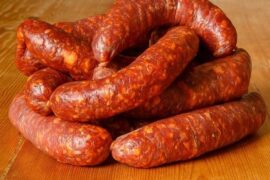
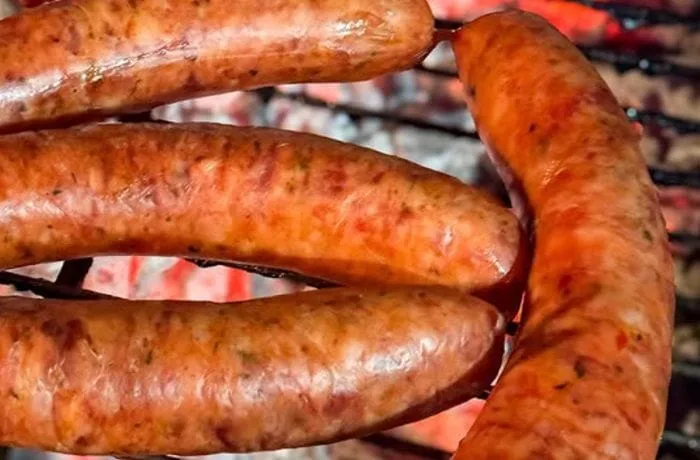
Chilean San Carlos artisanal longaniza is a handcrafted fresh sausage from the city of San Carlos in the Ñuble Region, made from ground pork loin and bacon at an 80/20 lean-to-fat ratio, seasoned with paprika, garlic powder, oregano, and cumin, stuffed into natural pork casing, and cooked on a grill or skillet until golden and crispy outside. The mixture rests 12 hours in the refrigerator before stuffing, and the finished sausages air-dry for 4 to 6 hours before grilling. San Carlos longaniza is one of the most recognized artisanal sausages in Chile and carries a Denominación de Origen designation.
The defining characteristic of San Carlos longaniza — and the reason it differs from other Chilean longanizas — is the pork source: animals raised in the Ñuble region have traditionally been fed a diet that includes rice bran, a byproduct of the region’s rice-milling industry that produces a distinctive fat composition and flavor profile in the finished meat.
How to Make Chilean San Carlos Artisanal Longaniza?
The fat ratio is not adjustable without changing the character of the sausage. The 80/20 lean-to-fat proportion — 2 kg loin plus 500 g bacon — produces the juiciness and texture that define San Carlos longaniza. Less fat means a drier, tougher sausage; more fat means excessive rendering on the grill and a greasy result. Use a medium grinding disc, not fine: fine grinding over-emulsifies the fat into the lean and eliminates the slightly coarse texture that distinguishes handcrafted sausage from industrial product.
Do not skip the 12-hour rest or the 4 to 6 hour air-drying after stuffing. The rest allows salt to redistribute moisture evenly through the meat mixture; the air-drying firms the casing and reduces surface moisture, which prevents the sausages from splitting during the initial high-heat phase of grilling.
Nutritional Information
Per 100 g: approximately 300 kcal, 17 g protein, 25 g total fat (9 g saturated), 1 g carbohydrates, 800 mg sodium. The high sodium content reflects the curing role of salt in the mixture — it is functional, not purely for flavor. Those managing sodium intake may reduce the salt to 1.5 tablespoons, though this will slightly affect the texture and shelf life of the uncooked sausage.
Chilean San Carlos Artisanal Longaniza Recipe
Prep time: 20 minutes (plus 12-hour rest + 4–6 hour air-dry) | Cook time: 20 minutes | Servings: 4
Ingredients
- 2 kg pork loin, diced
- 500 g pork bacon, diced
- 200 ml cold water
- 2 tablespoons fine salt
- 2 tablespoons sweet paprika
- 1 teaspoon garlic powder
- ½ teaspoon dried oregano
- ½ teaspoon ground cumin
- Natural pork casing, rinsed and soaked in warm water
Instructions
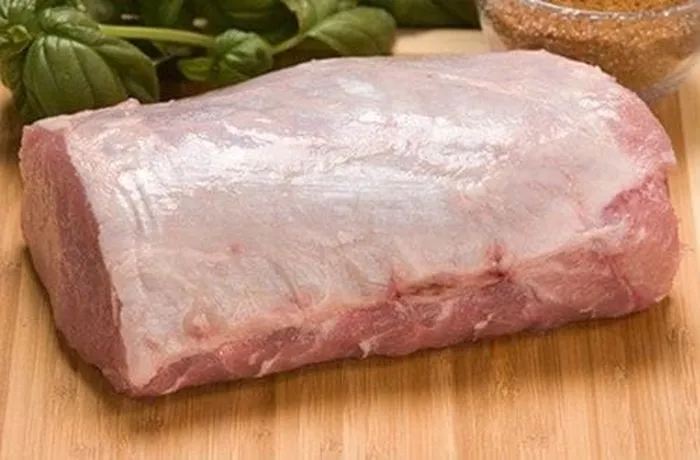
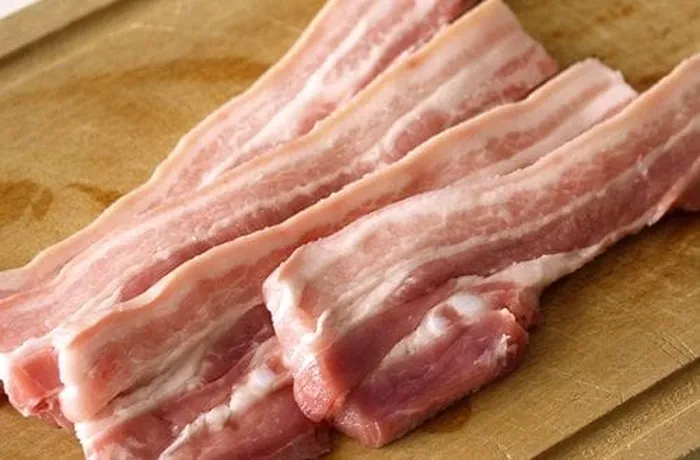
- Select pork loin with good marbling and dice it into cubes of approximately 3 cm. Dice the bacon into similar-sized pieces. Pass both through a meat grinder fitted with a medium disc — do not use the fine disc, which over-emulsifies the mixture and eliminates the coarse texture characteristic of artisanal sausage. The ground mixture should have a visible, slightly rough texture with small pieces of fat distributed throughout the lean.
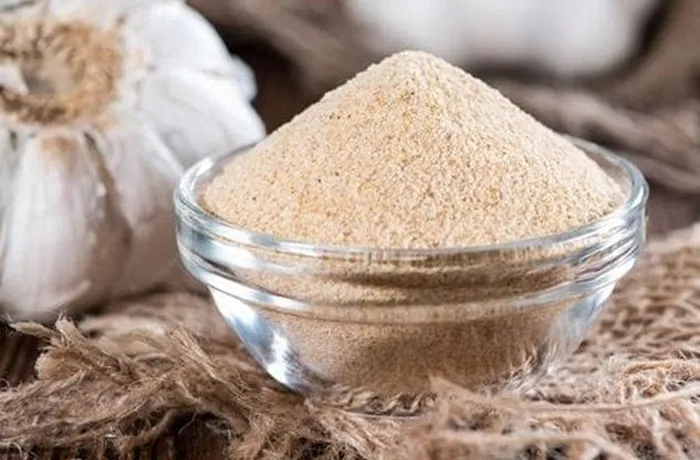
- Place the ground mixture in a large bowl. In a separate small bowl, combine the salt, paprika, garlic powder, oregano, and cumin. Add the dry spice blend to the ground pork and mix thoroughly by hand for 3 to 4 minutes, working the seasoning evenly through the entire mixture. Gradually incorporate the 200 ml of cold water while continuing to knead — the water helps the proteins bind and keeps the mixture juicy during cooking.
- Cover the bowl tightly with plastic wrap and refrigerate for a minimum of 12 hours. This rest period allows the salt to redistribute moisture evenly through the mixture and gives the fat-soluble spice compounds time to infuse throughout the fat. After resting, fry a small spoonful of the mixture in a dry pan and taste — adjust seasoning before stuffing if necessary.
- Rinse the natural casing under cold running water and soak in warm water for 30 minutes until pliable. Thread onto the sausage stuffer nozzle. Stuff the meat mixture firmly into the casing, working slowly to avoid air pockets — prick any visible air bubbles with a thin needle. Tie into 15 cm portions using kitchen twine, leaving a small gap between each link. Hang the finished longanizas in a cool, well-ventilated location and air-dry for 4 to 6 hours before cooking.
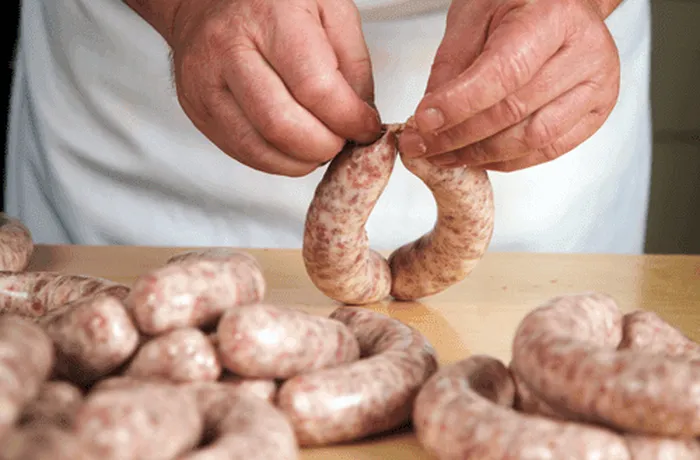
- Grill the air-dried longanizas over medium heat on a wood-fired grill or in a heavy skillet, turning every 3 to 4 minutes for even browning on all sides. Cook for approximately 20 minutes total until the exterior is golden and crispy and the internal temperature reaches 71°C (160°F). Rest for 3 minutes before serving. Serve with pan amasado, pebre, and ensalada chilena.
Additional Tips
How to prevent longanizas from splitting on the grill?
Three factors prevent casing rupture. First, the 4 to 6 hour air-drying phase before cooking firms and slightly dries the casing surface, making it more resistant to heat expansion. Second, start the longanizas on medium rather than high heat — high heat causes rapid interior steam expansion before the casing can adjust. Third, prick the casing once on each side with a thin needle just before placing them on the grill; this provides a pressure release point without opening a large hole that causes juice loss.
How to smoke San Carlos longanizas at home?
If you have a covered grill or a small smoker, place the air-dried longanizas over indirect heat (not directly above the coals) and add a small piece of espino, boldo, or oak wood to the coals. Maintain a temperature of 80 to 90°C inside the covered grill and smoke for 45 to 60 minutes until the internal temperature of the sausage reaches 71°C. Smoking at this low temperature renders the fat slowly, produces a deeper color and smoke ring in the meat, and gives the finished longaniza a complexity that direct grilling cannot achieve.
How to store uncooked stuffed longanizas?
Refrigerate stuffed, uncooked longanizas in a single layer on a wire rack over a tray for up to 3 days — the rack allows air circulation around the casing and prevents the bottom from becoming damp. For longer storage, freeze in individual portions separated by parchment paper for up to 3 months. Thaw overnight in the refrigerator before cooking; do not thaw at room temperature, which encourages bacterial growth in the protein-rich mixture. Do not refreeze once thawed.
Chilean Artisanal Sausages Comparison
| Sausage | Origin | Defining feature | Typical use |
|---|---|---|---|
| Longaniza de San Carlos (this recipe) | Ñuble Region | Rice-fed pork, paprika seasoning | Grilled, in sandwiches |
| Longaniza de Chillán | Ñuble Region | Similar style, slight seasoning variation | Grilled, in sandwiches |
| Longaniza de Ancud | Chiloé Island | Smoked, more rustic cut | Smoked, in stews |
| Prieta (blood sausage) | Nationwide | Pork blood + fat + spices | Boiled, pan-fried |
Frequently Asked Questions (FAQs)
1. Can I use synthetic casing instead of natural pork casing?
Yes, and it is easier to handle for first-time sausage makers — no soaking required, more uniform diameter, less prone to tearing during stuffing. However, natural pork casing produces a superior result: it clings more tightly to the meat, provides the characteristic snap when bitten, retains juices better during cooking, and is permeable to smoke. For an authentic San Carlos longaniza, natural casing is strongly preferred.
2. What firewood produces the best flavor for grilling longanizas?
Espino (Acacia caven) and boldo (Peumus boldus) are the traditional choices in the Ñuble and Biobío regions. Espino burns slowly with a mild, persistent smoke that does not overpower the pork; boldo has a more aromatic, herbaceous note from its essential oil content. Both are native Chilean species. Outside Chile, oak or fruitwood (apple, cherry) produce comparable results. Avoid resinous softwoods like pine, which produce bitter, acrid smoke.
3. What traditional accompaniments pair best with San Carlos longanizas?
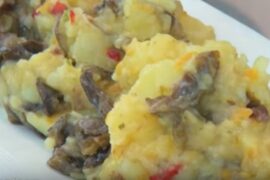
Pan amasado — traditional Chilean kneaded bread baked in a wood-fired oven — is the canonical accompaniment, used to make the longaniza sandwich that is the most common street-food format in the Ñuble region. Pebre (fresh herb and tomato salsa) adds acidity that cuts through the fat. Rustic mashed potatoes with merkén or boiled potatoes are the traditional side dish for a plated meal. Ensalada chilena (sliced tomato and onion) rounds out the plate.
4. Why does the meat mixture need to rest 12 hours before stuffing?
The 12-hour rest allows two critical processes. First, the salt draws moisture from within the meat fibers and redistributes it throughout the mixture, improving water retention and reducing juice loss during grilling. Second, fat-soluble flavor compounds in the paprika, garlic, and cumin migrate through the fat of the mixture, producing uniformly seasoned sausages rather than ones that taste seasoned only on the surface. Skipping this step produces noticeably drier sausages with uneven flavor distribution.
5. What is the correct fat-to-lean ratio for San Carlos longanizas?
The traditional ratio is 80% lean pork to 20% fat — achieved in this recipe with 2 kg pork loin and 500 g bacon. Below 15% fat, the sausages become dry and crumbly and lose the characteristic juiciness of the San Carlos style. Above 25% fat, they shrink excessively on the grill as the fat renders and produce heavy flare-ups. The 80/20 ratio is the same used in most traditional European-style fresh sausages and is the minimum fat content needed to keep the meat matrix moist throughout cooking.
What Is Chilean San Carlos Longaniza?
San Carlos longaniza is an artisanal fresh pork sausage produced in the city of San Carlos and surrounding communities in the Ñuble Region of south-central Chile. It belongs to the broader family of Chilean longanizas — fresh sausages made from coarsely ground pork seasoned with paprika, garlic, and herbs — but is distinguished by the pork source and the specific seasoning balance that have developed in the San Carlos area over generations of artisanal production. The sausage is most commonly eaten grilled and served in a pan amasado roll with pebre and ensalada chilena, a preparation known locally simply as “un longaniza.” It is sold at street markets, artisanal butcheries (carnicerías artesanales), and roadside stalls throughout the Ñuble Region and is one of the most commercially recognized artisanal food products from the area.
History of Longaniza de San Carlos
Sausage-making in the San Carlos area developed in the nineteenth and early twentieth centuries alongside the agricultural economy of the Ñuble Region, which combined cattle farming, cereal cultivation, and rice growing. The availability of rice bran as a feed supplement for pigs — a byproduct of the rice mills operating in the region — influenced the fat composition of locally raised pork over time, producing a meat with a flavor profile that became associated with the San Carlos sausage tradition. The longaniza de San Carlos received a Denominación de Origen (DO) designation from the Chilean government, recognizing it as a product of specific geographic and cultural origin tied to the Ñuble Region. The DO defines the production area, the permitted ingredients, and the minimum standards for the lean-to-fat ratio and seasoning that a longaniza must meet to carry the San Carlos name.
Did You Know?
San Carlos and the neighboring city of Chillán — both in the Ñuble Region — are the two most recognized centers of artisanal longaniza production in Chile. Both cities produce sausages under similar traditional methods, and locals debate fiercely which version is superior. The primary difference between the two is subtle: San Carlos longaniza tends to have a slightly more pronounced paprika character and a coarser grind, while Chillán longaniza is traditionally smoked, which gives it a darker color and a more complex, rounded flavor. In Chilean popular culture, buying longanizas directly from the producers in San Carlos or Chillán on a road trip south is a recognized culinary ritual — the Ruta 5 Sur corridor between the two cities has been informally called one of Chile’s great artisanal food routes.