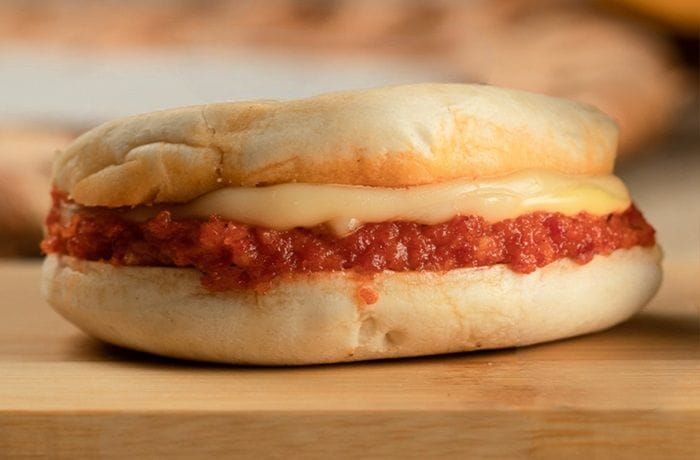
Chilean choriqueso from Punta Arenas is made by crumbling smoked chorizo into a pan with oil and cooking over medium-low heat into a smooth spreadable paste, spreading it onto split hallulla rolls, covering with a slice of gouda cheese, baking at 180°C for 3 minutes until the cheese melts, then topping with mayonnaise and serving immediately — a Patagonian street food sandwich ready in 30 minutes that serves 2.
The choriqueso is the defining street food of Punta Arenas — a city at the southern tip of Chilean Patagonia where the cold, windswept climate demands exactly this kind of hot, fat-rich, immediately satisfying sandwich. It is a local evolution of the choripán (chorizo on bread), distinguished by the addition of melted cheese and mayonnaise, the use of hallulla rather than marraqueta, and the key technique of cooking the chorizo into a paste rather than grilling it whole.
How to Make Chilean Choriqueso from Punta Arenas?
The chorizo paste is the technical core of the recipe: the chorizo must be cooked slowly over medium-low heat, with its casing removed, so that the fat renders gradually and the meat breaks down into a smooth, cohesive paste rather than a dry crumble. This low-and-slow approach — stirring continuously — is what produces the spreadable texture that distinguishes a proper Magallanic choriqueso from a simple chorizo sandwich. The cheese-melting and assembly take under 5 minutes once the paste is ready.
Nutritional Information
Each serving of Chilean choriqueso contains approximately 580 calories, 28 g of proteins, 35 g of total fats (12 g saturated), 90 mg of cholesterol, 40 g of carbohydrates, 3 g of sugars, and 950 mg of sodium. The high fat and calorie content reflects the Patagonian context in which this dish was created — a cold-climate region where dense, energy-rich street food serves a practical as well as cultural purpose.
Homemade Chilean Choriqueso from Punta Arenas Recipe
Prep Time: 15 minutes
Cook Time: 15 minutes
Servings: 2
Ingredients
- 100 g smoked chorizo (artisan, Argentine-style preferred)
- 2 slices gouda cheese (or chanco or mozzarella)
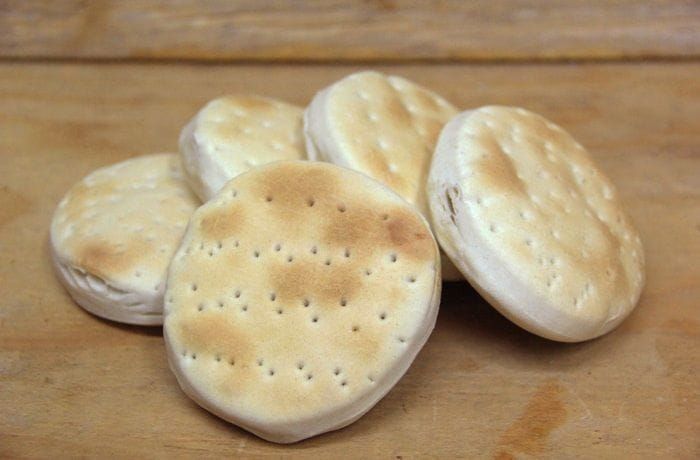
- 2 thick hallulla rolls, split lengthwise
- 2 tablespoons mayonnaise
- 1 teaspoon vegetable oil
- 1 teaspoon butter
- 1 pinch black pepper
- ½ teaspoon sweet paprika (pimentón)
Instructions
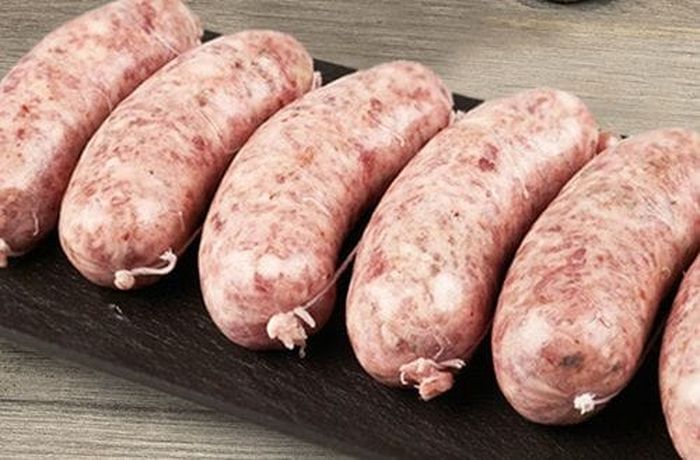
- Make the chorizo paste: Remove the casing from the smoked chorizo and crumble the meat into a skillet with 1 teaspoon of vegetable oil. Cook over medium-low heat, stirring continuously with a wooden spoon, until the chorizo softens and breaks down into a smooth, homogeneous paste — about 8 to 10 minutes. The fat should render slowly into the meat rather than splattering. Season with a pinch of black pepper and sweet paprika to taste.
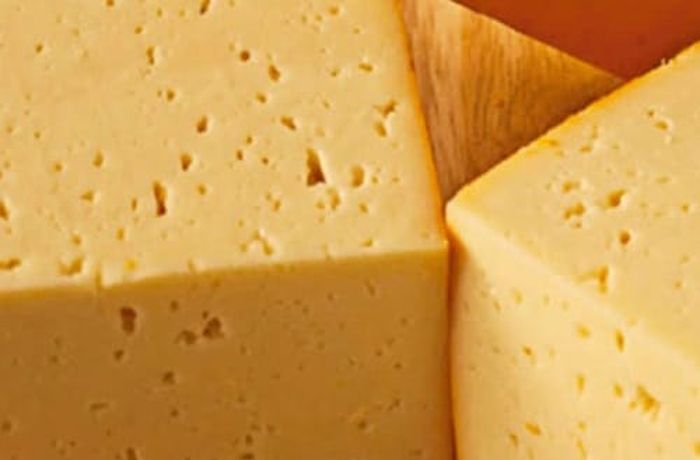
- Assemble and melt the cheese: Preheat the oven to 180°C (356°F). Split the hallulla rolls lengthwise. Spread the hot chorizo paste evenly over the cut surface of each roll base, going almost to the edges. Lay one slice of gouda cheese on top of the paste, making sure it stays within the bread edges so it does not drip onto the baking sheet. Transfer to the oven and bake for 3 minutes, or until the cheese is fully melted and beginning to bubble at the edges.
- Finish and serve: Remove from the oven. Add one tablespoon of mayonnaise directly over the melted cheese on each sandwich. Cover with the top half of the hallulla and press gently. Serve immediately — the contrast between the hot, melted interior and the cool mayonnaise is part of the experience. In Punta Arenas, choriqueso is traditionally accompanied by a glass of leche con plátano (banana milk).
Additional Tips
Use the Right Chorizo — and Cook It Slowly
The quality of the chorizo paste depends entirely on the chorizo itself and on the patience of the cook. Use artisan smoked chorizo with a simple ingredient list — the fewer the additives, the more cleanly the meat breaks down into a smooth paste. If the chorizo contains too many fillers or binders, it will crumble instead of cohering. Cook exclusively over medium-low heat: high heat fries the outside of the chorizo pieces before the inside softens, producing a dry, granular texture rather than the creamy paste that defines an authentic choriqueso.
Butter the Hallulla Before Assembling
Some Punta Arenas versions include a thin layer of butter spread on the cut surface of the hallulla base before adding the chorizo paste — this creates an additional fat barrier that prevents the bread from absorbing the chorizo’s rendered grease and turning soggy. It also adds flavor. If using this technique, spread the butter on the untoasted cut surface first, then add the chorizo paste directly on top. The butter listed in the ingredients is for this step.
Add Merkén for the Magallanic Variant
Several local versions of choriqueso in Punta Arenas — including some served at the famous Kiosko Roca — finish the sandwich with a pinch of merkén (smoked Mapuche chili) either stirred into the chorizo paste during cooking or sprinkled over the mayonnaise before closing. The merkén adds a distinctly southern Chilean dimension to the flavor — smoky, mildly spicy, and aromatic — that complements the richness of the chorizo and cheese.
| Component | Standard | Substitute | Notes |
|---|---|---|---|
| Chorizo | Artisan smoked (Argentine-style) | Spanish smoked chorizo (chorizo ibérico) | Avoid pre-cooked or cured varieties — they do not make paste |
| Cheese | Gouda | Chanco, mozzarella | Avoid aged hard cheeses or processed slices |
| Bread | Thick hallulla | Ciabatta roll, flatbread roll | Must be dense enough to hold without collapsing |
| Heat | None (standard) | Pinch of merkén or ají | The Kiosko Roca variant often includes merkén |
Frequently Asked Questions (FAQs)
Can I use a different bread instead of hallulla?
Yes — ciabatta rolls or any dense flat roll that can be split and hold the paste without getting soggy work well. Avoid soft burger buns or sandwich bread. The hallulla used in Punta Arenas is slightly smaller and thicker than the standard Chilean variety, with a denser crumb that holds up under the filling.
What type of chorizo works best for this recipe?
Artisan smoked chorizo with minimal additives — Argentine-style is the traditional choice in Patagonia. The chorizo must be raw and smokeable, not pre-cooked or cured for slicing. The simpler the ingredient list, the smoother the finished paste.
Can the chorizo paste be made in advance?
Yes. The paste keeps in the refrigerator for up to 3 days. Spread it cold onto the hallulla and it will warm through during the 3-minute cheese-melting step in the oven — no need to reheat separately.
What cheese melts best for choriqueso?
Gouda melts smoothly and evenly without releasing excessive oil. Chanco (Chilean semi-soft) is the closest traditional alternative. Mozzarella works for a stretchier melt. Avoid aged hard cheeses or processed cheese slices.
What Is Chilean Choriqueso?
Choriqueso is a hot sandwich specific to the Magallanes Region of southern Chile — particularly the city of Punta Arenas — built on the combination of smoked chorizo cooked into a spreadable paste, melted cheese, and mayonnaise, served on a hallulla roll. It is a direct evolution of the Argentine-Chilean choripán (grilled chorizo on bread) adapted to the extreme southern climate: instead of grilling the whole chorizo over fire — difficult in a wind-battered Patagonian city — the sausage is removed from its casing and cooked down into a rich, warming paste that can be prepared indoors and assembled quickly.
History and Origin of Choriqueso in Punta Arenas
The choriqueso emerged in Punta Arenas between the 1970s and 1980s at street kiosks and small local restaurants catering to workers and residents who needed inexpensive, filling food suited to the cold climate. The Kiosko Roca — a landmark street food stand in Punta Arenas that has been serving choriqueso for decades — is widely credited with establishing the canonical version of the sandwich: smoked chorizo paste, melted cheese, mayonnaise, hallulla. Its popularity spread through the city and the broader Magallanes Region, and today choriqueso is considered an inseparable part of the local food identity, as distinctive to Punta Arenas as the Magellanic penguin and the Strait of Magellan.
Did You Know?
Punta Arenas (population approximately 130,000) is the southernmost city of its size in the world and the administrative capital of Chile’s Magallanes and Chilean Antarctica Region. Its food culture has been shaped by the extreme geography and climate, by successive waves of immigration — Croatian, British, Spanish, and German settlers all contributed to the local culinary identity — and by the traditional industries of sheep ranching, fishing, and Patagonian agriculture. The choriqueso reflects all of these influences: the smoked chorizo tradition of European settlers, the sheep-farming culture that made fatty, protein-rich food a practical necessity, and the ingenuity of adapting continental street food to local conditions.