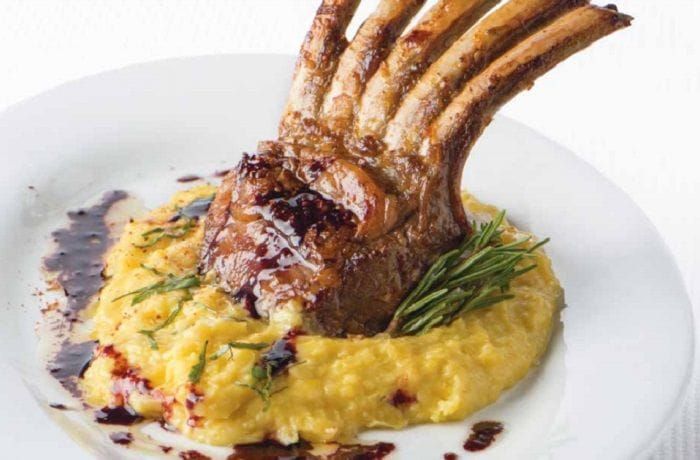
Chilean lamb chops with corn pastelera (chuletas de cordero con pastelera de choclo) are made by marinating a rack of lamb with merkén, garlic, and olive oil for 3 hours, searing the chops in a hot pan until golden, and serving them over a creamy corn pastelera with a Carménère wine reduction — a Chilean celebration dish that serves 6 people.
The combination of seared lamb, sweet corn paste, and a spiced wine reduction is one of the most elegant expressions of Chilean fine-dining tradition: three distinct preparations — the chops, the pastelera, and the sauce — each cooked separately and brought together at plating to create a restaurant-quality result achievable at home.
How to Make Chilean Lamb Chops with Corn Pastelera?
The three preparations — lamb chops, pastelera de choclo, and Carménère reduction — run in parallel once the lamb has marinated. The pastelera takes the longest active cooking (30 minutes of constant stirring) and can be started while the lamb finishes marinating. The wine reduction takes 15 to 20 minutes. The lamb itself cooks in under 10 minutes once the pan is hot. Timing all three to finish simultaneously is the key challenge and the mark of a well-executed plate.
Nutritional Information
Each serving of Chilean lamb chops with corn pastelera contains approximately 550 calories, 30 g of carbohydrates, 35 g of total fats, 25 g of proteins, 5 g of fiber, 10 g of sugars, 80 mg of cholesterol, and 150 mg of sodium. Lamb is a complete protein source rich in zinc, iron, and vitamin B12, while the corn pastelera contributes complex carbohydrates and dietary fiber.
Homemade Chilean Lamb Chops with Corn Pastelera Recipe
Prep Time: 3 hours (includes marinating)
Cook Time: 45 minutes
Servings: 6
Ingredients
Lamb Chops
- 3 kg rack of lamb (costillar de cordero), cut into individual chops
- 100 ml extra-virgin olive oil
- 3 garlic cloves, finely chopped
- 1 teaspoon merkén (smoked Mapuche chili)
- Coarse sea salt
Corn Pastelera
- 1 kg ground fresh corn (choclo molido) — or frozen corn kernels, blended
- 300 ml whole milk
- 50 g sugar
- 3 fresh basil leaves
- Salt, to taste
Carménère Wine Reduction
- 500 ml Chilean Carménère (or Syrah/Merlot)
- 60 g unsalted butter
- 50 g sugar
Instructions
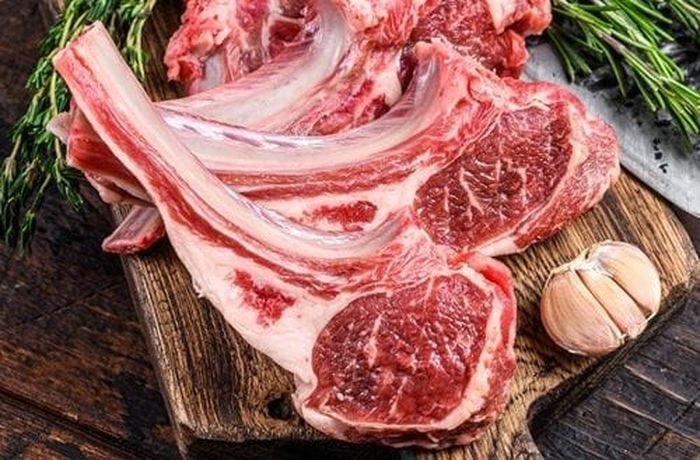
- Marinate the lamb: Combine the chopped garlic, merkén, and olive oil in a bowl. Coat the lamb chops thoroughly and marinate for 3 hours in the refrigerator. Remove from the marinade, pat dry, and season with coarse salt. Heat a large skillet over high heat, add a drizzle of olive oil, and sear the chops on each side until golden — 2 to 3 minutes per side for medium-pink, or until they reach your desired internal temperature. For extra precision, finish in a 180°C (356°F) oven for 10 minutes after searing.
- Make the corn pastelera: In a large heavy-bottomed pot, combine the milk, basil leaves, and sugar over medium heat. Stir until the sugar dissolves. Add the ground corn (or blended frozen corn), reduce the heat to low, and cook for 30 minutes, stirring constantly to prevent sticking. The pastelera is ready when it pulls away from the sides of the pot and forms a thick, smooth paste. Season with salt to taste.

- Make the wine reduction: In a medium saucepan, combine the red wine and sugar over medium-high heat. Stir to dissolve the sugar and bring to a boil. Maintain at a gentle boil, stirring occasionally, until the wine has reduced to one-third of its original volume — about 15 to 20 minutes. The consistency should coat the back of a spoon.

- Finish and serve: Remove the wine reduction from the heat and add the cold butter in pieces, whisking constantly until the sauce is smooth, glossy, and fully emulsified. To plate: spoon a generous portion of pastelera into the center of each plate, arrange the lamb chops on top, and drizzle the Carménère reduction around and over the meat. Serve immediately.
Additional Tips
Get a Proper Sear First, Then Finish in the Oven
Searing the chops in a very hot pan for 2 to 3 minutes per side before finishing in a 180°C oven gives you two results in one: a golden, slightly charred crust from the pan and a controlled, even internal temperature from the oven. This is especially important when cooking a full rack for 6 people, where keeping all chops at the same doneness simultaneously is difficult over direct heat alone.
Infuse the Milk Before Making the Pastelera
Before adding the corn, heat the milk with the basil, 1 sprig of rosemary, and 2 crushed garlic cloves until just below a simmer. Remove from heat, steep for 15 minutes, then strain. Using infused milk instead of plain milk adds a subtle herbal layer to the pastelera that rounds out the sweetness of the corn and complements the savory lamb.
Add Butter Off the Heat for the Wine Sauce
Adding butter to the wine reduction while the pan is still on the burner risks breaking the sauce — the emulsion separates into greasy and watery layers. Always remove the pan from heat first, then whisk in cold butter piece by piece. The residual heat of the reduced wine is sufficient to melt the butter; active heat is not.
| Ingredient | Standard | Substitute | Notes |
|---|---|---|---|
| Rack of lamb | 3 kg costillar | Lamb leg steaks or shoulder chops | Cooking time may vary; use a thermometer |
| Fresh ground corn | 1 kg choclo molido | Frozen sweet corn kernels, blended | Add 1 tbsp butter for extra richness if using frozen |
| Carménère | 500 ml | Syrah, Merlot, or Pinot Noir | Avoid Cabernet Sauvignon — reduction turns bitter |
| Merkén | 1 tsp | Smoked paprika + pinch of cayenne | Adjust heat level to taste |
Frequently Asked Questions (FAQs)
Can I use frozen corn for the pastelera de choclo?
Yes. Frozen sweet corn kernels work well — blend them with the milk and basil until smooth, then cook following the same method. The flavor is slightly sweeter than fresh choclo, but the result is equally creamy. If using fresh corn, grate the cobs directly for a coarser, more traditional texture.
What internal temperature should the lamb reach for medium-pink?
The ideal medium-pink internal temperature for lamb chops is 60 to 63°C (140 to 145°F). For well-done, reach 70°C (158°F) or above. Use an instant-read thermometer inserted into the thickest part, away from the bone.
What red wine can I use instead of Carménère?
If Carménère is not available, use a medium-to-full-bodied red with spiced or fruity notes — Syrah/Shiraz or Merlot are the closest substitutes. Avoid very tannic varieties like Cabernet Sauvignon, which become bitter when reduced.
How do I gratinate the pastelera without an oven?
Sprinkle granulated or brown sugar over the plated pastelera and use a kitchen torch to caramelize it until golden and bubbling — about 30 seconds per portion. This creates the same caramelized crust as broiling without transferring the dish to an oven.
What Is Chilean Pastelera de Choclo?
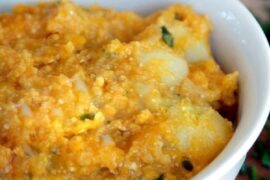
Pastelera de choclo is a traditional Chilean corn paste made by cooking ground fresh corn with milk, sugar, and basil over low heat until it forms a thick, smooth, custard-like mass. It is one of the most versatile preparations in Chilean home cooking — served as a side dish, used as the topping for pastel de choclo, or plated as a base for grilled and seared meats as in this recipe. The combination of corn’s natural sweetness with the savory richness of lamb and the tannic depth of a wine reduction is a pairing that defines central and southern Chilean festive cooking.
History of Carménère in Chile
Carménère originated in the Médoc region of Bordeaux, France, and was believed extinct after the phylloxera plague devastated European vineyards in 1867. It was rediscovered in Chile in 1991, where it had been mistakenly cultivated as Merlot for over a century. Today Chile is the world’s primary producer of Carménère, and the grape has become one of the country’s most distinctive wine identities, recognized by its characteristic notes of red pepper, dark fruit, and soft tannins — qualities that make it particularly well-suited to reductions served with red meat.
Did You Know?
The rack of lamb (costillar de cordero or carré de cordero) is cut from the first and second ribs of the animal — the part of the back adjacent to the loin. It is one of the most prized cuts for its tenderness and the natural handle provided by the exposed rib bones, which allow for easy individual portioning at the table. Chilean lamb, particularly from Magallanes and Aysén in Patagonia, is internationally recognized for its quality — the animals graze on native Patagonian grasses and herbs that influence the flavor of the meat.