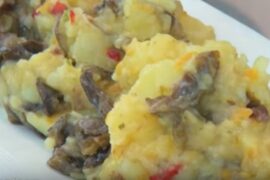
Chilean pastel de piures is a baked casserole from the coastal regions of central and southern Chile built on two ingredients: dried piure (Pyura chilensis), a marine tunicate found on Chilean and Peruvian rocky shores, and starchy boiled potatoes mashed into a thick purée. The dried piure is soaked overnight, ground, and simmered for 30 minutes with onion, garlic, carrot, and water before being combined with the potato mash, butter-enriched, seasoned, and baked in individual bowls or a single dish at 180°C until golden. Total hands-on time after soaking is 70 minutes.
Piure has an intensely marine, slightly iodine flavor with a firm texture that mellows during the long simmer. It is one of the most distinctly Chilean ingredients in coastal cooking and one of the least known outside Chile.
How to Make Chilean Pastel de Piures?
The overnight soak is not a shortcut step — dried piure is dense and leathery and requires a minimum of 10 hours in cold water to rehydrate fully. Change the water once during soaking if possible, as the first soak draws out the strongest salt and mineral residue from the drying process. After soaking, rinse the strips under running water before grinding.
The 30-minute simmer of the ground piure with sofrito and water is the step that develops the flavor of the filling. Do not rush it — the piure needs time to release its natural juices into the liquid and absorb the aromatics from the onion and garlic. The mixture should reduce to a thick, cohesive paste before being combined with the potato mash.
Nutritional Information
Per serving (based on 4 servings): approximately 310 kcal, 18 g protein, 14 g total fat (4 g saturated), 28 g carbohydrates, 380 mg sodium. Piure (Pyura chilensis) is rich in omega-3 fatty acids (EPA and DHA), vanadium — a trace mineral found in unusually high concentrations in this species — iodine, and complete protein. Potatoes contribute potassium and vitamin C. This is one of the most nutritionally complex seafood casseroles in Chilean cuisine.
Chilean Piure Sea Squirt and Potato Casserole Recipe
Prep time: 30 minutes (plus overnight soak) | Cook time: 40 minutes | Servings: 4
Ingredients
- 8 strips dried piure (Pyura chilensis)
- 6 large starchy potatoes (papas amarillas or russet)
- 1 onion, finely diced
- 1 carrot, finely grated
- 1 garlic clove, minced
- 2 tablespoons butter
- 100 ml neutral oil
- 200 ml water
- Sea salt and black pepper to taste
- Optional: grated parmesan, mozzarella, or goat cheese for topping
Instructions
- The night before: submerge the dried piure strips in a bowl of cold water and soak for at least 10 hours. Change the water once during soaking. The following day, drain and rinse the rehydrated piure thoroughly under cold running water. Pass through a meat grinder or pulse in a food processor until ground to a coarse paste. Set aside.
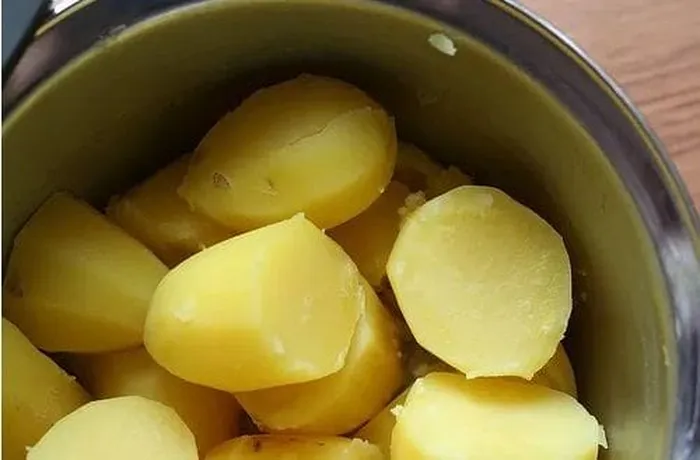
- Peel the potatoes and boil in salted water for 20 minutes until completely tender when pierced with a fork. Drain and mash immediately while hot into a thick, smooth purée — do not add liquid at this stage, as the purée needs to be firm enough to hold the casserole together. Set aside.
- Preheat the oven to 180°C (356°F). Heat the oil in a medium skillet over medium heat. Add the diced onion, minced garlic, and grated carrot. Sauté for 5 minutes, stirring, until the onion is soft and translucent. Add the ground piure and 200 ml of water. Stir to combine, reduce the heat to low, and simmer gently for 30 minutes, stirring occasionally, until the mixture has thickened and the water has largely absorbed. Optional: deglaze with a splash of white wine before adding the piure to add complexity to the filling.
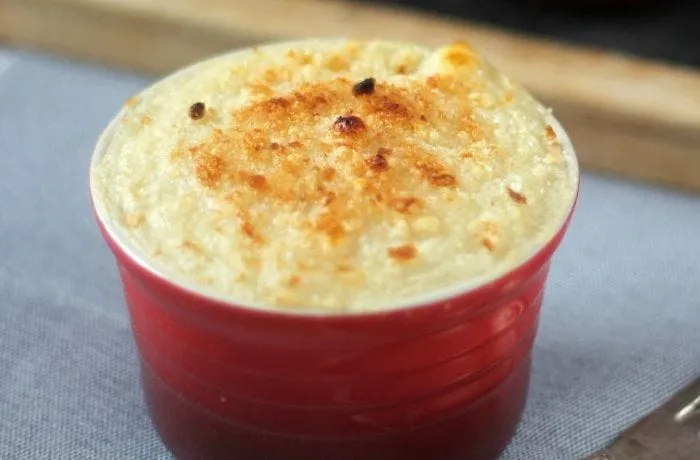
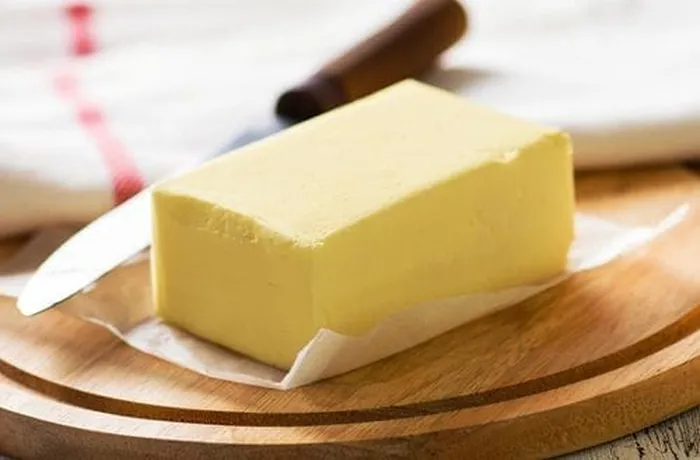
- Remove from the heat and combine the piure filling with the mashed potatoes in a large bowl. Add the butter and mix thoroughly until fully incorporated. Season generously with salt and black pepper. Distribute the mixture into individual oven-safe bowls or a single baking dish. Optionally, top with grated cheese. Cover tightly with aluminium foil and bake for 20 minutes, then remove the foil and bake for a further 10 to 15 minutes until the surface is golden. Serve hot.
Additional Tips
How to enhance the marine flavor of the filling?
Before adding the ground piure to the sofrito, deglaze the pan with 50 ml of dry white wine and let it reduce for 2 minutes. The acidity of the wine lifts the caramelized onion bits from the pan and creates a more complex base that amplifies the marine flavor of the piure without masking it. A small piece of dried kombu seaweed dissolved in the 200 ml of simmering water adds depth in the same direction. Both techniques are optional but produce a noticeably richer result.
How to achieve the best cheese topping?
A combination of grated parmesan and mozzarella in a 60/40 ratio gives the best result: parmesan provides the browned, savory crust while mozzarella supplies the melt and stretch. Crumbled goat cheese adds a tangy note that contrasts effectively with the sweet, marine flavor of the piure. Apply the cheese only after removing the foil for the final 10 to 15 minutes — adding it earlier causes it to overcook and dry out before the surface browns properly.
How to serve pastel de piures for a dinner party?
Individual portions baked in ceramic ramekins or small clay bowls (pocillos de greda) make an impressive presentation for four guests. Fill the ramekins three-quarters full, leaving room for the cheese topping to bubble without overflowing. Place the ramekins on a baking sheet lined with foil to catch any drips. Serve directly in the ramekins with a small side salad of dressed tomato and onion (ensalada chilena) to cut through the richness of the casserole.
Chilean Seafood Casseroles Comparison
| Dish | Main seafood | Base | Topping |
|---|---|---|---|
| Pastel de piures (this recipe) | Sea squirt (piure) | Potato mash | Cheese (optional) |
| Chupe de locos | Abalone | Bread + cream | Melted cheese |
| Chupe de jaiba | Crab | Bread + milk | Melted cheese |
| Pastel de papa | None (beef) | Potato mash | Potato + egg wash |
Frequently Asked Questions (FAQs)
1. Can fresh piure replace dried piure in this recipe?
Yes. Fresh piure contains significantly more moisture than the dried form and does not need overnight soaking — rinse thoroughly under cold water and drain well before grinding. Reduce the 200 ml of water in the recipe to 100 ml or less and monitor the filling consistency as it simmers. The flavor of fresh piure is more intense and iodine-forward; the dried and rehydrated version is slightly mellower.
2. What potato variety works best for pastel de piures?
Starchy, floury varieties produce the creamiest mash and hold the casserole together best: papas amarillas are the traditional Chilean choice. Russet potatoes are an excellent substitute outside Chile. Avoid waxy varieties such as red potatoes or new potatoes — they contain more moisture and less starch and do not break down into a smooth mash, which means the casserole filling will not bind properly during baking.
3. How do I prevent the casserole from drying out in the oven?
Cover the baking dish tightly with aluminium foil for the first 20 minutes, then remove it for the final browning phase. If the filling looks dry before going into the oven, stir in 2 to 3 tablespoons of vegetable broth or strained piure soaking liquid. The butter in the mixture also acts as an internal moisture barrier. Do not skip the resting period of 5 minutes after removing from the oven — it allows the filling to set and reduces surface dryness.
4. Can I make a vegan version of pastel de piures?
The piure is an animal product, so the dish cannot be fully plant-based. However, the dairy components are easily replaced: substitute the butter with extra-virgin olive oil or vegan margarine in equal amounts. Vegan melting cheese works as a topping substitute, though the browning behavior differs from dairy cheese. All other ingredients in the recipe are naturally plant-based.
5. How long does it keep and how should I reheat it?
Stored in an airtight container in the refrigerator, the baked casserole keeps for up to 3 days. Reheat in an oven preheated to 180°C for 10 minutes — this restores the texture of the potato top and re-crisps any cheese. Cover with foil during reheating to prevent further drying, removing it for the last 2 minutes if you want a crispier surface. The casserole can also be frozen before baking; thaw overnight in the refrigerator before the oven phase.
What Is Chilean Piure?
Piure (Pyura chilensis) is a marine tunicate — a sea squirt — that lives attached to rocks in the intertidal and subtidal zones along the Chilean and Peruvian Pacific coast. From the outside it appears as an irregular, rocky lump covered in a tough, grey-brown tunic. Inside, the edible flesh is bright crimson red, firm, and intensely flavored — a combination of iodine, brine, and a metallic note that distinguishes it from all other Chilean seafood. It is harvested by artisanal fishers (buzos mariscadores) along the Chilean coast from the Atacama region southward and is sold fresh at fish markets, or dried and packed for longer storage and wider distribution. Piure has been part of Chilean coastal diet since pre-Columbian times and appears in indigenous Mapuche and Lafkenche food traditions as well as in colonial-era Chilean cooking records.
History of Pastel de Piures in Chilean Cooking
The pastel format — ground or shredded seafood combined with a potato or bread base and baked — is one of the oldest categories of Chilean coastal cooking, shared across the central and southern regions wherever both seafood and potatoes were available year-round. Pastel de piures developed in coastal communities from the Bío-Bío region southward, where piure was abundant and dried piure was used as a preservation method for the off-season. The dish allowed households to use a small quantity of strongly flavored dried piure to season a large quantity of potato, stretching the seafood across multiple servings — an important economic function in fishing communities. It remains a marker of coastal Chilean identity and is particularly associated with the artisanal fishing communities of the Araucanía and Los Lagos regions.
Did You Know?
Pyura chilensis is scientifically remarkable for two reasons. First, it is one of a very small number of animal species that can accumulate vanadium — a rare transition metal — at concentrations millions of times higher than the surrounding seawater, storing it in specialized blood cells called vanadocytes. The biological function of this vanadium accumulation is not fully understood. Second, piure reproduces as a hermaphrodite: each individual produces both eggs and sperm simultaneously but cannot self-fertilize. When two piures are in close proximity, they fertilize each other. A single piure living in isolation can eventually revert to releasing both eggs and sperm into the water in an attempt at external fertilization. This unusual reproductive biology has made Pyura chilensis a subject of ongoing research in marine biology.