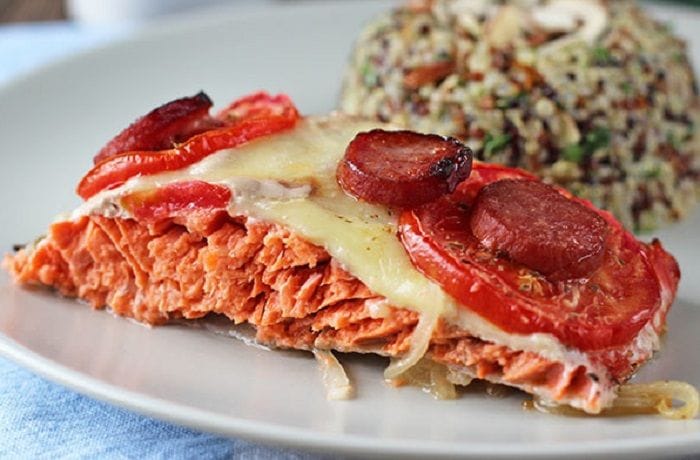
Cancato de salmón is a southern Chilean oven dish where marinated salmon is layered with creamy cheese, tomato slices, and Chillán longaniza—baked at 180°C for 25 to 30 minutes until the cheese melts and the sausage crisps over the fish. It is a traditional dish from the south of Chile that perfectly combines one of the world’s finest salmons with high-quality sausages, making it an excellent choice for an appetizer or a main course.
Nutritional Information
Each serving of cancato de salmón contains approximately 350 kcal, 32 g of protein, 18 g of fat (8 g of saturated fat), 95 mg of cholesterol, 8 g of carbohydrates, 2 g of sugars, and 620 mg of sodium. (*)
(*) Estimated values may vary depending on ingredients and portion sizes.
Chilean Salmon Cancato Recipe
Preparation: 60 minutes
Cooking: 30 minutes
Servings: 4 people
Ingredients
- 1 kg of Chilean salmon
- 450 g of skinless longaniza sausage, sliced
- 300 g of creamy cheese, sliced
- 100 ml of white wine
- 2 onions, sliced
- 2 tomatoes, sliced unpeeled
- 2 cloves of garlic
- 1 tablespoon of lemon juice
- Dried oregano
- Salt
- Pepper
Preparation
- In an elongated dish, marinate the salmon with lemon juice, garlic, salt, and pepper. Cover with aluminum foil and refrigerate for 60 minutes.
- Preheat the oven to medium-high temperature, around 180°C (356°F) for at least 10 minutes.
- On a baking tray, arrange a base of sliced onions, place the marinated salmon on top, cover with slices of creamy cheese, followed by tomato slices, sprinkle with dried oregano to taste, and finally top with slices of Chillán longaniza.
- Place the tray in the preheated oven and cook for 25 to 30 minutes, depending on the thickness of the salmon, adding the white wine about 5 minutes before the end of cooking to deglaze the onions.
- Remove from the oven and serve the cancato de salmón immediately, as an appetizer or main course accompanied by rice or potatoes.
Additional tips
Marinating time matters
The 60-minute marinade in lemon juice, garlic, salt, and pepper is essential. Lemon begins to denature the surface proteins of the salmon, which helps the cheese and longaniza adhere during baking and creates a more unified final texture. Less than 30 minutes produces a noticeably blander result.
Correct layering order
Always place the cheese directly on the salmon and the tomatoes on top of the cheese—not the reverse. The cheese melts first and acts as a moisture barrier while the tomatoes release their juices gradually on top. Reversing the order results in a watery base that steams rather than bakes the fish.
Longaniza selection
Chillán longaniza is the traditional choice for its high fat content and paprika-forward seasoning. If unavailable, any smoked pork sausage with a high meat content and low starch filler works well. Avoid mild, delicate sausages that will be overwhelmed by the cheese and tomato.
Cheese options for cancato de salmón
| Cheese | Melt quality | Flavor | Notes |
|---|---|---|---|
| Creamy cheese (queso crema) | Excellent | Mild, buttery | Traditional; most common in Chile |
| Gouda | Good | Mild, slightly sweet | Good substitute; widely available |
| Mozzarella | Good | Neutral | Melts well; less flavor |
| Provolone | Good | Sharp, salty | Stronger flavor; use in smaller amounts |
Frequently Asked Questions (FAQ)
1. Can I make cancato with a different type of fish?
Yes. Reineta (white pomfret), corvina (sea bass), and congrio (conger eel) all work well. The key is a firm, thick fillet that can hold its structure during 25 to 30 minutes in the oven without falling apart. Avoid thin, delicate fish like sole.
2. What is the difference between cancato and curanto?
Curanto is a pit or pot preparation that layers multiple ingredients—shellfish, meats, and potato-based breads—steamed together. Cancato is an oven-baked dish built around a single fish, layered with cheese, tomato, and sausage. Both are traditional to southern Chile but are structurally and technically different dishes.
3. Can I cook cancato de salmón on a grill?
Yes. Place the salmon on a piece of aluminum foil on the grill, add the toppings, and seal the foil into a parcel. Cook over medium heat for 20 to 25 minutes. The result is slightly smokier and less caramelized than the oven version.
4. What sides go best with cancato de salmón?
White rice and boiled potatoes are the most common sides in Chilean home cooking. A simple green salad with lemon dressing balances the richness of the cheese and longaniza. Crusty bread to soak up the pan juices is also traditional.
History and Origin of Cancato
Cancato is a word derived from Mapudungun “kangkatu” or “kangka” (roasted meat), which later in the Chiloé area evolved into the term “canca” (roast), “hacer canca” (to roast), and finally established “hacer cancato” as the specific activity of roasting fish. The technique of cooking fish over open fire or embers is documented among the Mapuche-Huilliche peoples of southern Chile prior to Spanish colonization. Over time, Spanish and German immigrant influence—particularly in the Chillán and Lakes Region areas—introduced sausages and cured cheese into the preparation, creating the layered oven version known today. Cancato de salmón became widely popular in the 20th century as Chilean salmon farming expanded in the Los Lagos and Aysén regions, making salmon the dominant fish for the recipe.
Did you know?
Chileans consume an average of 3.5 kilograms of salmon per capita each year (IFOP, 2020), significantly more than other fish such as tuna, which only reaches 1.7 kilograms per inhabitant.