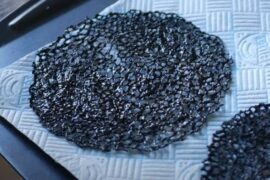
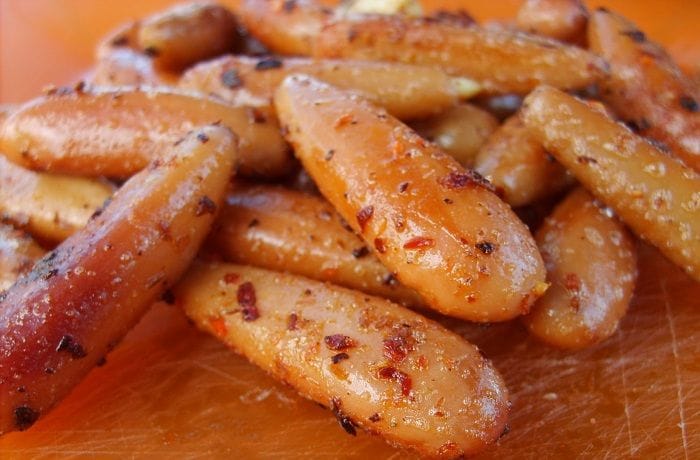
Merkén-seasoned pine nuts are a Mapuche appetizer made by boiling Araucaria pine nuts until their shells open, then sautéing them with garlic, olive oil, and merkén—Chile’s ancestral smoked chili spice—for a nutty, aromatic dish ready in under 15 minutes of active cooking. A traditional recipe and versatile fruit, highly nutritious and easy to prepare on any occasion.
Nutritional Information
Each serving of merkén-seasoned pine nuts contains approximately 250 kcal, 7 g of protein, 10 g of fat, 35 g of carbohydrates, 4 g of fiber, and 180 mg of sodium. (*)
(*) Estimated values may vary depending on ingredients and portion sizes.
Merkén Pine Nuts Recipe
Preparation: 15 minutes
Cooking: 130 minutes
Servings: 6 people
Merkén Pine Nuts Recipe
Ingredients
- 1 kg of pine nuts
- 30 ml of olive oil
- 2 cloves of garlic
- 1 tablespoon of merkén
- 1 tablespoon of oregano
- 1 teaspoon of salt
Preparation
- Wash the pine nuts thoroughly without peeling. Place in a large pot and cover with plenty of boiling water. Cook on medium heat for about 2 hours (30 to 40 minutes in a pressure cooker) or until they begin to open their shells, checking for a soft yet firm consistency.
- Drain and peel the pine nuts while still warm, removing the shell by pressing from the base. Reserve whole or split them in half horizontally.
- In a large skillet, add the olive oil and heat over medium heat. Sauté the crushed garlic, oregano, and salt, stirring for a couple of minutes with a wooden spoon. Add the pine nuts and mix well, sprinkle with merkén, stir and keep on low heat for another two minutes.
- Serve the merkén-seasoned pine nuts immediately as an appetizer or side dish to a salad or main course.
Additional tips
How to check doneness
Pine nuts are ready when their shells begin to open naturally during boiling and the interior yields a soft yet firm consistency when pressed. Overcooking makes them mushy; undercooking leaves them starchy and difficult to peel.
Peeling technique
Peel pine nuts while still warm by pressing firmly from the base of the shell. Cold pine nuts contract and become significantly harder to peel. Working in small batches directly from the pot keeps them at the right temperature.
Adjusting merkén intensity
For a milder version, use half a tablespoon of merkén and add a pinch of smoked paprika. For maximum heat, add a second tablespoon after plating. Merkén loses intensity quickly when stored, so use freshly opened packages for best flavor.
Araucaria pine nut preparation methods
| Method | Cook time | Texture | Best for |
|---|---|---|---|
| Boiling (standard) | ~2 hours | Soft, creamy | This recipe; most common |
| Pressure cooker | 30–40 min | Same as boiling | Time-saving alternative |
| Oven-roasted (180°C) | ~45 min | Drier, nuttier | Snacking without sauté |
| Rescoldo (embers) | ~30 min | Smoky, firm | Traditional Mapuche method |
Frequently Asked Questions (FAQ)
1. Where can I find Araucaria pine nuts?
Araucaria pine nuts (piñones) are available in Chilean markets from March to June. Outside Chile, they can occasionally be found in Latin American specialty stores. They are not the same as Mediterranean pine nuts.
2. Can I use store-bought merkén or should I make my own?
Store-bought merkén works well for this recipe. Traditional merkén is made from dried and smoked cacho de cabra chili mixed with toasted coriander. If unavailable, a blend of smoked paprika and a pinch of cayenne is a reasonable substitute.
3. How do I store cooked merkén pine nuts?
Store in an airtight container at room temperature for up to 2 days, or refrigerate for up to 5 days. Reheat briefly in a dry skillet over medium heat to restore their texture before serving.
4. What dishes do merkén pine nuts accompany best?
They work as a standalone appetizer, a side dish to grilled meat or fish, or a topping for salads and soups. Their earthy, smoky flavor pairs especially well with fresh goat cheese and crusty bread.
History and Origin of Araucaria Pine Nuts
Piñones—the seeds of the Araucaria araucana tree—have been a dietary staple of the Mapuche and Pehuenche peoples for centuries. The Araucaria, known in Mapudungun as pehuén, is a sacred tree in Mapuche cosmology and gave its name to the Pehuenche people, literally “people of the pehuén.” Pine nuts were traditionally gathered in autumn, then boiled, roasted in embers, or dried for winter storage, providing a concentrated source of carbohydrates and fats through the cold months. The addition of merkén—a smoked chili spice made from cacho de cabra peppers and toasted coriander—reflects the Mapuche tradition of flavoring foods with native spices. Today, piñones al merkén are prepared in homes throughout southern Chile and are increasingly available in Santiago markets from March to June.
Did you know?
In English, the Araucaria tree is colloquially known as the “monkey puzzle tree” due to the intricate shapes of its branches. The oldest specimen in Chile is located in Conguillío National Park and is estimated to be about 1,800 years old.