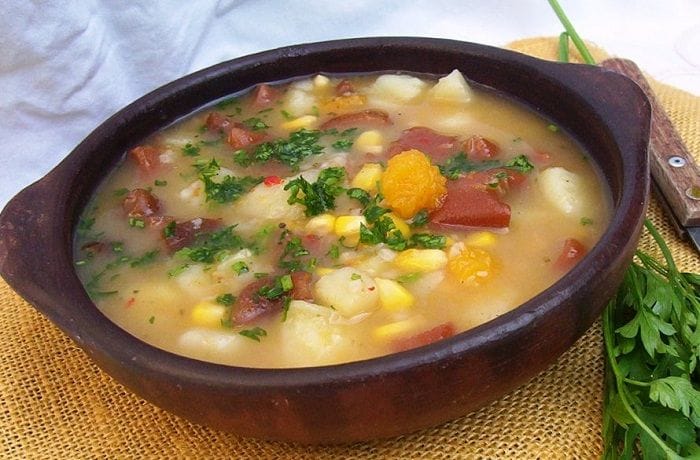
A delicious cochayuyo stew (cazuela de cochayuyo) full of the properties of this magnificent seaweed that is usually used in traditional preparations as a substitute for beef.
Nutritional Facts
Each serving of Cochayuyo Stew contains approximately 280 kcal, 42 g of carbohydrates (including 7 g of fiber and 4 g of sugar), 8 g of fat, 12 g of protein, 15 mg of cholesterol, and 420 mg of sodium. (*)
(*) Estimated values based on standard ingredients. Nutritional content may vary depending on the type of broth used.
How to Make Cochayuyo Stew
The most important aspect of preparing this stew is that the cochayuyo must be soaked for at least 12 hours, ideally the night before cooking, to achieve a soft texture that is easy to cook.
Preparation: 12 hours
Cooking: 60 minutes
Servings: 6
Chilean Cochayuyo Stew (Cazuela) Recipe
Ingredients
- 500 g of cochayuyo
- 250 g of squash
- 6 medium potatoes
- 4 cups of beef broth
- 3 tomatoes
- 2 onions
- 1 stalk of celery
- ¼ cup of oil
- ¼ cup of rice
- Vinegar
- Fresh parsley
- Oregano
- Salt
- Pepper

Instructions
- In a large container, pour 2 liters of cold water and a tablespoon of vinegar and soak the cochayuyo for at least 12 hours.
- Remove and wash the cochayuyo thoroughly in cold water and cut it into medium-sized pieces, about 3 centimeters each.
- In a large pot, add the oil, chopped onions, tomatoes, and celery. Season with salt, pepper, and oregano to taste and cook over low heat for about 30 minutes.
- Add the beef broth, chopped potatoes, and rice and continue cooking for another 25 minutes until everything is well cooked.
- Serve the cochayuyo stew immediately and garnish with chopped fresh parsley on top of the broth.
Additional Tips
- Neutralizing the Ocean Aroma: For those new to sea vegetables, the scent of boiling cochayuyo can be quite strong. Adding a splash of vinegar or a slice of lemon to the soaking water or the initial boil helps neutralize the intense “sea” aroma while preserving its health benefits.
- Achieving the Perfect Texture: The goal is an “al dente” texture, similar to a firm mushroom. While soaking for 12 hours is necessary to rehydrate the kelp, be careful not to overcook it once it is in the stew. It should have a slight snap rather than being soft or mushy.
Frequently Asked Questions (FAQ)
What does cochayuyo taste like?
Cochayuyo has a mild, savory umami flavor with a hint of saltiness from the sea. Its most distinctive feature is its texture—once cooked, it is firm and fleshy, making it a popular plant-based alternative to beef in traditional Chilean stews.
Can I make this stew vegan?
Absolutely. While the traditional recipe uses beef broth, you can easily substitute it with a rich vegetable stock. The cochayuyo itself provides enough depth of flavor to make a satisfying and 100% vegan cazuela.
Is it possible to speed up the 12-hour soaking process?
If you are short on time, you can boil the dried cochayuyo in water with a tablespoon of vinegar for 30 to 45 minutes until it softens. However, the traditional cold-soak method is preferred, as it results in a more uniform and tender texture.
Where can I find cochayuyo outside of Chile?
Cochayuyo (bull kelp) is often sold in health food stores, organic markets, or specialty Latin American grocers. Look for it in the dried seaweed or macrobiotic section. It is usually sold in dried bundles.
Are there any health precautions I should know about?
Because cochayuyo is extremely rich in iodine, individuals with thyroid conditions (such as hyperthyroidism) should consult their doctor before adding large amounts of seaweed to their diet.
Properties and benefits of Cochayuyo
Cochayuyo is rich in essential nutrients, including vitamins C and B12, as well as minerals like iodine and calcium, and is a good source of natural fiber. The bioactive compounds in cochayuyo may have antioxidant and anti-inflammatory properties, contributing to overall health.
Did you know?
Cochayuyo has been consumed in Chile for hundreds of years, being a fundamental part of Mapuche cuisine and nowadays considered a superfood.