
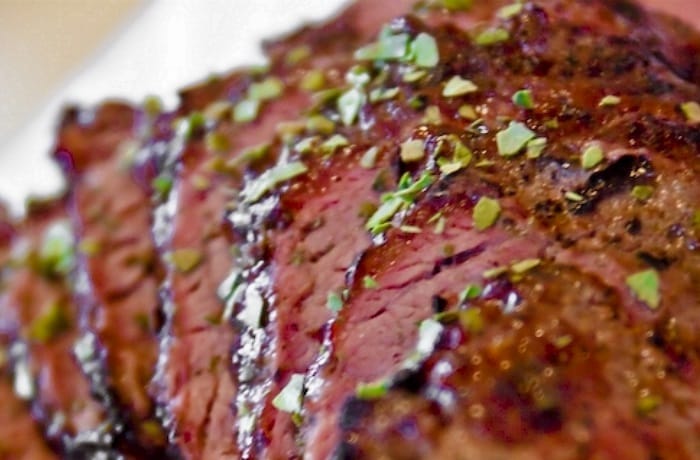
Chilean cilantro steak is a beef fillet marinated in soy sauce, garlic, and fresh cilantro, seared on high heat and finished in the oven in 30 minutes. Each serving delivers around 250 calories and 32 g of protein — a simple but deeply flavorful combination of umami from the soy and the herbaceous freshness of cilantro, served alongside homemade French fries.
How to Make Cilantro Steak?
This beef steak recipe stands out for its simplicity — it consists of marinating the steaks with cilantro, garlic, soy sauce, and olive oil for at least 2 hours, then searing on high heat to build a crust, and finishing in the oven. The sear-then-oven technique is key: it creates the exterior crust that locks in the juices while the gentler oven heat cooks the center evenly without drying the meat.
Nutritional Information
Each serving of Chilean cilantro steak contains approximately 250 calories, 4 g of carbohydrates, 12 g of fats, 32 g of protein, 1 g of fiber, and 900 mg of sodium.
Oven-Baked Cilantro Steak Recipe
Preparation: 15 minutes (plus 2 hours marinating)
Cooking: 30 minutes
Servings: 4 people
Ingredients
- 1 kg of beef steak
- 1 cup of chopped cilantro
- ½ cup of soy sauce
- ½ cup of olive oil
- 2 cloves of garlic, chopped
- Pepper

Instructions
- In a large bowl, combine the soy sauce, olive oil, garlic, chopped cilantro, and a pinch of pepper. Mix until everything is integrated. Set aside.
- Immerse and coat the steak in the marinade, ensuring the sauce is evenly distributed on all sides. Cover with plastic wrap and marinate in the refrigerator for at least 2 hours.
- In a large skillet, add a bit of olive oil, heat over high flame, and sear the steaks on all sides for 2 to 3 minutes per side to build a crust. Then, place them on an oiled baking tray and bake in the oven covered with aluminum foil for 30 minutes, removing the foil in the last 5 minutes. Remove and let rest for 5 minutes.
- Serve the steak immediately, sliced, sprinkled with fresh chopped cilantro, accompanied by freshly made French fries.
Additional Tips
Marinate for at least 2 hours — overnight produces the best result
The soy sauce and olive oil marinade needs time to penetrate the muscle fibers. Two hours is the minimum for noticeable flavor penetration in a 2.5 cm thick steak; overnight marinating (up to 12 hours) produces a more uniformly seasoned result with deeper umami and a more pronounced cilantro aroma throughout the meat. Do not marinate for more than 24 hours — the acid and salt in the soy sauce begin to break down the protein structure and produce a mushy texture.
Sear on high heat before the oven — the crust locks in the juices
The searing step is not optional. A properly seared steak develops the Maillard reaction — the browning of proteins and sugars on the surface — which creates hundreds of flavor compounds not present in unseared meat. Use a heavy skillet (cast iron is ideal) preheated until it barely begins to smoke before adding the steak. The crust also acts as a moisture barrier, significantly reducing juice loss during the oven phase.
Rest the meat for 5 minutes after cooking — cutting immediately loses the juices
During cooking, heat drives the juices toward the center of the steak. If cut immediately, those juices pour out onto the cutting board. A 5-minute rest allows the muscle fibers to relax and the juices to redistribute evenly throughout the steak. Cover loosely with aluminum foil during resting to maintain temperature. This single step dramatically improves the juiciness of the finished dish.
| Ingredient | Substitution and result |
|---|---|
| Beef steak | Chicken breast — reduce oven time to 20 minutes; same marinade works perfectly |
| Soy sauce | Tamari — gluten-free; identical flavor; or coconut aminos for a lighter, sweeter result |
| Fresh cilantro | Flat-leaf parsley — milder, no controversy; good option for those who dislike cilantro |
| Olive oil | Avocado oil — higher smoke point; better for the high-heat searing step |
Frequently Asked Questions (FAQs)
1. How long should I marinate the steak?
A minimum of 2 hours for a standard 2.5 cm steak. Overnight (8 to 12 hours) is ideal for maximum flavor penetration and a more complex, deeply seasoned result. Do not exceed 24 hours — the salt and acid in the soy sauce begin degrading the protein structure and produce a mushy texture on the exterior of the steak after that point.
2. Why does cilantro taste like soap to some people?
The soapy or metallic taste that some people experience with cilantro is a genetic trait linked to variants in olfactory receptor genes — particularly OR6A2, which is sensitive to aldehyde chemicals present in cilantro. Studies suggest that 4 to 14% of people of European descent are affected, compared to much lower rates in South Asian and Latin American populations. If you are in this group, flat-leaf parsley is the recommended substitute for this recipe.
3. Can I cook this steak on a grill instead of the oven?
Yes — and the result is excellent. Grill the marinated steaks over high heat for 4 to 5 minutes per side for medium doneness, brushing with the remaining marinade during cooking. The grill produces a smokier, charred crust that complements the cilantro and soy flavors differently from the oven version. Do not use the raw marinade that the meat soaked in — bring it to a boil for 2 minutes first to eliminate any bacteria before using as a basting sauce.
4. What cut of beef works best for this recipe?
Beef tenderloin (filete) is the traditional Chilean choice — lean, tender, and quick-cooking. Sirloin (lomo liso) and flank steak (asado de tira) also work well; both have more fat marbling and stronger beef flavor than tenderloin. For flank steak, slice against the grain after resting to maximize tenderness. Avoid very thin cuts (under 1.5 cm) — they overcook during the oven phase before the center reaches the desired temperature.
What Is Chilean Cilantro Steak?
Chilean cilantro steak — filete al cilantro — is a beef preparation in which the steak is marinated in a soy sauce, garlic, and fresh cilantro mixture before being seared and oven-finished. It reflects the influence of Asian culinary traditions on Chilean cooking — particularly the use of soy sauce, which became a widespread pantry ingredient in Chile during the 20th century. The combination of cilantro (a cornerstone of Chilean cooking) with the umami depth of soy sauce produces a distinctly Chilean-Asian flavor profile that has made this dish a popular weeknight preparation across the country.
History of Cilantro Steak in Chile
Cilantro has been one of the most essential herbs in Chilean cooking since the colonial period, introduced by Spanish settlers who brought seeds from the Iberian Peninsula, where cilantro had been used since Roman times. The herb became so thoroughly integrated into Chilean cuisine that it appears in virtually every savory preparation — from cazuela to empanada filling to pebre (the quintessential Chilean condiment). The addition of soy sauce to Chilean cooking reflects the influence of Chinese and Japanese immigration in the late 19th and early 20th centuries, which introduced soy-based condiments to Chilean pantries. The filete al cilantro emerged as a natural convergence of these two influences — the traditional Chilean herb and the adopted umami ingredient — producing a marinade that has become one of the most popular home cooking preparations for beef steak in the country.
Did You Know?
Cilantro is an aromatic herb widely used in the cuisine of various cultures. Some people love its taste, while others find it polarizing due to its unique flavor profile — a genetic difference in olfactory receptor genes that makes the aldehydes in cilantro smell soapy rather than herbal to 4 to 14% of the population, particularly those of European descent.