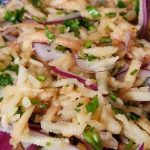
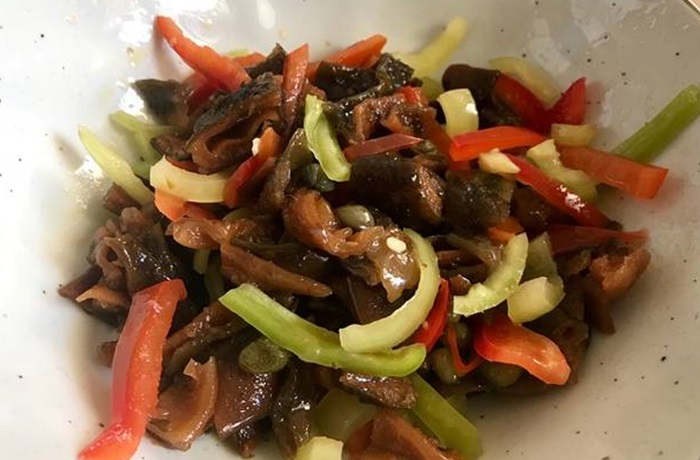
Cochayuyo is a key seaweed in Chilean cuisine that takes on a modern and nutritious twist when sautéed with fresh vegetables, using a delicious Asian-inspired technique that preserves both its benefits and flavor.
How to Make Sautéed Cochayuyo?
To make this dish, cochayuyo is first hydrated and cooked until tender, then sautéed with a variety of vegetables such as onion, carrot, and zucchini, and seasoned with traditional Chilean spices like merkén.
Nutritional Facts
Each serving of sautéed cochayuyo with vegetables contains approximately 120 kcal, 4 g of protein, 3 g of total fat (0.5 g saturated fat), 0 mg cholesterol, 20 g of carbohydrates, 5 g of sugars, and 400 mg of sodium.
Chilean Sautéed Cochayuyo with Vegetables Recipe
Prep time: 15 minutes
Cook time: 30 minutes
Servings: 4
Ingredients
- 200 g dried cochayuyo
- 2 tablespoons olive oil
- 2 garlic cloves, minced
- 1 onion, thinly sliced
- 1 carrot, julienned
- 1 zucchini, cubed
- 1 teaspoon merkén
- 1 teaspoon cumin
- 1 lemon
- ½ red bell pepper, sliced
- ½ green bell pepper, sliced
- Fine sea salt
- Black pepper
Preparation Steps
- Rinse the cochayuyo under cold water to remove impurities. Soak in cold water for at least 8 hours or overnight. Drain and boil in salted water for about 20 minutes or until tender. Drain and cut into strips or small pieces.
- Heat the olive oil in a large skillet over medium-high heat. Add the onion and garlic, sautéing until translucent. Add the carrot, bell peppers, and zucchini, and sauté for 5 to 7 minutes until al dente.
- Add the cochayuyo and mix well with the vegetables. Season with merkén, cumin, salt, and pepper to taste. Sauté everything together for another 5 minutes to let the flavors blend. Optionally, drizzle with lemon juice before serving for a fresh touch.
Additional Tips
- It’s crucial to maintain a high, steady temperature while sautéing the cochayuyo. Make sure to preheat the skillet well before adding oil, and avoid overcrowding it—sauté in small batches if needed.
- A splash of soy sauce or tamari (for a gluten-free option) can enhance the umami flavors of the cochayuyo and vegetables, adding depth without overly salty ingredients.
Origin of the Stir-Fry Technique
Stir-frying originates from Chinese cuisine, specifically from the technique known as wok hei, which involves cooking at high heat in a wok. It became globally popular for its speed and ability to preserve nutrients while intensifying flavors.
Did You Know?
The name “cochayuyo” comes from Quechua, where kucha means lake or sea and yuyu means plant—literally, “plant of the sea.” It is an excellent source of dietary fiber, protein, calcium, iron, and iodine.