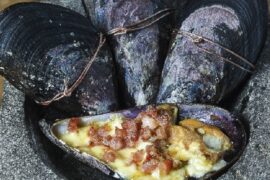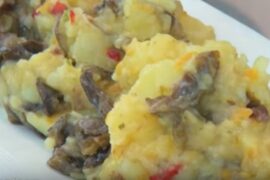
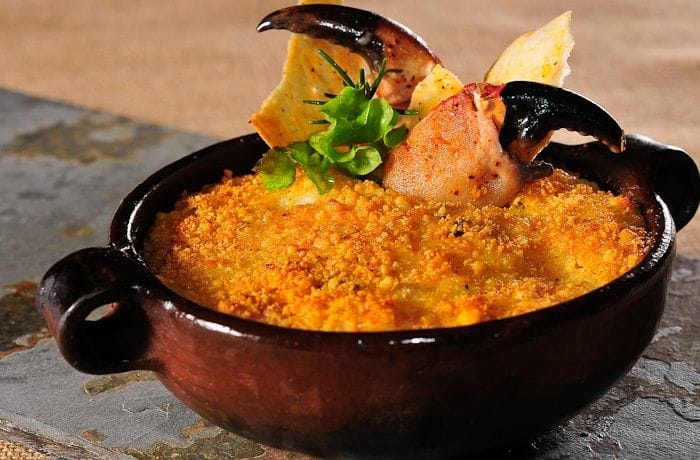
Chilean crab pie — pastel de jaiba — is a baked coastal classic: shredded crab meat mixed with soaked marraqueta bread, cream, sautéed onion, and Parmesan, portioned into clay molds and baked golden in 60 minutes. One of the most celebrated seafood dishes on the Chilean coast, each serving delivers around 350 calories and the unmistakable combination of sweet crab and smoky merkén that defines this preparation.
How to Make Homemade Crab Pie?
The key to crab pie is the bread step: marraquetas are soaked in milk until fully saturated, then partially drained and added to the crab mixture. The amount of residual moisture in the bread determines the final consistency of the pie — too dry and the filling cracks; too wet and it never sets. Crab, whether fresh, processed, or frozen, is widely available in Chilean markets and supermarkets year-round.
Nutritional Information
Each serving of Chilean crab pie contains approximately 350 calories, 25 g of carbohydrates, 18 g of fats, 28 g of protein, 2 g of fiber, and 800 mg of sodium.
Chilean Crab Pie Recipe
Preparation: 30 minutes
Cooking: 30 minutes
Servings: 4 people
Ingredients
- 500 g of shredded crab meat
- 300 ml of milk
- 150 ml of cream
- 100 g of butter
- 8 crab legs
- 2 cloves of garlic
- 2 marraquetas (Chilean bread rolls)
- 1 large onion
- Grated Parmesan cheese
- Aji de color (red chili pepper paste)
- Merkén (smoked chili pepper seasoning)
- Sea salt
- Pepper
Instructions
- Peel and finely chop the onion and garlic into small cubes and set aside.
- In a medium skillet, heat and melt 50 grams of butter. Add the chopped onion and garlic, and sauté over medium heat until the onion becomes translucent. Season with salt and add aji de color or merkén to taste.
- Crumble the marraquetas and soak them in a bowl with milk for about 15 minutes. Press the bread to remove excess milk while keeping a high level of moisture. Discard any hard pieces of crust. The final consistency of the pie will depend on this step.
- Carefully shred the crab meat, removing any remaining bits of shell, and mix it with the soaked bread and the sautéed onion. Add the cream and 3 or 4 tablespoons of grated cheese. Taste and adjust the seasoning if necessary.
- Preheat the oven to 180°C (356°F) for at least 10 minutes.
- Place the mixture into 6 small clay molds, approximately 10 cm in diameter. Cover with grated Parmesan cheese and butter. Arrange the molds on a baking tray and place them in the preheated oven for about 15 minutes. Then increase the temperature to 200°C (392°F) to brown the top. Remove from the oven and let rest for a minute.
- Serve the crab pie immediately, piping hot, garnished with the remaining crab legs.
Additional Tips
The bread soaking step determines the final consistency — this is the most critical technique
Soak the crumbled marraquetas in milk for a full 15 minutes until completely saturated, then press with your hands to remove excess liquid while leaving the bread visibly moist — not dripping, not dry. If too much milk is squeezed out, the filling will crack and dry in the oven. If too little, the mixture will be wet and will not hold its shape when portioned. The soaked bread also distributes flavor evenly through the filling and provides the binding structure that holds the crab and cream together during baking.
Use frozen crab meat correctly — thaw for 24 hours and drain thoroughly
If using frozen crab meat, transfer it from the freezer to the refrigerator 24 hours before preparation and allow it to thaw completely in its sealed packaging. Once thawed, open the package over a strainer and allow all excess liquid to drain for at least 15 minutes before using. Water from frozen crab that is not removed will dilute the filling and prevent it from achieving the firm, creamy consistency of the traditional recipe. Fresh crab is always the preferred option when available — the flavor is more pronounced and the texture is firmer.
Make it in a Thermomix for a faster, hands-off result
The Thermomix version produces an equally excellent result: chop the marraquetas at speed 8, then the onion and garlic at speed 5. Cook with butter at 100°C for 5 minutes at speed 1. Add the crab, milk, cream, aji de color, merkén, salt, and pepper and cook at 90°C for 15 minutes at speed 1. Transfer to an ovenproof dish in alternating layers with Parmesan and breadcrumbs, finishing with cheese on top. Bake at 180°C for 25 minutes.
| Ingredient | Substitution and result |
|---|---|
| Crab meat | Shrimp or langoustine tails — milder flavor; same technique and quantities |
| Marraqueta bread | Any dense white bread (baguette, sourdough) — same soaking technique; remove crusts |
| Parmesan cheese | Gruyère or Gouda — meltier, less sharp crust |
| Merkén | Smoked paprika + pinch of cayenne — similar smoky heat; adequate substitute |
Frequently Asked Questions (FAQs)
1. What crab species is used in Chilean crab pie?
Chilean crab pie is traditionally made with jaiba — the Chilean swimming crab, principally Portunus xantusii or Cancer setosus, harvested along the Chilean coast from Arica to the Strait of Magellan. Jaiba is widely available in Chilean fish markets fresh or pre-shredded and frozen. Outside Chile, king crab, snow crab (centolla), or Dungeness crab are the closest substitutes in texture and flavor. Imitation crab (surimi) is not recommended — it lacks the flavor and moisture that define the original recipe.
2. Can I make crab pie in advance?
Yes — the filling can be prepared up to 24 hours in advance and refrigerated, covered, before baking. Portion into molds, cover with Parmesan and butter, refrigerate overnight, and bake directly from cold the next day — add 5 to 10 minutes to the baking time. The baked pie can also be refrigerated for up to 2 days and reheated covered in the oven at 160°C for 15 minutes. Do not freeze the baked pie — the bread-based filling separates on thawing.
3. Do I need clay molds or can I use standard baking dishes?
Clay molds are traditional and produce the best result — clay distributes heat evenly and retains it longer, keeping the pie hot at the table. Standard ceramic ramekins (10 cm diameter) or a single large ovenproof ceramic or glass baking dish all work well. Metal molds are the least preferred option — they conduct heat more aggressively, which can dry out the edges before the center is hot.
4. What does aji de color taste like and can I substitute it?
Aji de color — also called color chileno — is a mild red chili paste made from dried sweet-hot Chilean peppers. It has a bright red color, a slightly sweet and gently piquant flavor, and a paste-like consistency used as a sofritos base throughout Chilean cooking. The closest available substitutes are sweet Hungarian paprika paste or a mixture of sweet paprika and a small amount of tomato paste, which replicates the color and mild heat without the specific Chilean pepper character.
What Is Chilean Crab Pie?
Chilean crab pie — pastel de jaiba — is a baked seafood casserole in which shredded crab meat is combined with soaked marraqueta bread, cream, sautéed onion and garlic, and Parmesan cheese, portioned into individual clay molds and baked until golden and bubbling. It is one of the signature dishes of Chilean coastal cooking, particularly associated with the fishing communities and seafood restaurants of the central and northern Chilean coast. Though it resembles a quiche or gratin in technique, its flavor profile — dominated by sweet crab, smoky merkén, and the richness of the bread-cream base — is distinctly Chilean and represents the region’s tradition of showcasing seafood in baked, communal formats.
History of Crab Pie in Chile
The pastel de jaiba emerged from the fishing culture of the Chilean coast, where jaiba (swimming crab) has been harvested and consumed since pre-Columbian times. The Mapuche and coastal indigenous peoples of Chile developed extensive techniques for preparing seafood from the rich Humboldt Current, which makes the Chilean coast one of the most productive fishing zones in the world. The baked pie format — combining seafood with bread and dairy in a mold — reflects the influence of Spanish colonial cooking techniques on Chilean seafood tradition, merging indigenous ingredients with European preparation methods. The marraqueta bread as a binder is a specifically Chilean contribution: Chile’s iconic bread roll, used throughout Chilean cooking as a thickener, panade, and base ingredient, transforms into a creamy seafood binder when soaked in milk and combined with crab. The dish became increasingly popular throughout the 20th century as refrigeration made crab available inland, and today pastel de jaiba is found in restaurants and home kitchens across Chile, far beyond its coastal origin.
Did You Know?
Chilean crabs — jaibas — are crustaceans that live on sandy, rocky, and algae-covered seafloors, distributed all along the Chilean coast from the northern desert coast to the far south. Chile’s cold Pacific waters, fed by the Humboldt Current, are among the richest in marine biodiversity in the world — the same cold, nutrient-dense water that makes Chilean salmon, congrio, and shellfish among the most prized seafood products in South America.