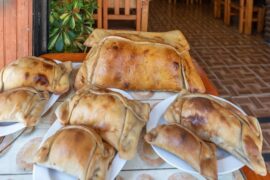
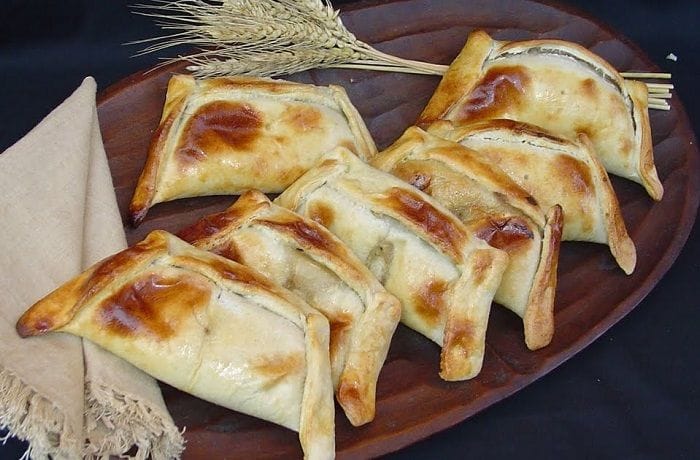
Chilean Empanadas de Pino are a version of a dish found in many Spanish-speaking countries, with different variations and formats—sweet, savory, baked, or fried. The name “empanada” is derived from the Spanish word “empanar,” which means “to enclose something in pastry or bread for cooking.”
Nutrition Facts
Each serving of Chilean Empanadas de Pino (1 large empanada) contains approximately 450 kcal, 18 g of protein, 22 g of fat, 45 g of carbohydrates, 85 mg of cholesterol, and 580 mg of sodium.
(*) Estimated values may vary depending on the size of the empanada and whether ground or diced beef is used.
How to Make Empanadas de Pino
The Chilean Pino Empanada is a baked recipe made from a dough of wheat flour, butter, and hard-boiled eggs, which is then filled with a mixture of ground beef and onions, olives, and hard-boiled eggs—a dish undoubtedly the most traditional and recognizable in Chilean cuisine.
Prep Time: 3 hours
Cook Time: 1 hour 45 minutes
Servings: 6
Ingredients
1. For the pastry dough
- 1½ kg of wheat flour
- 375 g of butter
- 3 cups of water
- 2 tablespoons of salt
- 2 egg yolks
2. For the filling
- 1 kg of ground or diced beef
- 34 black olives
- 8 hard-boiled eggs
- 2 tablespoons of parsley
- 1½ kg of onions
- 1 tablespoon of paprika
- ½ tablespoon of cumin
- ½ cup of beef broth
- Oregano
- Raisins (optional)
- Salt
- Sugar

Instructions
- Place water in a large pot and heat it. Once it boils, add finely diced onions. Boil for 10 minutes, remove from the pot, and let them cool. In a large skillet, heat oil and add the ground meat, onions, salt, and sugar. Sauté for about 3 minutes. Add oregano, parsley, and paprika.
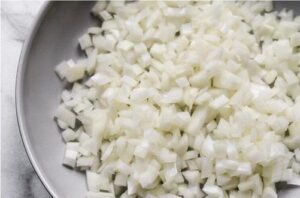
- Continue stirring while adding beef broth and two tablespoons of flour to thicken the mixture. Once the texture becomes juicy and thick, remove from heat, cool, and cover it for the next day.

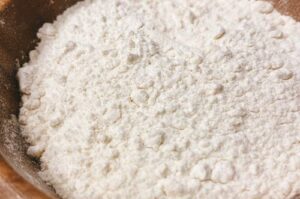
- Sift the flour onto a kneading table and create a well in the center, incorporating the butter. Dissolve two tablespoons of salt in three cups of warm water and add it gradually while kneading, mixing everything well until it no longer sticks to your fingers.
- Rest the dough for about 10 minutes and then roll it out using a rolling pin or a clean glass bottle. Cut the dough into circular shapes using an empanada mold or a knife, using the edge of a round plate as a guide. Set aside.
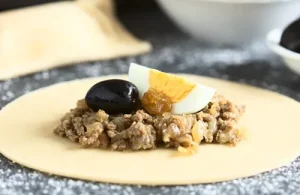
- In each dough cutout, place a quarter of a hard-boiled egg, 2 olives, and an optional raisin. Add 2 tablespoons of the beef and onion filling, then seal the empanadas by forming a semicircle and ensuring the edges are sealed well, forming a trapezoid-shaped figure.

- Mix two egg yolks with half a cup of water and spread the mixture with a brush on the surface of each empanada. Preheat the oven to 200°C (392°F) and bake for about 15 minutes or until they are golden brown. Let the baked empanadas cool slightly and serve while still warm, optionally accompanied by a glass of Chilean red wine.
Additional Tips
- You can prepare the baked empanadas with ground or diced beef according to your preference and always assemble them with the filling cold, as if it’s warm, it may break the dough.
- If you have the time and plan ahead, it’s a good idea to prepare the beef and onion filling the day before and let it rest in the refrigerator. This will allow the flavors to meld perfectly.
Frequently Asked Questions (FAQ)
1. What is the difference between “Pino” made with ground beef vs. diced beef?
Ground beef is more common for daily home cooking, but diced beef (carne picada) is considered the “gourmet” or traditional standard for festive occasions, as it provides a better bite and texture.
2. Why is it called “Pino”?
The name is derived from the Mapuche word “pirru,” which referred to a minced meat and onion mixture. By the mid-16th century, the term had evolved into “pino” in the Chilean lexicon.
3. Should I include raisins?
This is a historic debate in Chile! Traditional recipes often include one or two raisins to provide a subtle sweet contrast to the savory meat, but many modern diners prefer them without. It is entirely optional.
4. How do I get that perfect golden shine?
The secret is the egg wash—a mixture of egg yolks and a bit of water brushed generously over the dough just before it goes into the 200°C (392°F) oven.
Origin of the Chilean Empanadas
Empanadas, in their general form, can be traced back to ancient Greeks and Moors, who brought the recipe to Spain, from where it spread to America and evolved with locally inspired fillings.
Did You Know?
Since 1930, every October 4th, Chile celebrates “National Empanada Day” as an event to commemorate this incredible and delicious food; whether made with ground or diced meat, with raisins or merken, it will always be a good occasion to enjoy Chilean baked empanadas de pino.
How to adapt this recipe to a vegan or vegetarian version?
How to adapt this recipe to a gluten-free version?
How to adapt this recipe to a keto (ketogenic) version?
Recommended
- Chilean Mote con Huesillos Recipe
- Chilean “Chancho en Piedra” Sauce
- Chilean Chicken Soup (Cazuela)
- Warm Mulled Wine (Nagevado)