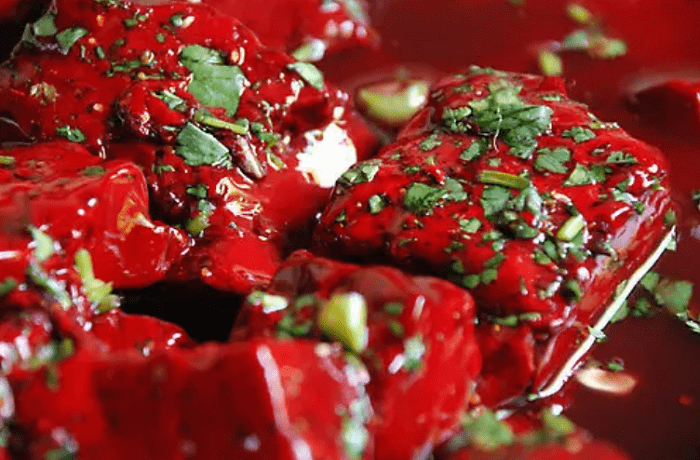
Ñachi, or ñache, is a traditional Mapuche dish from southern Chile — prepared with fresh blood from a goat or lamb, collected at the moment of slaughter and immediately seasoned with lemon juice, cilantro, and merkén. The mixture coagulates in about 10 minutes into a soft, cheese-like consistency, then cut into cubes and served alongside fresh bread and Chilean red wine.
Contents
Nutritional Facts
Each serving of ñache or ñachi contains approximately 150 kcal, 5 g of carbohydrates, 10 g of protein, 20 mg of cholesterol, and 50 mg of sodium.
How to Make Ñache or Ñachi?
Ñachi, or ñache, is a Mapuche preparation traditionally made at the start of preparing a goat or lamb for a barbecue. The blood is collected in a tray immediately after the animal is slaughtered, then seasoned and coagulated. This practice is one of the oldest culinary traditions in human history.
Prep Time: 30 minutes
Servings: 10
Ingredients
- Fresh blood from a goat or lamb
- 2 lemons
- Fresh cilantro finely chopped
- Merkén (smoked chili pepper)
- Sea salt
Instructions
- Collect the animal’s blood in a flat-bottomed tray where you have previously mixed fresh chopped cilantro, sea salt, and merkén to taste. Stir to combine. Add the juice of the lemons and let the mixture sit until it coagulates, usually no more than 10 minutes.
- Once it reaches the desired consistency, cut the mixture into small cubes of 2 to 3 centimeters using a knife. Serve the ñachi or ñache immediately, accompanied by fresh-baked bread and ideally a glass of Chilean wine.
Technical Keys for a Perfect Ñachi
Immediate Collection
The technique requires collecting the blood immediately after the animal is slaughtered into a tray that already contains salt, cilantro, and merkén. This ensures the flavors integrate before the solidification process begins.
The Role of Lemon
Lemon juice is the technical agent that accelerates and stabilizes the coagulation. Without its acidity, the mixture would not reach the firm consistency required to be cut into cubes.
Soft Cheese Texture
A well-prepared ñachi should have a solid yet soft consistency, similar to a fresh cheese. If it remains too watery, tradition holds that this is a bad omen for the preparer — in such cases, it is discarded.
The Precise Cut
Once coagulated (usually within 10 minutes), cut into small cubes of 2 to 3 centimeters. This allows the lemon and spices to coat every side of the blood pieces.
Blood-Based Dishes in World Cuisines
| Dish | Country | Blood Source | Preparation Style |
|---|---|---|---|
| Ñachi / Ñache | Chile (Mapuche) | Goat or lamb | Fresh, coagulated with lemon |
| Black pudding | United Kingdom | Pig | Cooked blood sausage |
| Morcilla | Spain / Latin America | Pig | Cooked sausage with rice or onion |
| Czernina | Poland | Duck | Sweet-sour blood soup |
| Dinuguan | Philippines | Pig | Blood stew with offal |
Frequently Asked Questions (FAQ)
1. What does ñachi actually taste like?
Although the base is blood, the predominant flavors are lemon, cilantro, and merkén. The blood provides a creamy texture and a very subtle metallic note that is balanced by the acidity and the smoky heat of the seasoning.
2. Is it safe to consume fresh blood?
Traditionally, it is consumed immediately after slaughter in rural settings. While the lemon acts as a mild natural disinfectant, its safety depends entirely on the health of the animal and the hygiene of the slaughtering process.
3. What is the significance of “Ñuke Mapu” in this tradition?
During preparation, it is customary to pour some of the blood onto the ground as an offering to Ñuke Mapu (Mother Earth). It is an act of gratitude for the animal’s life that will feed the community.
4. Why is it said that ñachi makes you sleepy?
This is due to the high concentration of iron present in animal blood. The rapid metabolism of this amount of iron can create a feeling of heaviness or somnolence after consumption.
5. What are the traditional accompaniments?
It should be served immediately after preparation, ideally accompanied by fresh-baked bread and a glass of Chilean red wine to complement its intensity.
Traditions and Consumption
As part of the preparation, some of the blood is poured into the “Ñuke Mapu” (Mother Earth). According to tradition, if the ñache turns out too watery, it is believed that the preparer will have a short life. In such cases, the ñache is discarded or fed to animals. Well-prepared ñache, on the other hand, should have a texture similar to soft cheese. When made properly, it symbolizes a long life for the preparer and good health for those who partake in the dish.
Did You Know?
Eating ñachi can induce sleepiness due to the high iron content in the animal’s blood. It is advisable for certain individuals to avoid consuming it.