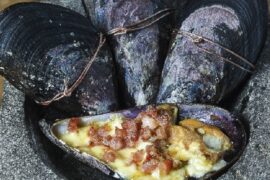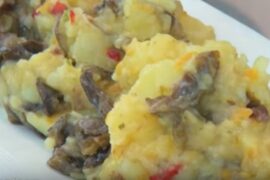
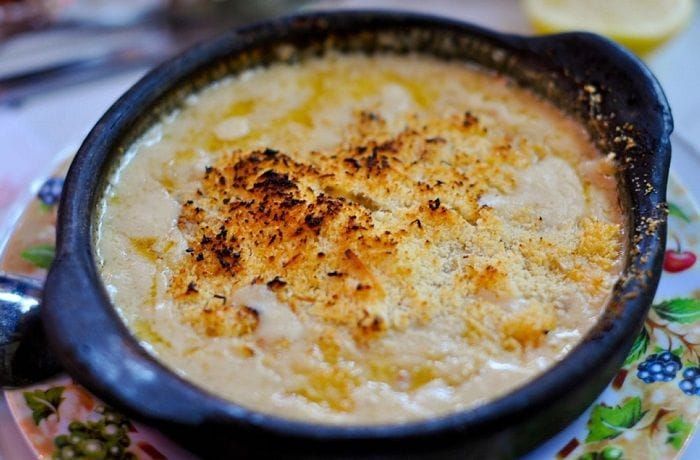
Chupe de locos is a Chilean baked abalone casserole made by tenderizing fresh abalones, simmering them in a rich bread-thickened base with milk and seafood stock, then gratinated under the broiler with parmesan until golden — ready in about 3 hours and serving 4 people.
A spectacular dish from the Chilean coast, chupe de locos brings together the briny depth of fresh abalones with a creamy, soaked-bread base that absorbs all the flavors of the sea, finished with a golden parmesan crust that makes it one of the most celebrated preparations of Chilean coastal cuisine.
How to Make Chilean Abalone Chupe?
Chilean abalone chupe begins with the careful preparation of the locos: each abalone must be beaten firmly with a rolling pin to break down the tough muscle fibers before a slow, two-hour simmer. The soaking liquid of crusty bread in milk and reserved seafood stock forms the body of the casserole, absorbing the brine and richness of the abalones as they cook together. The dish is portioned into individual clay bowls, topped with parmesan and butter, and finished under a 200°C broiler until a deep-golden crust forms.
Nutritional Information
Each serving of Chilean chupe de locos contains approximately 450 calories, 38 g of carbohydrates, 22 g of fats (12 g saturated), 25 g of proteins, 8 g of sugars, and 600 mg of sodium. Locos are a rich source of vitamin B12, vitamins A and D, calcium, iron, phosphorus, and zinc, contributing to bone and immune health.
Homemade Chupe de Locos Recipe
Prep Time: 45 minutes
Cook Time: 2 hours 20 minutes
Servings: 4
Ingredients
- 8 medium abalones (locos), fresh or frozen
- 3 crusty bread rolls (marraquetas)
- 100 ml whole milk
- 200 g grated parmesan cheese
- 50 g butter
- 1 medium onion, finely chopped
- 1 garlic clove, minced
- 2 tablespoons fresh parsley, chopped
- Olive oil
- Fine sea salt
- Black pepper
Instructions
- Prepare the abalones: Wash and clean the abalones thoroughly. If frozen, thaw in the refrigerator for 24 hours. Place on a cutting board and beat firmly with a rolling pin until the flesh softens significantly.
- Cook the abalones: Simmer the abalones in salted water for 80 minutes (or 40 minutes in a pressure cooker). Remove from heat, let cool in the cooking water, then drain and reserve the liquid. Chop the abalones into small pieces.
- Prepare the bread base: Soak the bread rolls in the milk combined with some of the reserved cooking liquid until fully softened, then blend or push through a sieve to form a smooth paste.
- Build the casserole: Sauté the onion in olive oil until translucent, then add the minced garlic and cook for one minute. Add the chopped abalones, the bread paste, parsley, and half the parmesan, along with enough reserved stock to achieve a thick, creamy consistency. Season with salt and pepper. Divide the mixture into individual clay bowls (pocillos de greda).
- Gratinate and serve: Top each bowl evenly with the remaining parmesan and dot with butter. Bake in a preheated oven at 200°C (392°F) until the surface is deeply golden. Serve immediately while hot, optionally paired with a Chilean white wine.
Additional Tips
For a Creamier Texture
Before adding the other ingredients, use an immersion blender directly in the pot to blend the soaked bread with the milk and stock into a completely smooth emulsion. This gives the chupe a velvety consistency without any lumps and integrates the bread base more thoroughly with the abalone pieces.
For a More Intense Sea Flavor
Replace the milk and part of the water with filtered abalone cooking water or a fish fumet. The concentrated iodine and mineral flavors deepen the maritime character of the dish considerably, making the final result taste closer to the traditional coastal versions of this recipe.
For Even Gratination
Ensure the parmesan layer covers the surface evenly to the edges of each bowl, and place the bowls on the highest rack of the oven. This allows the cheese to form a consistent golden crust rather than browning only in the center, which is the visual hallmark of a well-made chupe de locos.
| Ingredient | Standard Version | Substitute | Notes |
|---|---|---|---|
| Abalones (locos) | Fresh or frozen | Canned abalones | Skip cooking and tenderizing; use canning liquid as stock |
| Parmesan cheese | Grated | Gouda or mozzarella | Mantecoso + goat cheese is the traditional substitute |
| Bread rolls | Marraqueta | Thick mashed potatoes | Or cream + cornstarch for a bread-free version |
| Milk | Whole milk | Fish fumet or abalone stock | Intensifies the sea flavor significantly |
Frequently Asked Questions (FAQs)
Why is it important to tenderize the abalones (locos)?
Tenderizing breaks the tough muscle fibers of the abalone, ensuring that after prolonged cooking it becomes soft and tender rather than rubbery.
Can I use canned abalones for chupe de locos?
Yes. Canned abalones do not need cooking or tenderizing. Chop them directly and add to the sauté, using the canning liquid as part of the base stock.
What can I substitute for parmesan cheese?
You can use a blend of grated mantecoso and goat cheese, or simply gouda or mozzarella, which will still give a good gratinated crust.
Is there a bread-free version of chupe de locos?
Replace the soaked bread with thick mashed potatoes or a mixture of cream with dissolved cornstarch to achieve a similar creamy consistency.
What Is Chilean Abalone Chupe?
Chupe de locos is a traditional Chilean coastal casserole centered on the loco (Concholepas concholepas), a prized marine gastropod commonly known as the Chilean abalone or false abalone. The dish combines tenderized, slow-cooked abalone meat with a base of soaked crusty bread, milk, and the mollusk’s own cooking broth, creating a thick, creamy mixture that is baked in individual clay bowls under a gratinated parmesan crust.
History of Chupe de Locos in Chile
The chupe is a preparation with deep roots across Latin America, appearing in different forms from Peru to Argentina, ranging from thick soups to baked casseroles. In Chile, the gratinated style became the standard, reflecting the country’s long Pacific coastline and the abundance of shellfish in its cold, nutrient-rich waters. The loco, heavily regulated since the late 1980s due to overfishing, transformed from an everyday coastal ingredient into a prized, seasonal delicacy that signals a festive table whenever it appears.
Did You Know?
The Chilean loco (Concholepas concholepas) is not a true abalone but a muricid gastropod endemic to the southeastern Pacific coast. It has been subject to strict fishing quotas in Chile since 1989. The controlled harvesting periods, known as “vedas,” are what make chupe de locos a genuinely celebratory dish rather than a common weeknight meal — and what gives it its special status in Chilean coastal gastronomy.