

Chilean pulmay is a seafood pot curanto where mussels, clams, fish, chicken, smoked pork, sausages, and potatoes are layered in a sealed pot with white wine and steamed under cabbage leaves for two hours—producing a mixed platter of meats and seafood alongside a prized consomé broth served separately. It is a variation of the traditional pit curanto, prepared in a pot and preserving the cooking juices.
Nutrition Facts
Each serving of Chilean pulmay contains approximately 780 kcal, 35 g of carbohydrates (including 6 g of fiber and 4 g of sugar), 32 g of fat, 62 g of protein, 215 mg of cholesterol, and 1,150 mg of sodium. (*)
(*) Estimated values based on one large bowl serving including all proteins and one potato.
How to Make Chilote Seafood Pulmay
Pulmay, like most recipes that use sea products, accepts various variations depending on the availability of products, always fresh and cooked in a pot.
Preparation: 45 minutes
Cooking: 2 hours
Servings: 6 people
Ingredients
- 800 g of firm white fish fillet
- 750 ml of white wine
- 500 g of clean mussels in their shells
- 500 g of clean clams in their shells
- 500 g of chopped sausages
- 500 g of unpeeled shrimp
- 6 pieces of chicken
- 6 smoked pork chops
- 6 medium potatoes with skin
- 2 medium white cabbages
- 1 whole unpeeled garlic head
- Finely chopped parsley
- Salt
- Pepper

Instructions
- In a very large pot, pour half of the wine and add the garlic head cut in half; cook over medium heat until the wine starts to bubble. Add the mussels and clams on one side and at the bottom of the pot; on the other side, add the chicken pieces with the skin down and season to taste.
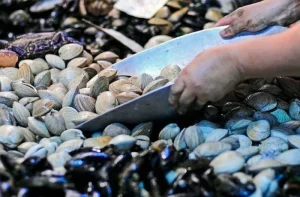
- Distribute the chopped sausage and pork chops in the same layer, then add the potatoes in a new layer and finish with another layer of fish fillet and shrimp. Pour the other half of the white wine and cover all the ingredients with several layers of cabbage leaves. Seal the pot tightly and cook everything over very low heat for about 2 hours.

- Remove from heat and serve on a large platter, distributing the chicken, potatoes, fish, and seafood, and keep the hot cooking juice aside. Serve the pulmay immediately, accompanied by the cooking juice in individual clay cups sprinkled with chopped parsley.
Expert cooking tips
The double-seal technique
To ensure no steam escapes—which is vital for the curanto flavor—place a clean kitchen towel or a layer of aluminum foil under the lid before closing the pot. This traps every drop of the wine and seafood steam inside and prevents the broth from evaporating.
Cabbage vs. nalca leaves
While cabbage is the standard for home cooks, in southern Chile large nalca (Chilean rhubarb) leaves are traditionally used. If you have access to an ethnic market, try large, thick leaves that can withstand 2 hours of steaming for a more authentic flavor.
Serving the consomé
The cooking juice is the most prized element of pulmay. Always serve it in separate clay cups (pocillos de greda). For an extra kick, add a drop of lemon juice and a small amount of ají chili to the broth before serving.
Pulmay seafood at a glance
| Seafood | Texture after 2 hours | Flavor contribution | Can be substituted with |
|---|---|---|---|
| Mussels | Tender | Briny, sweet | Razor clams |
| Clams | Firm | Oceanic, deep | Cockles |
| White fish fillet | Flaky | Mild, delicate | Salmon, cod |
| Shrimp | Succulent | Sweet, subtle | Langoustine tails |
Frequently Asked Questions (FAQ)
1. What is the difference between curanto and pulmay?
Curanto is traditionally prepared in a hole in the ground using hot stones and covered with leaves and damp sacks. Pulmay is the urban adaptation of this recipe, prepared in a pot on a stove, which is why it is also known as “curanto en olla.”
2. Can I use frozen seafood?
While fresh products are always recommended for the best texture, high-quality frozen mussels and clams can be used. Ensure they are fully thawed and rinsed before adding them to the pot to avoid excess water diluting the wine-based broth.
3. What kind of white wine should I use?
Use a dry, high-acidity white wine like a Chilean Sauvignon Blanc. Avoid sweet wines, as the pork and sausages already provide enough richness to the broth.
4. Why are the ingredients layered in a specific order?
Layering ensures that the ingredients that need the most heat are at the bottom (shellfish and chicken) while the delicate fish and shrimp steam gently at the top. The cabbage on top acts as a natural pressure lid.
5. How do I serve pulmay to a large group?
To make it easier for guests, you can use mesh bags for individual portions of seafood and meat, a technique often used in public festivities to facilitate service.
History and Origin of Pulmay
The origin of pulmay lies in curanto—one of the oldest documented cooking methods in South America, originating in the Chiloé Archipelago. Curanto traditionally refers to a pit dug in the ground and lined with hot stones, where layers of shellfish, meat, potatoes, and chapaleles are stacked and covered with pangue leaves and damp sacks to steam for hours. Spanish chronicles from the 17th century document this method among the Mapuche-Huilliche peoples of Chiloé as a pre-Columbian practice. Pulmay, or “curanto en olla,” emerged as an urban adaptation when pit cooking became impractical in cities. While less spectacular than pit curanto, pulmay preserves the defining elements of the original—layered cooking, steam-trapped juices, and the ceremonial consomé broth—as the culinary identity of Chiloé.
Did You Know?
Occasionally, pulmay can be cooked in mesh bags that hold individual portions of the cooking to facilitate service, usually in preparations open to the public.