
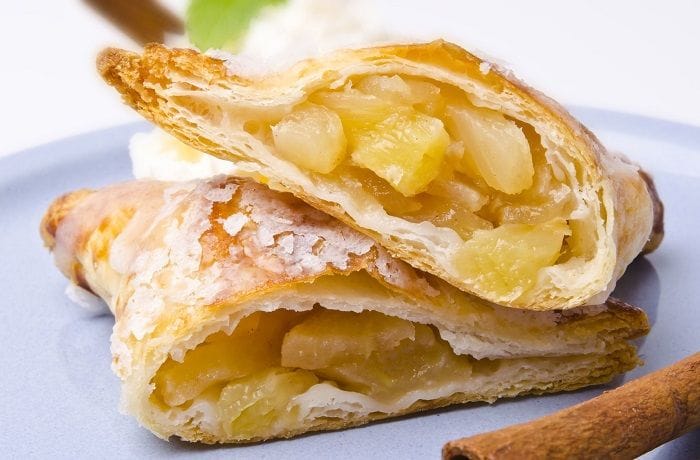
Chilean apple empanadas are a sweet, buttery pastry filled with slow-cooked cinnamon apple, dusted with powdered sugar, and served warm or at room temperature as a dessert or tea-time treat. They are especially common in southern Chile and the Chiloé Archipelago, where local apple varieties are harvested in autumn and transformed into these comforting pastries.
This recipe serves 6 people and takes about 60 minutes from start to finish. The dough is a simple fat-enriched shortcrust — no yeast, no proofing — and the filling comes together in one pot in under 15 minutes.
How to Make Chilean Apple Empanadas?
The recipe runs in two parallel tracks: a butter-enriched dough that rests while you prepare the filling, and a cooked apple filling thickened with cornstarch that must cool completely before it goes inside the pastry. Getting both timings right is the difference between empanadas that hold their shape in the oven and ones that split open and leak.
Nutritional Information
Each Chilean apple empanada contains approximately 320 kcal, 4 g of protein, 18 g of total fat, 45 g of carbohydrates (20 g of sugars), and 200 mg of sodium. Apples contribute dietary fiber, potassium, and malic acid, which aids fat digestion. (*)
(*) Estimated values. Actual nutrition may vary by ingredients and serving size.
Homemade Chilean Apple Empanadas Recipe
Prep Time: 20 minutes
Cook Time: 40 minutes
Servings: 6 people
Ingredients
- 1 kg of wheat flour
- 10 large apples
- 500 g of butter
- 200 g of white sugar
- 200 g of brown sugar
- 50 g of unsalted butter (for the filling)
- 50 ml of water
- 2 tablespoons of cornstarch
- 1 tablespoon of ground cinnamon

Instructions
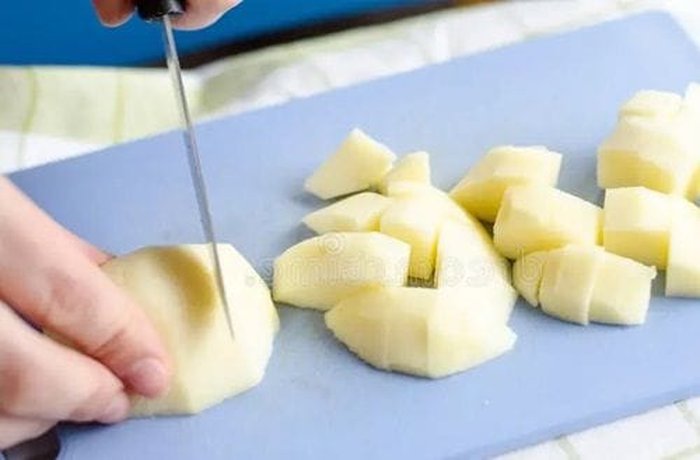
- Sift the flour into a large bowl, add the white sugar and 500 g of butter, and mix with your hands or a wooden spoon until the dough comes together evenly. Let the dough rest uncovered at room temperature. At the same time, peel the apples and cut them into medium cubes; set aside in a large pot.
- Add the brown sugar, ground cinnamon, and 50 g of unsalted butter to the pot with the apples. Cover and cook over medium heat until the apples begin to release their juice, stirring occasionally with a wooden spoon, until the pieces are shiny, tender, and well cooked through.
- Dissolve the cornstarch in the cold water until smooth, then pour it into the apple mixture, stirring gently and constantly over medium heat until the filling thickens. Remove from heat and cool to room temperature — do not fill the empanadas while the filling is still warm. On a lightly floured surface, roll the dough out thinly with a rolling pin and cut into circles using a plate or an empanada mold.
- Place a generous spoonful of cooled apple filling in the center of each circle. Fold the dough in half over the filling and seal the edge firmly with your fingertips or press down with a fork to create a crimp. Arrange the filled empanadas on a baking tray and prick the top of each one with a fork.
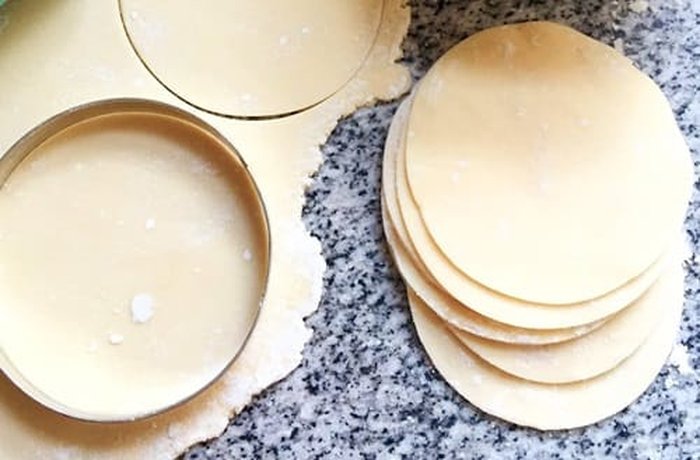
- Preheat the oven to 200°C (392°F) and bake the empanadas for approximately 20 minutes, or until golden brown. Remove from the oven and, while still hot, dust generously with powdered sugar and an optional sprinkle of ground cinnamon. Serve warm or at room temperature as a dessert or afternoon tea accompaniment.
Additional Tips
Choose Tart Apples for Better Balance
Tart, firm varieties such as Granny Smith or the small russet apples from southern Chile work best here. Their acidity contrasts with the brown sugar and prevents the filling from turning cloying. Sweeter varieties like Red Delicious break down quickly and lose structure; if that is all you have, reduce the brown sugar by 30 g and cook for slightly less time.
The Filling Must Be Completely Cool Before Filling
Warm filling creates steam inside the pastry during baking, which inflates the dough and causes the seams to split open. Make the filling first, spread it out in a shallow dish to speed cooling, and only begin assembling when it is at room temperature or slightly below. If you are short on time, refrigerate the filling for 20 minutes.
Seal Firmly and Prick the Top
The two most common reasons apple empanadas open in the oven are a poorly sealed edge and no steam vent. Moisten the edge with a little water or egg white before folding to help the dough bond. After crimping with a fork, make two or three small punctures on top with the same fork — this gives the steam a path out and keeps the empanada compact and evenly browned.
| Ingredient | Substitution | Result |
|---|---|---|
| Fresh apples | Canned apple filling | Reduces prep time significantly; skip cornstarch step |
| White + brown sugar | Coconut sugar or panela | Less refined; deeper caramel and molasses notes |
| Cornstarch | All-purpose flour | Use double the amount; less glossy result |
| Butter (dough) | Lard | More traditional; flakier, shorter pastry texture |
Frequently Asked Questions (FAQs)
Can I use any variety of apple for these empanadas?
Yes. Tart, firm varieties like Granny Smith or Fuji hold up best during cooking — they soften without becoming mushy. Sweeter varieties break down more quickly; reduce the brown sugar by 30 g if using them. In Chile, small local russet-type apples are traditionally used for their intense flavor and firm texture.
Can I fry apple empanadas instead of baking them?
Yes, though the sweet filling makes them more delicate when fried. Seal the edges very firmly and fry at 170°C (338°F) — slightly lower than savory empanadas — to avoid burning the sugar in the dough. Drain on paper towels and dust with powdered sugar while still warm.
How do I prevent apple empanadas from opening during baking?
Seal the edges firmly with a fork crimp and moisten them with a little water or egg white before folding. Pricking the top with a fork releases steam buildup inside, which is the main cause of empanadas opening during baking.
Can I freeze apple empanadas?
Yes — freeze them raw, filled and sealed, on a flat tray first, then transfer to airtight bags for up to one month. Bake directly from frozen at 200°C, adding 5 to 10 extra minutes. Fully baked empanadas can also be frozen but tend to lose some crispiness on reheating.
What drinks pair well with apple empanadas?
Hot tea with milk, freshly brewed coffee, or a Chilean licor de oro complement the cinnamon spice well. For a cold pairing, chilled homemade chicha de manzana echoes the apple flavor beautifully.
What Is Chilean Apple Empanada?
Chilean apple empanada (empanada de manzana) is a sweet, baked pastry made from a simple butter-enriched shortcrust dough filled with cooked, cinnamon-spiced apple thickened with cornstarch and sweetened with a combination of white and brown sugar. It is the dessert counterpart to Chile’s iconic savory empanada de pino, and shares the same hand-held, half-moon format. Unlike the savory version, apple empanadas are finished with a dusting of powdered sugar and served at tea time, as an after-school snack, or as a dessert at family gatherings throughout southern Chile.
History of Apple Empanadas in Chile
Apples arrived in Chile with Spanish colonizers in the 16th century and quickly adapted to the cool, humid climate of the central and southern regions, where they became one of the most widely cultivated fruits. By the 18th and 19th centuries, sweet apple empanadas had become a staple of rural cooking in the southern provinces and the Chiloé Archipelago, where small, intensely flavored local varieties ripen in late summer. The tradition in Chiloé is especially strong: apple empanadas appear at local markets, harvest festivals, and family celebrations as a fixture of the regional food culture. Today they are sold at bakeries and street stalls throughout southern Chile and remain a beloved seasonal treat.
Did You Know?
The apple tree is native to Central Asia, where its wild ancestor (Malus sieversii) can still be found growing in the mountain forests of Kazakhstan. It was cultivated for thousands of years before European colonizers brought it to the Americas in the 16th century. Chile’s long, narrow geography and diverse microclimates allowed dozens of apple varieties to develop distinct regional characteristics — the small, tart apples of Chiloé bear little resemblance to the large commercial varieties grown in the central valley, and it is the former that give traditional Chilean apple empanadas their signature flavor intensity.