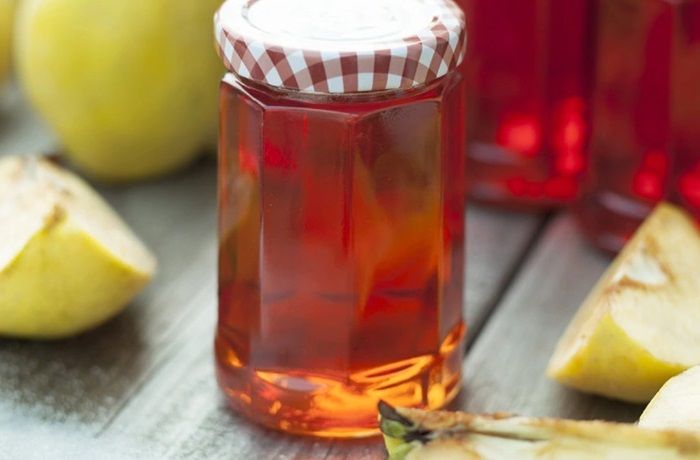
Quince jelly is a simple and easy recipe that makes the most of this aromatic fruit. It’s perfect for spreading on toast, cookies, or pairing with game meats or poultry.
How to Make Quince Jelly?
Quince jelly is a zero-waste preparation that uses the peels, seeds, and cores of the quince left over from making quince paste. It is an ideal sauce for accompaniment or can be diluted with water to prepare a juice just before consumption.
Nutritional Information
Each serving of quince jelly contains approximately 250 kcal, 0 g of protein, 0 g of total fat, 0 mg of cholesterol, 65 g of available carbohydrates, 65 g of sugars, and 5 mg of sodium.
Homemade Quince Jelly Recipe
Prep time: 15 minutes
Cook time: 60 minutes
Servings: 6 people
Ingredients
- 3 liters of purified water
- 1 kg of quince (peels and cores)
- 1 kg of white sugar
Preparation Steps
- Place the quince peels, seeds, and cores in a large pot and cover with water, ensuring it is about 3 cm above the fruit. Heat over medium heat, bring to a boil, and cook covered over high heat for about 30 minutes.
- Remove from heat and let cool to room temperature. Strain the cooking water through a fine sieve, optionally reserving the fruit remnants to make quince liqueur.
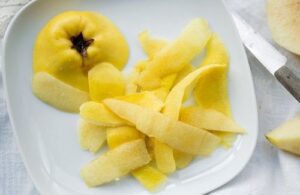
- Measure the amount of juice and add 750 grams of sugar per liter obtained. Return to the pot, bring to a boil, and simmer for 30 to 40 minutes, stirring constantly and skimming off any foam that forms on the surface.
- Once a clear liquid is obtained, pour it hot into sterilized jars and let it cool before consuming. It can be used as a spread for bread and sopaipillas, a complement to strong meats, or a base for making juice.
The Importance of Pectin
Boiling the peels, seeds, and membranes of the fruit releases pectin, a polysaccharide that acts as a gelling agent, thickener, and stabilizer in cooking and the food industry.
Did You Know?
Quince is a fruit native to Southwest Asia and has been cultivated since ancient times. It is considered a symbol of love and fertility.