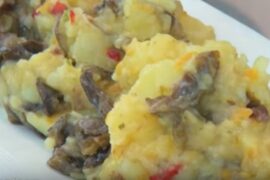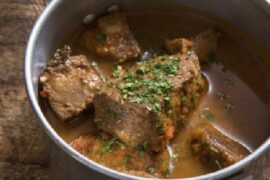
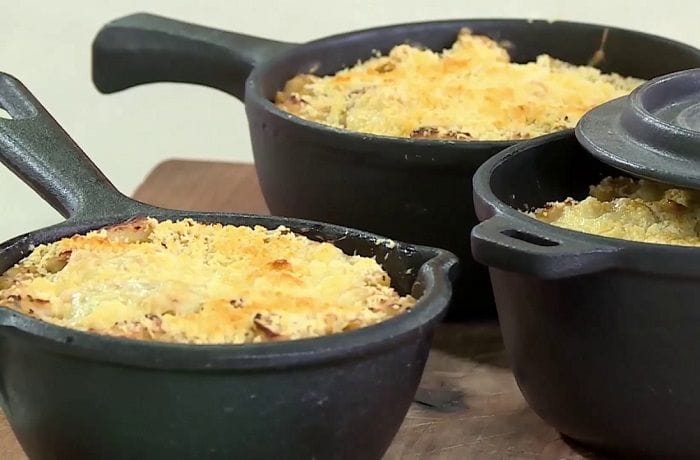
Chupe de guatitas is a Chilean tripe casserole made by pressure-cooking beef tripe until tender, then simmering it in a creamy spiced base thickened with breadcrumbs and finished with parmesan cheese under the broiler — ready in about 100 minutes.
A magnificent “chupe de guatitas” (tripe casserole) a Chilean recipe of homemade and rural food from the times when every slaughtered animal was used in some type of preparation.
How to make Chilean Tripe Casserole?
The tripe casserole is one of those grandmother’s recipes that used to be cooked for a minimum of two and a half hours until they were very tender before the widespread use of pressure cookers. An economical and tasty dish, a pure Chilean gastronomic tradition to warm the body.
Nutritional Information
Each serving of Chilean chupe de guatitas contains approximately 450 calories, 25 g of carbohydrates, 28 g of fats, 35 g of proteins, 3 g of fiber, 5 g of sugars, 180 mg of cholesterol, and 650 mg of sodium.
Chilean Chupe de Guatitas Recipe
Prep Time: 30 minutes
Cook Time: 70 minutes
Servings: 6
Ingredients
1. Tripe
- 2 ½ kg tripe
- 15 g salt (1 tablespoon)
- 2 sprigs of fresh oregano
- 1 celery stalk without leaves
- 1 onion
- 1 garlic clove
- ½ red bell pepper
- Water
2. Chupe
- 400 g breadcrumbs
- 250 g parmesan cheese
- 200 ml milk
- 200 ml cream
- 200 ml hot water
- 30 ml olive oil (2 tablespoons)
- 15 g red pepper (1 tablespoon)
- 5 g salt (1 teaspoon)
- 3 g cumin (½ teaspoon)
- 2 medium onions, diced
- 2 garlic cloves, finely chopped
- 1 tablespoon oregano
- ½ cup finely chopped parsley leaves
- Pepper

Preparation
1. Tripe
- Wash the tripe thoroughly with warm water, brush, and rinse with plenty of cold water. Set aside.
- In a pressure cooker, combine the tripe, celery, onion cut into quarters, garlic halved, fresh oregano, red bell pepper cut into strips, salt, and cover everything with cold water without exceeding ¾ of the height of the pot. Cover and heat over high heat until it starts to boil, then reduce the heat and cook for 45 minutes. Remove from heat, cool, and reserve everything in a large bowl.
- Separate the tripe from the broth and on a cutting board, chop the meat with a sharp knife into small pieces of 1 to 2 centimeters. Set aside.
2. Casserole
- In a large pot, add the oil, heat over high heat, and add the diced onions. Reduce the heat and sauté for about 3 minutes. Add the red pepper, cumin, salt, oregano, and stir well to integrate aromas and flavors.
- Add the chopped garlic, a little pepper, and cook for about 5 minutes, stirring constantly. Add a little water if necessary to prevent it from drying out.
- Add the chopped tripe, raise the heat, and stir to integrate everything. Add the chopped parsley, hot milk, and cream, gently mix with a wooden spoon, bring to a boil, and gradually add the breadcrumbs, stirring constantly, just enough to obtain a creamy and slightly thick texture.
- Carefully pour the mixture into a clay dish, gently tap on the base to settle the mixture, cover the entire surface with grated parmesan cheese, and sprinkle a pinch of red pepper.
- Place the dish in a preheated oven at 200°C (392°F) with the broiler option on and cook for about 5 minutes or until the surface is well browned.
- Serve the tripe casserole immediately, very hot, directly from the dish to share or in individual clay bowls, alone or accompanied by white rice or French fries.
Additional Tips
Reduce the cooking odor
Tripe releases a strong odor during cooking. Reduce it significantly by adding a few cloves and bay leaves to the first cooking water, or by soaking the tripe overnight in cold water mixed with a cup of apple cider vinegar before cooking.
Control the casserole thickness
Add the breadcrumbs gradually while stirring constantly. If the casserole becomes too thick, thin it with warm milk — never cold, as this can cause lumps. For a thinner result, use less breadcrumbs and a little more cream.
Nutritional value of tripe
Beef tripe provides a high content of lean protein, zinc, selenium, and calcium, supporting muscle repair and immune function. Despite its reputation, tripe is lower in fat than many premium cuts and is a traditional source of collagen in Chilean rural cooking.
| Problem | Solution |
|---|---|
| Strong cooking odor | Add bay leaves and cloves to the first cooking water, or soak tripe overnight in water with apple cider vinegar |
| Tripe still tough after 45 min | Return to the pressure cooker for 15–20 more minutes before proceeding with the casserole |
| Casserole too liquid | Stir in extra breadcrumbs, 1 tablespoon at a time, until the desired thickness is reached |
| Casserole too thick | Thin with warm milk — adding cold milk can cause lumps in the breadcrumb base |
| Cheese not browning on top | Switch to broil at 220°C for the last 5 minutes, watching closely to avoid burning |
Frequently Asked Questions (FAQs)
1. What does chupe mean in Chilean cooking?
Chupe is a term for thick, creamy casseroles popular in Chilean and Peruvian cuisine. Chupe de guatitas specifically refers to a tripe casserole thickened with breadcrumbs and finished with parmesan cheese under the broiler.
2. How do I know when the tripe is properly cooked?
Properly cooked tripe should be very soft and easy to cut with a fork. If it still offers resistance, return it to the pressure cooker for 15 more minutes. Under-cooked tripe stays rubbery and is unpleasant to eat.
3. Can I make chupe de guatitas without a pressure cooker?
Yes. In a regular pot, tripe needs 2 to 2.5 hours of simmering in salted water with onion, garlic, and herbs until fully tender. The pressure cooker shortens this to 45 minutes.
4. How do I reduce the smell of tripe while cooking?
Add a bay leaf, a few cloves, and a teaspoon of baking soda to the first cooking water. Some cooks also soak the tripe overnight in cold water with apple cider vinegar before cooking.
History of Chupe de Guatitas
Chupe de guatitas emerged from the Chilean tradition of using every part of a slaughtered animal. During the colonial period, tripe was one of the most affordable cuts available to working families, and the casserole format — thickened with bread and finished with cheese — reflects the Spanish and Italian influences on Chilean gastronomy. The dish was a common fixture in the pulperias (country inns) of rural Chile and has survived as a cherished comfort food despite tripe falling out of fashion in urban areas.
Did you know?
Tripe is also a very traditional ingredient in other American countries such as Ecuador and Mexico, where it is often called “menudo,” “pancita,” or “mondongo.”