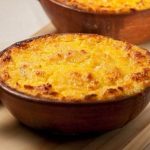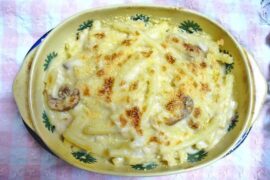

Cuttlefish chupe is a Chilean seafood casserole — processed cuttlefish mixed with soaked bread, Parmesan, evaporated milk, and white wine, then baked until the cheese is golden and bubbling. Ready in 90 minutes, each serving provides approximately 350 calories.
Economical and easy to prepare, this recipe makes the most of cuttlefish — one of the most abundant seafoods on the Chilean coast.
How to Make Chilean Cuttlefish Chupe
Cuttlefish is a white-fleshed mollusk increasingly used in Chilean cuisine due to its abundance along the coast. The key to a good chupe is cooking the cuttlefish long enough to tenderize it before blending, and draining the soaked bread well so the mixture does not become too liquid before baking.
Nutritional Information
Each serving of cuttlefish chupe contains approximately 350 calories, 22 g of carbohydrates, 14 g of fats, 35 g of proteins, 2 g of fiber, 4 g of sugars, and 680 mg of sodium.
Homemade Cuttlefish Chupe Recipe
Prep Time: 30 minutes
Cook Time: 60 minutes
Servings: 4
Ingredients
- 1 kg fresh cuttlefish
- 2 marraquetas
- 250 g Parmesan cheese
- 200 ml milk
- 100 ml evaporated milk
- 100 ml white wine
- 1 onion
- ½ teaspoon paprika
- Pepper
- Salt
Instructions
- In a large pot, add the cuttlefish, cover with boiling water and a tablespoon of salt, and cook for about 30 minutes. Drain, peel, cool, and process in a blender or with a hand blender until you get a thick, even mixture.
- In a large bowl, crumble the bread and cover it with milk until completely moistened. Mash with a fork until forming a paste. Drain well and set aside.
- In a large pot, add a splash of olive oil and sauté the diced onion for about 5 minutes. Add the processed cuttlefish, drained bread, evaporated milk, white wine, paprika, 3 tablespoons of grated Parmesan, salt, and pepper to taste. Stir to combine and cook over medium heat for a few minutes until the alcohol evaporates and the mixture thickens.
- Transfer the mixture to a large pudding mold, clay dish, or individual pots. Settle it with a few taps on the table, cover with the remaining grated Parmesan, and bake in a preheated oven at 180°C (356°F) for about 20 minutes with the grill on until the cheese is gratinated and golden.
- Serve the cuttlefish chupe immediately, piping hot, accompanied by salads or boiled potatoes.
Additional Tips
Cook the cuttlefish long enough before blending
Cuttlefish can be tough if undercooked. A full 30 minutes at a steady boil is the minimum — the flesh should be easy to peel and tender enough to crush between your fingers before you blend it. Undercooked cuttlefish results in a rubbery chupe that does not bind well with the bread and dairy.
Drain the soaked bread thoroughly before adding it
After soaking the marraquetas in milk, squeeze out as much liquid as possible before mashing. Excess milk in the bread makes the mixture too runny and prevents it from setting properly in the oven. The drained paste should hold its shape when pressed.
Use a clay dish for the best gratinated crust
A traditional clay dish (greda) retains heat evenly and gives the top layer a consistently golden crust without burning the edges. If using a metal baking dish, reduce the grill time by 3 to 5 minutes and check the surface regularly to avoid overbrowning.
| Ingredient | Substitution and result |
|---|---|
| Fresh cuttlefish | Frozen cuttlefish — thaw overnight in the refrigerator; pat dry before cooking |
| Marraquetas | Ciabatta or French bread — same crusty white bread profile, works equally well |
| Parmesan cheese | Gruyère or manchego — similar melt and saltiness; manchego adds a slightly nuttier flavor |
| Evaporated milk | Heavy cream — richer texture and deeper flavor; reduce quantity by 20% |
| White wine | Fish stock + 1 tsp lemon juice — alcohol-free option with similar acidity |
Frequently Asked Questions (FAQs)
1. Can I use frozen cuttlefish?
Yes. Thaw the cuttlefish in the refrigerator for 24 hours before cooking. Pat it dry before placing it in the pot — excess water from freezing dilutes the cooking liquid and can affect the final texture of the blended mixture.
2. What is the difference between chupe and pastel de jaiba?
Both are baked Chilean seafood casseroles with a similar base of bread, cheese, and dairy. The main difference is the protein: pastel de jaiba uses crab meat, while chupe de jibia uses cuttlefish. Pastel de jaiba tends to be chunkier; cuttlefish chupe is blended to a smoother consistency.
3. Can I prepare the chupe mixture ahead of time?
Yes. Prepare the mixture up to the point before baking, cover, and refrigerate for up to 12 hours. When ready to serve, transfer to the baking dish, top with Parmesan, and bake at 180°C for 25 minutes (5 minutes longer than usual to account for the cold start).
4. What if the mixture is too liquid before baking?
The most common cause is insufficient draining of the soaked bread. To fix it, cook the mixture over medium heat for an additional 5 to 8 minutes, stirring constantly, until it thickens enough to hold its shape in the dish. You can also add an extra tablespoon of breadcrumbs as an emergency binder.
What Does “Chupe” Mean?
Chupe is a traditional Chilean and Peruvian dish — a thick, creamy casserole made with seafood or meat, soaked bread, cheese, and dairy, then baked and gratinated. The word derives from the Quechua “chupi,” meaning broth or stew. In Chile, chupes are baked and finished under the grill, distinguishing them from looser stews or soups.
History of Cuttlefish Chupe in Chile
Chupes have been part of Chilean cuisine since the colonial period, when indigenous protein-based preparations were combined with Spanish dairy ingredients — cheese, milk, and bread — introduced after the 16th century. Cuttlefish (jibia) became a prominent chupe ingredient during the 20th century as fishing fleets expanded along the Chilean Pacific coast. Jibia is one of the most abundant cephalopods in Chilean waters and became an affordable, versatile protein for coastal communities, appearing in markets from Valparaíso to Puerto Montt.
Benefits of Consuming Cuttlefish
Cuttlefish is rich in iodine, an essential mineral for proper cell function and child development that also supports hair and nail health. It also contains vitamin E, which protects the immune system and shields cells from free radicals, and selenium, which helps prevent cardiovascular disease and delays cellular aging.
Did you know?
Cuttlefish is a great source of minerals such as calcium, selenium, and especially iodine, which helps improve metabolism and supports the circulatory system. Despite its rich flavor, cuttlefish is a lean protein — a 100 g portion contains less than 1 g of fat.
How to adapt this recipe to a vegan or vegetarian version?
How to adapt this recipe to a gluten-free version?
How to adapt this recipe to a keto (ketogenic) version?
Recommended
- Chilean creamy oyster recipe
- Homemade Chilean fish stew
- Homemade camotillos recipe
- Salmon and mandarin salad