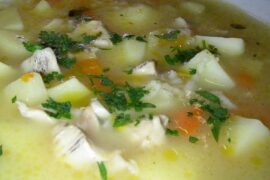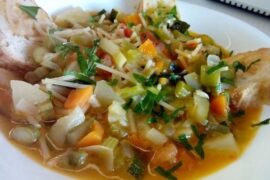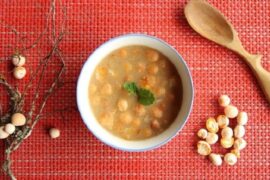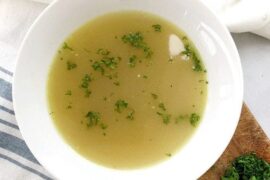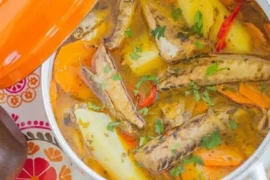

Chilean fish stew (cazuela) is typically a recipe that makes the most of available ingredients and is generally thicker than a fish broth, following the traditions of the country’s main stew varieties.
Nutrition Facts
Each serving of Chilean fish stew contains approximately 350 kcal, 45 g of carbohydrates, 10 g of fats (2 g of saturated fats), 20 g of proteins, and 400 mg of sodium.
How to Make Chilean Fish Stew?
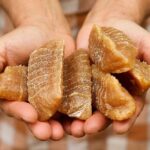
To prepare Chilean fish stew, it is recommended to use firm fish such as sea bass, usually using the cuts that are left from fillets used for other main dishes.
Prep Time: 20 minutes
Cook Time: 40 minutes
Servings: 4
Chilean Fish Stew Recipe
Ingredients
- 300 g sea bass fillets
- 200 g diced pumpkin
- 3 tablespoons oil
- 2 bay leaves
- 2 large potatoes, diced
- 2 medium carrots, sliced
- 2 garlic cloves
- 1 medium onion
- 1 teaspoon dried oregano
- 1 teaspoon paprika
- ½ red bell pepper
- ¼ cup rice
- Chopped parsley
- Salt
- Pepper

Preparation
- In a large pot, add the oil and heat over medium heat. Add chopped garlic and fry until slightly golden. Add the onion and bell pepper, stir to integrate, and keep the sauté on low heat for about 5 minutes.
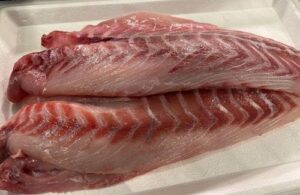
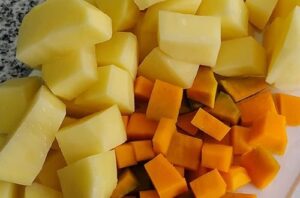
- Add sliced carrots, diced potatoes, diced pumpkin, bay leaves, oregano, and paprika. Season with salt and pepper to taste, cover with water, bring to a boil, reduce to medium heat, cover the pot, and cook for about 10 minutes. Add the fish and rice, and continue cooking until the potatoes are almost done.
- Uncover the pot, increase the heat, and cook for an additional two minutes. Taste and adjust seasoning if necessary. Serve the Chilean fish stew immediately, piping hot, adding a bit of each ingredient as is traditional. Crown the presentation with chopped fresh parsley.
Secrets for a “Fisherman’s Style” Cazuela
- The Sauté (Sofrito) Foundation: The garlic, onion, and bell pepper must be cooked on low heat until the onion is translucent. This slow sweat releases the natural sugars of the vegetables, which provides a sweet counterpoint to the saltiness of the fish.
- Paprika Activation: Never add paprika directly to the water. Adding it to the oil during the sauté stage allows its fat-soluble flavors and colors to bloom, giving the stew its characteristic amber hue and smoky undertone.
- Sequential Starch Management: Adding the pumpkin, potatoes, and carrots first—followed by the rice and fish later—is a matter of texture science. If you add the fish too early, it will disintegrate into mush; if you add the rice too late, the broth won’t achieve that velvety, starchy body that defines a cazuela.
- Fish Collagen Boost: While the recipe uses fillets, the technical “secret” is to use a concentrated fish stock made from heads and bones (fumet). This provides natural gelatin, which gives the stew a “lip-smacking” quality and a much deeper umami profile.
Frequently Asked Questions (FAQ)
1. Can I use frozen fish for this stew?
Yes, but you must thaw it completely in the refrigerator for 12 hours before cooking. This prevents excess water from diluting the broth and ensures the fish pieces maintain their structural integrity during the simmer.
2. What is the main difference between “Caldillo” and “Cazuela”?
A caldillo (like the famous Caldillo de Congrio) is usually lighter and more focused on the broth and fish. A cazuela is a “sustancioso” (substantial) meal that always includes larger pieces of potato, pumpkin, and a starch like rice or corn.
3. Why is pumpkin (zapallo) included?
Pumpkin is essential in Chilean stews not just for flavor but also as a thickener. As it cooks, some of the pumpkin softens and dissolves into the broth, adding a creamy texture and a subtle sweetness that balances the acidity of the bell peppers.
4. How do I prevent the sea bass from breaking apart?
Sea bass is a firm fish, but it is still delicate. The trick is to add it only when the potatoes are nearly done. Cook it for the final 5–7 minutes only; the residual heat of the stew will finish the cooking without destroying the flakes.
5. Can I substitute the rice?
In some southern regions of Chile, rice is replaced with chuchoca (fine cornmeal) or even small hand-made noodles. This changes the flavor profile slightly but maintains the thick, comforting consistency of the dish.
The Mosaic of the Latin American Cazuela
There are dozens of regional varieties, ranging from the iconic beef, poultry, or lamb versions in the Southern Cone to the hearty seafood stews typical of the Colombian and Mexican coasts.
Each country adapts this ancestral stew using its “star” ingredients:
- Pumpkin (Zapallo)
- Corn (Choclo)
- Cassava (Yuca)
This creates a diverse flavor map that perfectly reflects the unique biodiversity of each territory.
Did You Know?
The name “cazuela” comes from the ceramic or clay pot that has been used for centuries to cook these stews in various cultures around the world. It is characterized by its round and deep shape with handles on both sides.