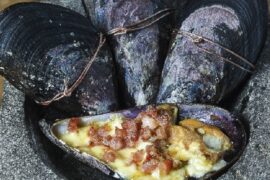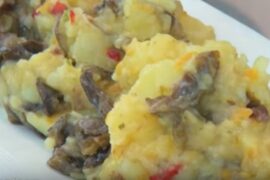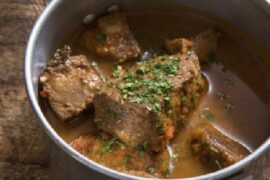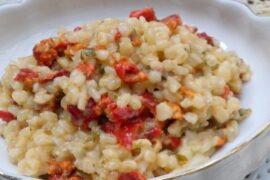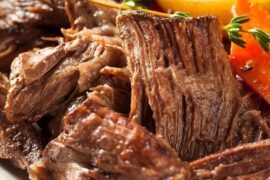
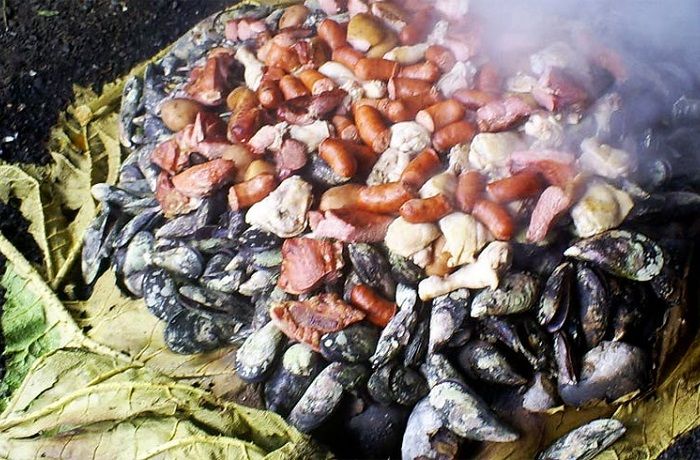
Curanto in the hole (curanto al hoyo in spanish) comes from the Mapudungun word “kurantu” (rocky place) and is an ancient technique originating from the Chiloé Archipelago that uses hot stones buried in a hole in the ground to cook food.
How to make Chilote Curanto in the Hole?
Curanto en hoyo is undoubtedly one of the most traditional dishes in Chilean cuisine and has spread throughout the country, even to Easter Island. While there may be significant variations in ingredient use, the cooking technique remains the same.
Nutritional facts
Each serving of curanto en hoyo contains approximately 650 kcal, 40 g of protein, 30 g of total fat (10 g of saturated fat), 80 mg of cholesterol, 55 g of carbohydrates (5 g of sugars), and 800 mg of sodium.
Curanto en Hoyo Recipe
Preparation: 60 minutes
Cooking: 120 minutes
Servings: 10 people
Ingredients
- 3 kg of dried mussels
- 3 kg of fresh mussels
- 3 kg of fresh clams
- 3 kg of picorocos (Chilean barnacles)
- 20 milcaos (Chilote-style potato cakes)
- 20 chapaleles (Chilote-style potato dumplings)
- 12 Chilote potatoes
- 12 short chicken drumsticks
- 12 long chicken drumsticks
- 12 smoked sausages
- 12 pieces of pork ribs
- 20 bean or pea pods
- Nalca or pangue leaves
Preparation
- Dig a hole in the ground, 1 meter in diameter and 50 centimeters deep, and cover the bottom with medium-sized stones.
- Start a fire in the hole with plenty of wood over the stones until they are red hot. Remove the coals and wood remnants, leaving only the exposed stones.
- Arrange the seafood on the hot stones: start with the picorocos, then add the dried mussels, fresh mussels, and clams. Cover with nalca leaves.
- Place all the meats, sausages, potatoes, and bean pods on top of the nalca leaves. Cover again with nalca leaves and finally add the milcaos and chapaleles, covering everything once more with nalca leaves to finish.
- Seal the hole with wet flour sacks to retain heat, then cover with the grass and soil removed from digging the hole. Keep covered and cook for 1 to 2 hours.
- Uncover the curanto and carefully remove the food, serving immediately, as it is customary to eat it around the cooking time.
Origin of Curanto
The earliest archaeological evidence of this cooking technique was identified in Ancud and dates back over 11,000 years, in the Lacuy Peninsula, at the northwest tip of Isla Grande de Chiloé.
Did you know?
Curanto provides a rich combination of nutrients from various seafood, meats, and vegetables, making it a flavorful and balanced meal.