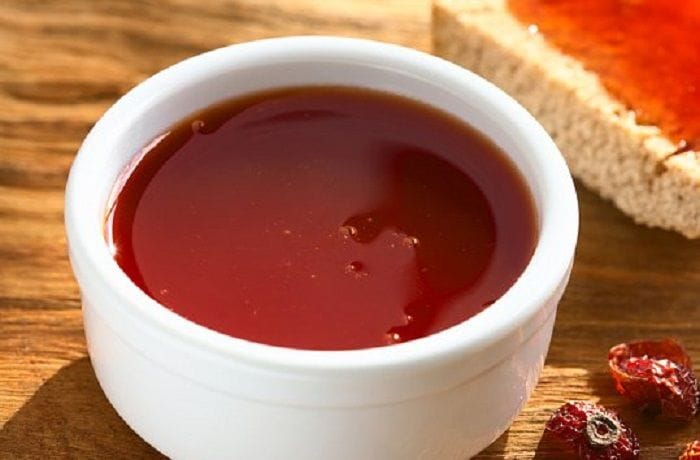
Rosehip jam is a traditional preparation in southern Chile, with a delicate and refined flavor that works well as an accompaniment or ingredient in both sweet and savory dishes, whether it’s cookies, homemade bread, desserts, or cake fillings.
Contents
Nutrition Facts
Each serving of Chilean Rosehip Jam contains approximately 400 kcal, 1 g of protein, 0.5 g of fat, 98 g of carbohydrates, 0 mg of cholesterol, and 5 mg of sodium.
(*) Estimated values may vary depending on ingredients and portions.
How to make Rosehip Jam
When preparing rosehip jam, an important tip is to always wear gloves during the process, as the fruit has a large number of small thorns, but the final result will undoubtedly be worth it.
Prep Time: 90 minutes
Cook Time: 30 minutes
Servings: 10
Ingredients
- 2 kg of rosehips
- 1 kg of sugar
- 1 tablespoon of lemon juice

Instructions
- Cut the rosehips in half and place them in a large pot covered with cold water. Bring to a boil over medium heat, reduce the heat, and simmer for about 15 to 20 minutes, stirring every couple of minutes with a wooden spoon until you get a smooth and creamy mixture.

- Remove the rosehips from the heat and strain them through a sieve and/or a very fine mesh, pressing to obtain the most pulp and remove all the seeds and hairs from the fruit. Weigh the resulting pulp and then weigh an equivalent amount of sugar.

- In a preferably copper pot, add the rosehip pulp, sugar, and lemon juice, and cook over low heat, stirring until you get the desired consistency. To test the cooking point, place a little jam on a cold plate and freeze for 2 minutes.

- Upon removal, the jam should have acquired a jelly-like consistency without being too liquid. If not, continue cooking. Store the rosehip jam in sterilized glass jars, seal, and store in a cool, dark place. Consume the rosehip jam as an accompaniment to bread, desserts, or even as a cake filling.
Additional Tips
- Meticulous Straining: The most critical step is removing the seeds and fine hairs. Using a fine mesh sieve or a combination of colanders ensures a smooth, creamy pulp. Any leftover hairs will ruin the texture and cause discomfort when eating.
- The Copper Pot Advantage: Traditionally, Chilean jams are made in copper pots. Technically, copper provides superior heat distribution, preventing the sugar from scorching and helping to maintain the vibrant color of the fruit.
- Acidity Balance: Adding lemon juice is not just for flavor; the citric acid helps the natural pectin in the rosehips to set and acts as a natural preservative to maintain the jam’s shelf life.
Frequently Asked Questions (FAQ)
Why is rosehip called the “fruit of youth”?
Technically, rosehips contain up to 20 times more vitamin C than oranges. This high concentration of ascorbic acid and fatty acids makes it a powerhouse for collagen production and skin health, which is why it is so prevalent in the skincare industry.
Can I use less sugar in the recipe?
In traditional jams, sugar acts as the primary preservative. While you can reduce it, the 2:1 ratio (fruit to sugar) used here ensures the jam reaches the correct “jelly” consistency and stays safe to eat for months when stored in sterilized jars.
What if my jam is too thick after cooling?
Rosehip pulp is naturally very dense. If it becomes too hard, you can gently reheat it with a small amount of hot water or more lemon juice until it reaches the desired spreadability, then re-jar it.
Does the hair removal process affect the flavor?
Not the flavor, but it is essential for safety and texture. The tiny hairs (trichomes) inside the rosehip are irritating to the digestive tract. The straining process is what elevates a “rustic” jam to a “refined” southern Chilean specialty.
How can I use rosehip jam in savory cooking?
Because of its high acidity and deep flavor, it works beautifully as a glaze for game meats (like wild boar or venison) or paired with strong cheeses like Camembert or aged Manchego.

Did You Know?
Rosehip is widely known worldwide as the “fruit of youth” due to its extensive use in skincare products for all types of skin.