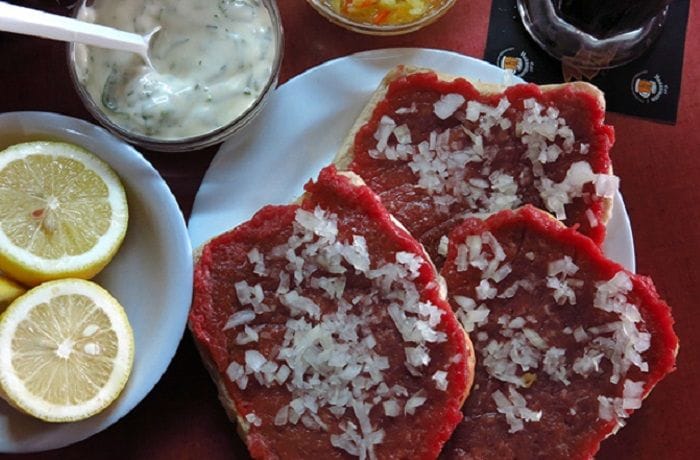
Valdivian Crudo (Crudo Valdiviano) is more than just a dish; it’s a culinary landmark of southern Chile. Born from the intersection of German heritage and local Patagonian ingredients, it represents the perfect “once” (afternoon snack) for those rainy Valdivian afternoons.
Nutrition Facts
Each serving of Valdivian Raw Meat (Crudo) contains approximately 584 kcal, 32 g of protein, 37 g of fat, 28 g of carbohydrates, 100 mg of cholesterol, and 574 mg of sodium.
(*) Estimated values may vary depending on ingredients and portions.
How to Make Valdivian Raw Meat
A good afternoon snack with a couple of raw meat dishes, plus a low-fat dark beer (black or pink beef) and an apple kuchen will help you remember why you’ll want to return to Valdivia time and time again.
Preparation: 30 minutes
Cooking: 5 minutes
Servings: 4 people
Ingredients
1. Raw Meat
- 500 g of ground beef
- 8 slices of sandwich bread
2. Accompaniments
- 1 large onion, chopped
- 2 dill pickles, chopped
- 2 lemons, quartered
- 1 green chili, chopped
- Old-fashioned mustard
- Olive oil
- Salt
- Pepper
3. Sauce
- 120 g of homemade mayonnaise
- 2 tablespoons of natural yogurt
- 2 tablespoons of cream
- 1 tablespoon of chopped cilantro
- 1 tablespoon of chopped chives
- Salt
Instructions
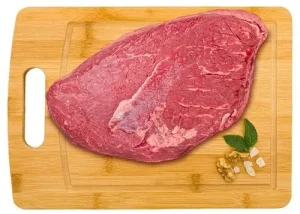
- Remove any excess fat with a sharp knife, and in a food processor or hand blender, grind the meat until smooth and homogeneous. Reserve in the refrigerator. In a medium bowl, add the cream, homemade mayonnaise, natural yogurt, cilantro, chives, a little olive oil, and salt to taste. Mix all the ingredients with the help of a spoon. Reserve.
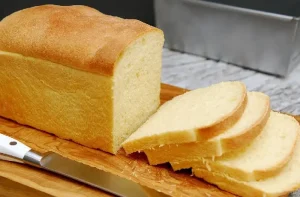
- Toast the slices of sandwich bread or place them in the oven at medium temperature for a couple of minutes, turning them to get an evenly toasted and slightly crispy texture, spread the meat on each toast, and arrange on a low and wide plate.
- Arrange the raw meat dishes on the table along with all the accompaniments, like chopped onion, dill pickles, green chili macerated in olive oil, and old-fashioned mustard served in small individual bowls.
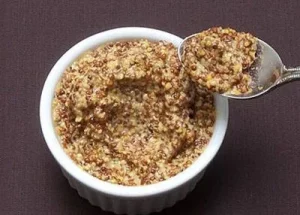
- Gently prick the surface of the meat with a fork and distribute the chopped onion over it, squeeze the juice of the quartered lemon on top, and add the pickles, green chili, old-fashioned mustard, salt, and pepper to taste.
Additional Tips
- Meat Texture is Paramount: To achieve the authentic professional consistency, do not just use regular ground beef. You must process it in a food blender until it becomes a smooth, homogeneous paste. This allows it to spread perfectly on the toast and absorb the lemon juice evenly.
- The “Das Haus” Sauce: The secret to the sauce’s depth is the triple combination of homemade mayonnaise, yogurt, and heavy cream. The yogurt provides a lactic acidity that lightens the fat, while the cream adds a velvet-like finish that balances the spiciness of the chili.
Frequently Asked Questions (FAQ)
1. What is the safest way to select beef for raw consumption?
Technically, you should look for “extra-lean” cuts from a trusted butcher. Because the meat is eaten raw, surface bacteria are the main concern; many professionals prefer to buy a whole muscle, trim the exterior, and then grind the interior at home.
2. Can I use a different type of citrus instead of lemon?
While traditional Valdivian crudo strictly uses lemon, some modern variants use lime for a sharper acidity. However, the classic flavor profile depends on the specific floral notes of Chilean lemons (like Limón de Pica) to balance the richness of the beef.
3. Why is yogurt added to the traditional sauce?
The natural yogurt provides a lactic acidity that cuts through the fat of the mayonnaise and cream. This technically lightens the sauce and adds a “tang” that complements the pickles and mustard.
4. How does the “macerated” green chili differ from fresh chili?
Macerating the chopped green chili in olive oil for a few minutes softens the capsaicin (the spicy compound) and helps distribute the heat more evenly across the meat toast without overwhelming the palate.
5. What is the best beer pairing for a Valdivian crudo?
To honor the German heritage of Valdivia, pair this dish with a pale ale or a stout. The maltiness of a dark beer provides a beautiful contrast to the acidity of the pickles and lemon.
History and Origin of Crudo Valdiviano
Valdivian crudo is a close relative of German Mett (raw pork) and French Tartare. In Chile, the recipe evolved by using beef and adapting to local tastes, becoming the inseparable companion of Valdivian onces (afternoon tea/snack) and the craft beers of the Los Ríos region.
Did You know?
Valdivian raw meat dishes are a heritage of German immigration in the city, but gradually they have extended their fame throughout the country, always accompanied by a good beer produced in the same city.