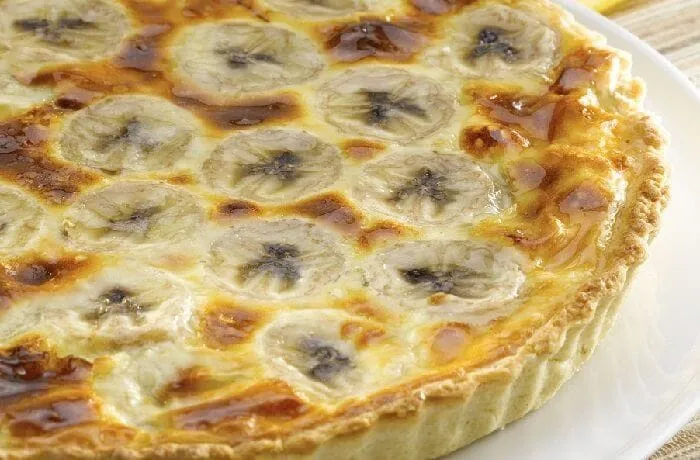
Chilean banana kuchen is a tart made with a butter shortcrust base, sliced ripe bananas, and a vanilla pastry cream poured over the fruit before a final bake. It belongs to the kuchen tradition of southern Chile — a repertoire of fruit-filled tarts inherited from German-speaking settlers who arrived in the Araucania and Los Lagos regions in the mid-nineteenth century. The banana version is a modern adaptation of that tradition, using a fruit that arrived in Chile later but became widely available and affordable in the twentieth century. Each kuchen serves 6 and takes approximately 80 minutes from start to finish.
The dough is a shortcrust made with flour, butter, brown sugar, egg, and milk — pressed into a tart mold rather than rolled, which makes it more forgiving for home bakers. The two-stage baking process — 15 minutes to set the base with the bananas, then 40 more minutes after the pastry cream is added — ensures the crust is fully cooked through and the cream sets without curdling.
How to Make Chilean Banana Kuchen?
The shortcrust dough for Chilean kuchen should have the texture of damp sand or coarse breadcrumbs after the butter is worked in — not a smooth, elastic dough. Overworking the dough develops gluten and produces a tough, chewy base instead of the tender, crumbly texture that defines a good kuchen crust. Work the butter in with your fingertips, rubbing it into the flour quickly to prevent the heat of your hands from melting it.
The pastry cream must be stirred constantly over medium heat and removed from the stove the moment it thickens — leaving it on the heat too long scrambles the egg and creates lumps. If lumps do form, strain the cream through a fine sieve before pouring it over the bananas. Pouring the cream while it is still warm ensures it spreads evenly and soaks into the gaps between the banana slices.
Nutritional Information
Per serving (one sixth of a 24cm kuchen): approximately 450 kcal, 7g protein, 18g total fat (10g saturated), 95mg cholesterol, 70g carbohydrates, 35g total sugars, 2g fiber. The caloric content comes primarily from the shortcrust base (butter and flour) and the pastry cream. Using condensed milk instead of pastry cream increases sugar by approximately 15g per serving; using cream cheese reduces fat by approximately 4g per serving.
Homemade Chilean Banana Kuchen Recipe
Prep time: 25 minutes | Cook time: 55 minutes | Servings: 6
Ingredients
For the shortcrust base:
- 300g all-purpose flour
- 80g unsalted butter, cold, cut into small cubes
- 100g brown sugar
- 1 large egg
- 125ml whole milk
- 2 teaspoons baking powder
- 1/4 teaspoon salt
For the filling:
- 6 ripe bananas (skins yellow with brown spots, flesh still firm)
For the pastry cream:
- 200ml heavy cream
- 100g sugar
- 1 tablespoon all-purpose flour
- 1 large egg
- 1 teaspoon vanilla extract
- 1 pinch of salt
Instructions
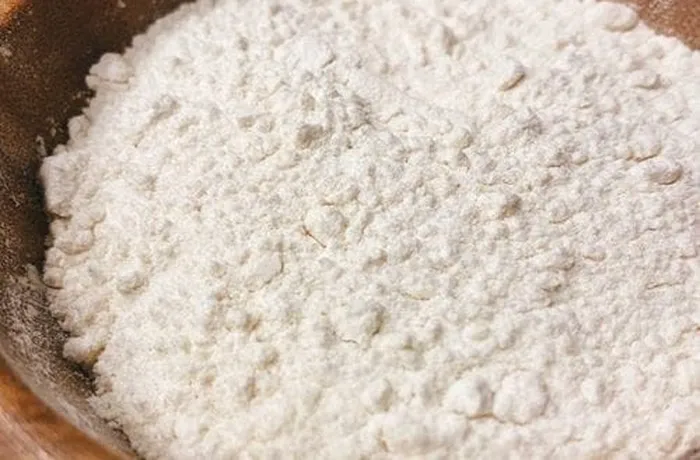
- Preheat the oven to 180 degrees C (350 degrees F). Grease and lightly flour a 24cm round tart mold or springform pan. Sift the flour, baking powder, and salt into a large bowl. Add the brown sugar and stir to combine. Add the cold butter cubes and work them into the flour with your fingertips, rubbing quickly until the mixture resembles coarse breadcrumbs with no visible butter pieces larger than a pea.
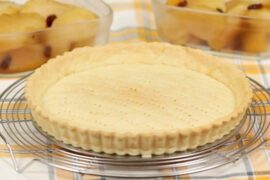
- Beat the egg with the milk in a separate bowl. Pour over the flour-butter mixture and mix with a fork until a soft, slightly sticky dough just comes together. Do not knead. Reserve approximately 3 tablespoons of dough for decoration. Press the remaining dough evenly into the base and up the sides of the prepared mold (about 2cm up the sides). Prick the base all over with a fork.
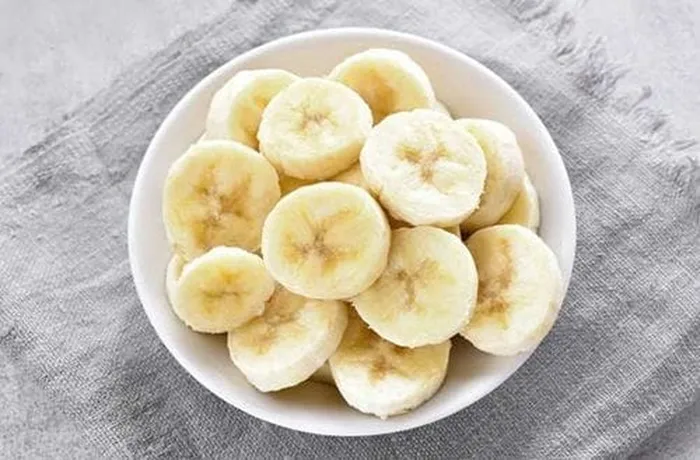
- Peel the bananas and slice them into rounds approximately 1cm thick. Arrange the slices in a single, overlapping layer across the entire surface of the dough base.
- Bake for 15 minutes until the edges of the dough begin to color and the base is set but not fully cooked through. While the kuchen bakes, prepare the pastry cream: pour the cream into a small saucepan over medium heat. Whisk in the flour gradually to prevent lumps, then add the sugar, egg, vanilla, and salt. Cook over medium heat, stirring constantly with a wooden spoon or silicone spatula, until the mixture thickens enough to coat the back of the spoon — approximately 5 to 6 minutes. Do not boil.
- Remove the kuchen from the oven. Pour the warm pastry cream evenly over the baked banana layer. Crumble or roll the reserved dough into thin strips and arrange decoratively across the surface. Return to the oven and bake for a further 40 minutes until the cream is set and the crust is lightly golden.
- Remove from the oven and allow to cool in the mold for at least 15 minutes before unmolding. The pastry cream continues to set as it cools. Serve at room temperature or slightly warm.
Additional Tips
How to choose the right bananas for kuchen
Use bananas with a yellow skin dotted with dark brown spots — the stage of ripeness where the fruit is sweet and fragrant but the flesh is still firm enough to hold its shape when sliced and baked. Fully green bananas are too starchy and bland; they do not soften properly during the 55 minutes of baking and leave a raw, astringent flavor in the finished kuchen. Bananas with completely black skins are too soft and release so much moisture during baking that the pastry cream becomes watery. The ideal banana for kuchen is one that is two or three days past the point you would eat it raw.
How to make egg-free Chilean banana kuchen
Replace each egg in the recipe with one very ripe mashed banana as a natural binder — the starch and pectin in the banana serve the same binding function as egg. In the dough, this means adding one extra mashed banana in addition to the six sliced bananas for the filling. In the pastry cream, omit the egg entirely and increase the flour to 2 tablespoons to compensate for the lost thickening power. The egg-free version is noticeably less rich but still produces a coherent kuchen that holds together when sliced.
Chocolate and condensed milk variations
For a chocolate banana kuchen, add 100g of semi-dark chocolate chips (60% cacao) to the banana layer before adding the pastry cream — scatter them between the banana slices so they melt into the cream during the final 40-minute bake. For a condensed milk version, replace the pastry cream entirely with 200ml of sweetened condensed milk poured directly over the bananas — it caramelizes slightly during baking and produces a denser, more intensely sweet filling. The condensed milk version requires no stovetop cooking, which makes it the faster option.
| Component | Standard (this recipe) | Substitute | Effect |
|---|---|---|---|
| Pastry cream | Cream + egg + flour | 200ml condensed milk | Sweeter, caramelized, no stovetop |
| Pastry cream | Cream + egg + flour | Cream cheese + 80g sugar + vanilla | Lighter, tangier, more stable |
| All-purpose flour (dough) | 300g | 150g AP + 150g whole wheat | Denser crust, nuttier flavor |
| Brown sugar (dough) | 100g | White sugar + 1 tsp molasses | Nearly identical |
Frequently Asked Questions (FAQs)
1. Can I use very ripe bananas for kuchen?
Yes, but reduce the sugar in the pastry cream by 20g to compensate. Very ripe bananas — skins almost entirely black — have a higher sugar content and release more moisture during baking, which can make the cream slightly looser. They also produce a more pronounced banana flavor, which many people prefer. Avoid bananas that are beginning to ferment or smell of alcohol; these add an off-flavor that baking does not eliminate.
2. Can I make the kuchen dough with whole wheat flour?
Yes, but use a 50/50 blend of whole wheat and white flour rather than 100% whole wheat. Whole wheat absorbs more liquid and produces a denser, less tender crust. The 50/50 blend maintains workable texture while adding fiber and a slightly nutty flavor. Add 10ml more milk to compensate for the increased absorption, and expect a slightly darker crust color.
3. How do I store Chilean banana kuchen?
Store at room temperature covered for up to 2 days, or refrigerated for up to 4 days. The pastry cream keeps the kuchen moist, but the banana filling continues to oxidize slightly over time. The crust firms slightly in the refrigerator but softens again after 20 minutes at room temperature. Do not freeze banana kuchen — the banana filling and pastry cream both degrade significantly on thawing.
4. What can I use instead of pastry cream in banana kuchen?
Cream cheese beaten with 80g sugar and 1 teaspoon vanilla is the most common substitute — lighter and tangier, it works well with bananas. Condensed milk (200ml poured directly over the bananas before the final bake) is a richer alternative that caramelizes slightly during baking. A standard custard can also be used but is thinner and may make the base soggy.
5. What is the difference between Chilean kuchen and German Kuchen?
Chilean kuchen descends from the Central European tradition brought by German-speaking settlers to southern Chile in the mid-nineteenth century but has diverged significantly. German Kuchen typically uses a yeast-based dough with toppings including plum, rhubarb, and quark. Chilean kuchen universally uses a shortcrust or crumble-type dough without yeast, and the fillings focus on local and available fruits. The Chilean version is also sweeter and richer in butter than the German original.
What Is Chilean Banana Kuchen?
Chilean banana kuchen is part of the kuchen tradition of southern Chile, a family of fruit-filled tarts that represents the most visible culinary legacy of the German, Swiss, and Austrian settlers who colonized the Araucania and Los Lagos regions beginning in 1848. The word kuchen means cake in German, and in its Chilean form it has come to refer specifically to an open-faced fruit tart with a shortcrust base and a cream filling baked directly in the mold, distinct from layer cakes, pound cakes, or sponge cakes. Banana kuchen is a twentieth-century addition to the kuchen repertoire — bananas were not widely available or affordable in southern Chile until improved refrigerated transport made tropical fruits accessible inland. Today it appears alongside apple, peach, cherry, and berry kuchen in the tearooms (salones de te) that are a distinctive institution of cities like Osorno, Valdivia, Puerto Montt, and Temuco.
History of Chilean Kuchen
The German-speaking immigration to southern Chile between 1848 and 1900 brought approximately 6,000 settlers to the regions of Valdivia, Llanquihue, and Osorno under a Chilean government colonization program intended to populate and develop lands recently incorporated after the Mapuche territory was reduced. The settlers brought Central European baking traditions with them, including the Kuchen culture of Baden-Wurttemberg and Bavaria. In Chile, these traditions adapted to the available local ingredients — native berries like murta (Ugni molinae) and maqui (Aristotelia chilensis), local apples, and the soft wheat varieties grown in the Central Valley. The shortcrust dough replaced the yeast-based doughs of Central Europe as locally milled flour and the altitude and humidity of southern Chile made yeast-based Kuchen less predictable for home bakers. By the early twentieth century, Chilean kuchen had become a distinct food tradition associated with the south, and tearooms serving kuchen with loose-leaf tea had become a regional institution that persists today.
Did You Know?
The city of Frutillar on the shores of Lake Llanquihue in the Los Lagos Region holds an annual German colonization commemoration (Semanas Musicales de Frutillar) and maintains several historic German colonial buildings as a living museum. Frutillar’s tearooms are considered among the best in Chile for traditional kuchen, and the town draws visitors specifically for its pastry tradition. The German-Chilean community of southern Chile — now in its fifth and sixth generations — has maintained enough cultural identity that some families still speak German at home, and German surnames are common across the region. The kuchen tradition has spread far beyond the original settlement area and is now found across Chile, but the south remains the reference standard for authenticity.