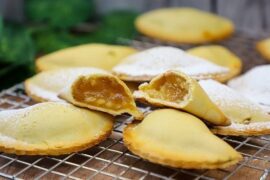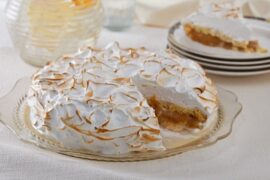
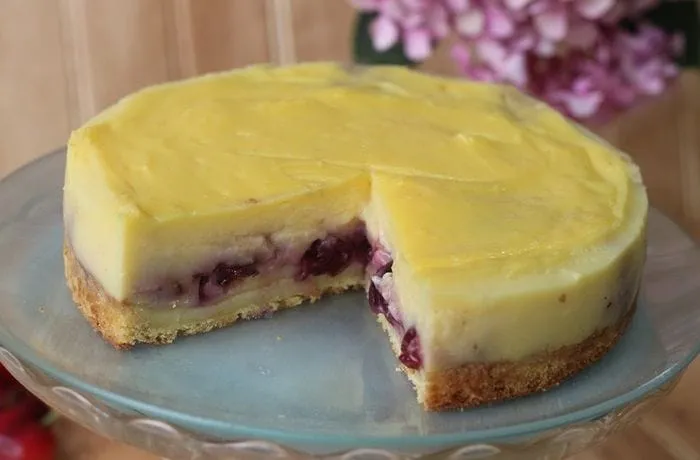
Chilean cherry kuchen is a fruit tart with a buttery shortcrust base, a layer of fresh pitted cherries, and a cream custard filling baked until set and golden. It takes 45 minutes of preparation and 50 minutes in the oven, serving 8 people from a single 24 cm springform tin.
The recipe arrived in southern Chile with German-speaking settlers in the nineteenth century. Over generations it became one of the signature desserts of the Lakes Region, made with the same cherries, blueberries, and strawberries that thrive in the wet, temperate climate of Valdivia, Osorno, and Puerto Montt. Today kuchen is sold in every Chilean pastry shop and served at home as an afternoon snack alongside tea or coffee.
How to Make Chilean Cherry Kuchen?
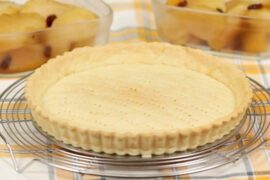
The shortcrust dough must be cold when it goes into the oven. After mixing, wrap it in plastic film and refrigerate for at least 30 minutes — cold butter in the dough creates the characteristic crumbly, sandy texture as it melts in the oven. A warm dough produces a dense, bready base instead.
Macerate the cherries with sugar and lemon juice for 20 minutes before assembling the tart. This draws out excess moisture, intensifies the fruit flavor, and prevents the filling from becoming waterlogged during baking. Drain the macerating liquid before placing the cherries on the dough.
Nutritional Information
Per serving (1 slice, approximately 150 g): 400 kcal, 5 g protein, 22 g total fat, 45 g carbohydrates, 2 g fiber, 25 g sugars, 90 mg cholesterol, 150 mg sodium. Cherry kuchen is high in sugars and saturated fat — a once-a-week treat rather than an everyday food.
Chilean Cherry Kuchen Recipe
Prep time: 45 minutes | Cook time: 50 minutes | Servings: 8
Dough Ingredients
- 300 g pastry flour (harina pastelera)
- 150 g cold butter, cubed
- 100 g powdered sugar (azúcar flor)
- 2 egg yolks
- 1 teaspoon vanilla extract
- 1 pinch of salt

Filling Ingredients
- 500 g fresh cherries, pitted
- 250 ml heavy cream
- 2 eggs
- 100 g sugar
- 1 tablespoon cornstarch
- 1 teaspoon almond extract
Instructions
- Sift the flour with the salt into a large bowl. Add the cold cubed butter and rub it into the flour with your fingertips until the mixture resembles coarse breadcrumbs with no large butter pieces remaining.
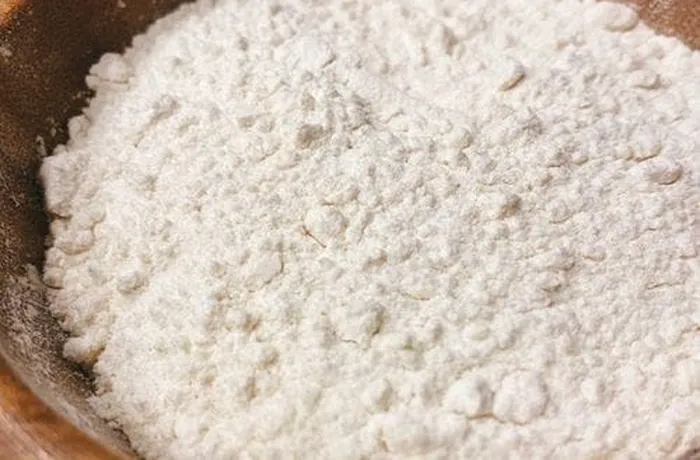
- Make a well in the center and add the egg yolks, powdered sugar, and vanilla extract. Mix with a fork, then bring together with your hands using folding motions until a smooth dough forms — do not overwork it. Shape into a flat disc, wrap in plastic film, and refrigerate for 30 minutes.
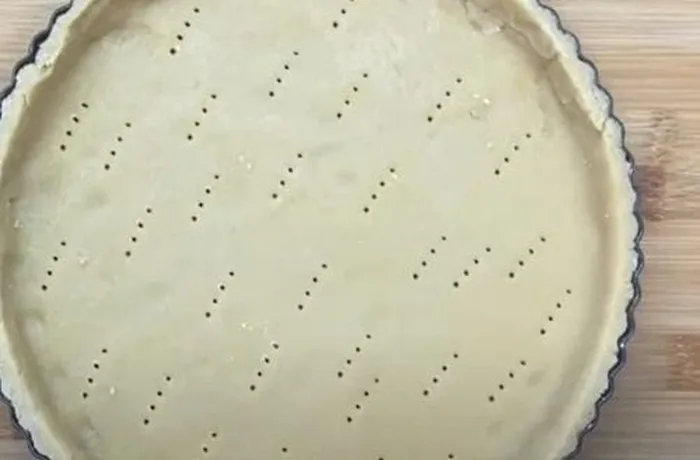
- Wash and pit the cherries. Combine the heavy cream, eggs, sugar, cornstarch dissolved in a tablespoon of cold water, and almond extract in a bowl and whisk until smooth. Remove the dough from the refrigerator and roll it out on a lightly floured surface. Press it into a 24 cm springform tin, covering the base and sides evenly to about 3 cm height.

- Preheat the oven to 180°C (356°F). Distribute the pitted cherries evenly over the dough base. Pour the cream and egg mixture over the cherries, spreading it evenly so it fills all the gaps. Bake for 50 minutes until the custard is set with a slight wobble in the center and the crust is golden brown. Cool completely in the tin before unmoulding. Refrigerate until serving.
Additional Tips
How to prevent a soggy kuchen base?
Blind-bake the dough for 10 minutes before adding the filling: line the raw dough with baking paper, fill with dried beans or rice to weigh it down, and bake at 180°C for 10 minutes. Remove the weights and paper, let cool for 5 minutes, then add the cherries and cream filling and continue baking. This sets the base before it comes into contact with the wet filling, keeping it crisp throughout the full baking time.
How to stop the cherries from sinking to the bottom?
Toss the pitted cherries in a tablespoon of flour before placing them on the dough — the light coating helps them stay suspended in the custard rather than sinking during baking. Alternatively, arrange the cherries after pouring half the cream mixture, then pour the remaining half over the top, trapping the cherries in the middle of the filling.
How to know when the kuchen is done baking?
The custard should be set at the edges and have a gentle wobble in the center — similar to a well-baked cheesecake. A skewer inserted 3 cm from the edge should come out clean. Do not overbake: a fully firm center means the custard has curdled and will be grainy when sliced. The kuchen firms up completely as it cools, so pull it from the oven when the center still has a slight movement.
Kuchen Varieties in Southern Chile
| Kuchen | Fruit | Region | Season |
|---|---|---|---|
| Cherry (this recipe) | Cherries | Lakes Region, Maule | November – January |
| Blueberry | Blueberries | Los Lagos, Araucanía | December – February |
| Strawberry | Strawberries | Nationwide | October – January |
| Murtilla | Murtilla (Ugni molinae) | Chiloé, Aysén | March – May |
Frequently Asked Questions (FAQs)
1. Can I use frozen or canned cherries instead of fresh?
Yes, but drain them very thoroughly. Frozen cherries release significantly more liquid than fresh ones during baking and can prevent the custard from setting. Spread frozen cherries on paper towels after thawing and pat dry before using. If using canned cherries in syrup, reduce the sugar in the filling by half and drain completely before adding to the tart.
2. Why does the recipe use cornstarch in the cream filling?
Cornstarch acts as a thickening agent that stabilizes the cream and egg mixture during baking, helping it set to a smooth, flan-like custard that holds its shape when sliced. Without it, the filling stays too liquid and the slices collapse on the plate. Dissolve the cornstarch in a tablespoon of cold liquid before adding to the mixture to prevent lumps.
3. Can I substitute the shortcrust dough with a biscuit base?
Yes. A common Chilean shortcut is to crush plain butter biscuits and mix with melted butter — approximately 200 g biscuits to 80 g butter — press into the tin, and refrigerate for 20 minutes before adding the filling. This eliminates the 30-minute chilling time for the dough and produces a softer, crumblier base similar to a cheesecake crust.
4. How long does cherry kuchen keep?
Stored in an airtight container in the refrigerator, cherry kuchen keeps for up to 4 days. The crust softens slightly after the first day as it absorbs moisture from the filling, but the flavor deepens. Serve cold or at room temperature — warming the tart causes the custard to weep and the base to turn soggy.
5. What does the word kuchen mean in Chilean cuisine?
Kuchen is the German word for cake, but in Chile it has become the specific term for a fruit tart with a shortcrust or butter pastry base and a cream custard filling. The style arrived with German-speaking settlers in the Lakes Region during the nineteenth century and was adapted over generations to the local fruits — cherries, blueberries, strawberries, and the native murtilla — that grow abundantly in the wet climate of southern Chile.
What Is Chilean Cherry Kuchen?
Chilean cherry kuchen is a fruit tart that fuses German shortcrust pastry technique with the fresh cherries grown in the central valley and Lakes Region of Chile. The base is a sandy, butter-rich dough — similar to a French pâte sablée — that cradles a layer of pitted fresh cherries set in a lightly sweetened cream custard. It is served cold, cut into wedges, and eaten as a mid-afternoon snack (once) or as dessert after lunch, always accompanied by tea or coffee.
History of Kuchen in Chile
The kuchen tradition arrived in southern Chile between 1850 and 1900 with German, Swiss, and Austro-Hungarian settlers who were granted land by the Chilean government to populate the frontier territories of what is now the Los Lagos and Los Ríos regions. These settlers brought their baking traditions and adapted them to the local climate and fruit supply. The Lakes Region — with its volcanic soil, high rainfall, and cool summers — proved ideal for growing the cherries, plums, and berries central to the German pastry tradition. Kuchen became embedded in southern Chilean culture and spread northward through the twentieth century, becoming one of the most widely recognized Chilean desserts internationally.
Did You Know?
The word kuchen means simply cake in German, but in Chile it acquired a specific meaning: a tart with a pastry base and fruit filling, distinct from other cakes. Chilean Spanish speakers use kuchen exclusively for this style of tart — asking for un trozo de kuchen in a Chilean café is understood universally to mean a slice of a fruit-filled pastry tart, not a layer cake or sponge.