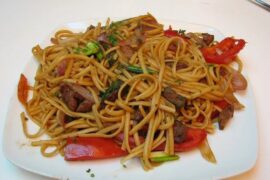
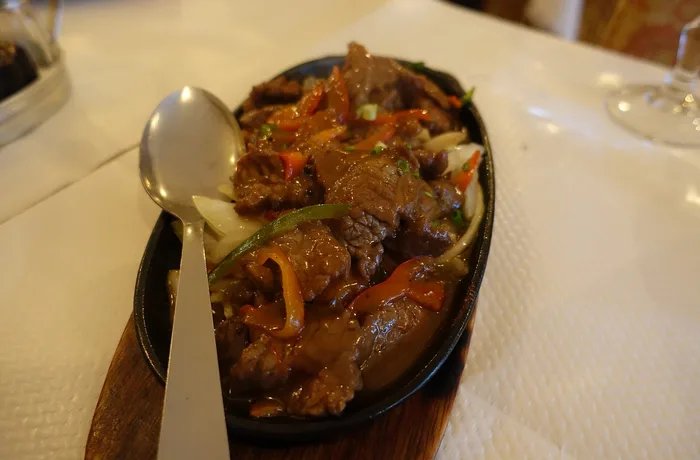
Chilean beef chop suey, or chapsui de carne, is a Chinese-Chilean stir-fry of thin beef slices that are marinated, seared in a wok and tossed with crisp vegetables in a light soy sauce, then served over fluffy long-grain rice. It takes about 30 minutes of prep and 25 minutes of cooking for 4 servings.
Chapsui is one of the classics of Chile’s Chinese restaurants, alongside arroz chaufán (fried rice) and fried wontons. The beef version follows the same logic as chicken chapsui but changes the cut and the technique, with a short marinade and a fast sear that keep the meat from turning tough or dry.
How to Make Beef Chop Suey?
The technique has two parts. First, the beef is sliced thin and marinated with soy sauce, cornstarch and a pinch of baking soda, which help it hold on to its moisture. Then it is seared in the wok over maximum heat in batches and set aside before the vegetables go in, so it can be returned at the end without overcooking.
Nutritional Information
Each serving of Chilean beef chop suey (one 450 g / 16 oz serving) contains approximately 590 kcal, 35 g of protein, 19 g of total fat (4 g of saturated fat), 70 mg of cholesterol, 70 g of carbohydrates, 6 g of sugars and 1,200 mg of sodium. These values are estimates and may vary depending on ingredients and portion sizes.
Homemade Beef Chop Suey Recipe
Preparation: 30 minutes
Cooking: 25 minutes
Servings: 4 servings
Ingredients
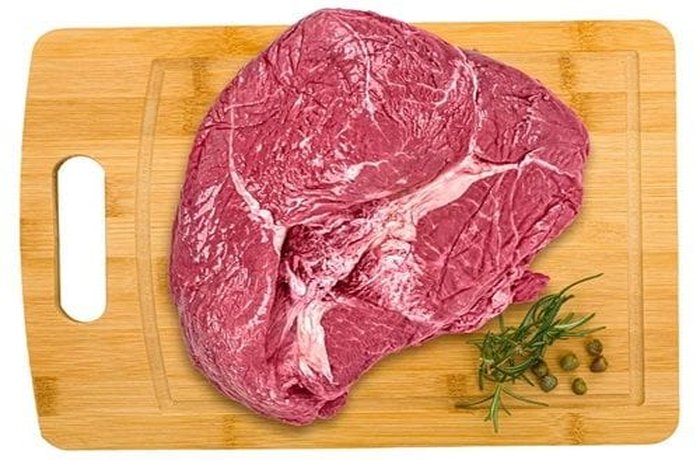
- 500 g (1.1 lb) beef round (posta rosada) or strip loin (lomo liso)
- 3 tablespoons soy sauce
- 2 tablespoons cornstarch
- ¼ teaspoon baking soda
- 1 onion, sliced lengthwise into thin wedges
- 1 carrot, cut into thin sticks
- 2 celery stalks, cut on the diagonal
- 1 red bell pepper, cut into strips
- 150 g (5 oz) bean sprouts
- 2 garlic cloves, minced
- 1 piece fresh ginger, grated
- 2 scallions, cut into pieces
- 150 ml (⅔ cup) beef broth
- 1 teaspoon sugar
- 4 tablespoons vegetable oil
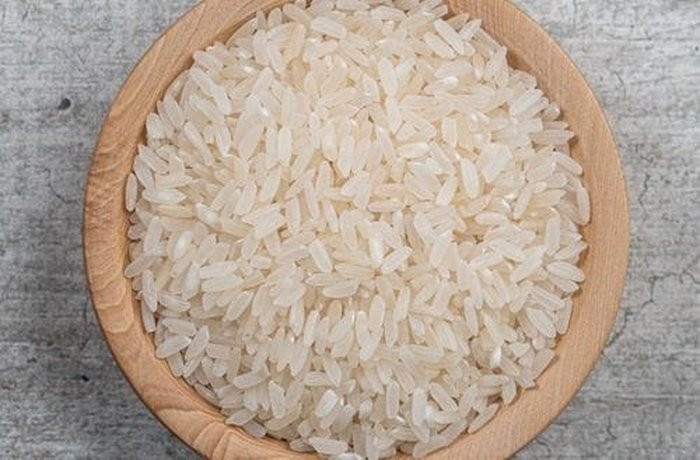
- 1½ cups long-grain rice
- 3 cups water
- Fine salt

Instructions
- Slice the beef against the grain into pieces 3 to 4 mm (about ⅛ inch) thick. If the piece is partly frozen, slicing is easier and more even. Mix the beef with 1 tablespoon of soy sauce, 1 tablespoon of cornstarch and the baking soda, massage it with your hands until no powder is visible, and let it marinate for 20 minutes at room temperature.
- While the beef rests, rinse the rice until the water runs clear and sauté it for 1 minute in a pot with 1 tablespoon of oil. Add the 3 cups of boiling water and salt to taste, cover, and cook over the lowest heat for 18 minutes. Turn off the heat and let it stand for 5 minutes without lifting the lid so the grains stay fluffy and separate.
- Heat the wok over maximum heat with 1 tablespoon of oil until it smokes. Sear half of the beef spread out in a single layer, without moving it, for 1 minute, then flip it and cook 30 seconds more. Transfer to a plate and repeat with another tablespoon of oil and the rest of the beef. It should be browned on the outside and still pink in the center.

- In the same wok, with the last tablespoon of oil, stir-fry the minced garlic and grated ginger for 20 seconds. Add the onion, carrot and celery and stir-fry for 2 minutes over high heat. Add the bell pepper and bean sprouts and stir-fry 1 minute more, until the vegetables are glossy and still crisp.

- Dissolve 1 teaspoon of cornstarch, the sugar and 2 tablespoons of soy sauce in the cold broth, pour it into the wok and boil for 1 minute, stirring, until the sauce thickens and turns glossy. Return the beef with its juices, toss for 30 seconds, add the scallions and serve right away over the rice.
Additional Tips
Why Use Baking Soda in the Marinade?
Baking soda raises the pH on the surface of the meat, which makes it harder for the proteins to tighten and squeeze out water when they hit the heat. The result is more tender, juicy beef, a technique widely used in Chinese cooking for lean cuts. Keep the amount small, ¼ teaspoon for 500 g, because too much leaves a soapy taste that the sauce cannot cover.
Why Slice the Beef Against the Grain?
The muscle fibers in beef round are long and firm. Cutting across them leaves short segments that break easily as you chew, so the slice feels tender even with an inexpensive cut. If you slice with the grain, the beef stays chewy no matter how well it is marinated and seared. To find the direction, look for the parallel lines running across the surface of the piece.
How to Keep the Vegetables Crisp
Add the vegetables in order of firmness, starting with the onion, carrot and celery and finishing with the bell pepper and bean sprouts, which soften in seconds. The wok should be very hot and uncovered so the steam escapes and the vegetables do not stew in their own juices. The same high heat and short times apply to other Chinese-Chilean stir-fries, such as Mongolian beef.
The technique changes with the protein, while the vegetables and sauce stay the same.
| Aspect | Beef chop suey | Chicken chop suey |
|---|---|---|
| Recommended cut | Beef round, strip loin or tenderloin | Boneless breast or thigh |
| Shape of the cut | 3 to 4 mm slices against the grain | 1 to 1.5 cm strips or cubes |
| Marinade | Soy sauce, cornstarch and a pinch of baking soda, 20 minutes | Soy sauce and cornstarch, 15 minutes |
| Cooking in the wok | 1.5-minute sear per batch, pink in the center | 4 to 5 minutes, until no pink remains |
Frequently Asked Questions (FAQs)
1. What Is the Best Beef for Chop Suey?
Beef round is the most common choice because it is affordable and lean, as long as you slice it thin and against the grain. Strip loin and tenderloin turn out more tender with less effort, but they cost more. Avoid cuts with a lot of connective tissue, such as plateada (rib cap) or osobuco (beef shank), which need long cooking to soften.
2. What Does Chapsui Mean?
Chapsui is the Chilean spelling of chop suey, a name of Cantonese origin usually translated as assorted pieces or a mix of things. The dish spread through Chinese restaurants in the Americas from the late nineteenth century, and each country adapted it to its own ingredients and to the tastes of its diners.
3. What Do You Serve with Beef Chop Suey?
It is most often served over fluffy white rice, which soaks up the sauce. In Chile’s Chinese restaurants it is also ordered with arroz chaufán, a Chinese-Chilean fried rice, and it often shares the table with fried wontons or spring rolls as a starter. For a lighter version, serve it on its own and increase the amount of vegetables in the stir-fry.
4. Can You Store or Freeze Beef Chop Suey?
It keeps in the refrigerator for up to 2 days in an airtight container and reheats in a skillet over high heat in 2 to 3 minutes. Freezing is not recommended, because the bean sprouts and bell pepper lose their crunch and release water as they thaw. The raw beef on its own, already marinated, can be frozen.
What Is Beef Chop Suey?
Beef chop suey, known in Chile as chapsui de carne, is a Chinese-Chilean stir-fry of thin beef slices with onion, carrot, celery, red bell pepper and bean sprouts in a light soy sauce thickened with cornstarch. The beef is marinated briefly and seared apart from the vegetables so it stays tender, and the whole dish is served over white rice as a one-plate lunch or dinner.
History of Beef Chop Suey in Chile
Chapsui is the Chilean adaptation of the name chop suey, a stir-fry of meat and vegetables associated with Cantonese cooking. Its best-known form developed in Chinese restaurants in the Americas from the late nineteenth century, and there are several stories about its origin, none of them confirmed.
In Chile the dish became part of the menu at Chinese restaurants, where it is made with chicken, beef, pork or shrimp and almost always served with rice.
Did You Know?
The sprouts sold in Chile as soybean sprouts are, in most cases, mung bean sprouts (Vigna radiata), a legume different from soy. True soybean sprouts have a larger yellow bean and are used more often in Korean cooking.
How to adapt this recipe to a vegan or vegetarian version?
How to adapt this recipe to a gluten-free version?
How to adapt this recipe to a keto (ketogenic) version?
Recommended
- Chilean chicken chop suey, the classic chapsui de pollo
- Chinese-Chilean Mongolian beef stir-fry
- Chilean arroz chaufán, Chinese-style fried rice
- Homemade Chilean fried wontons for a starter