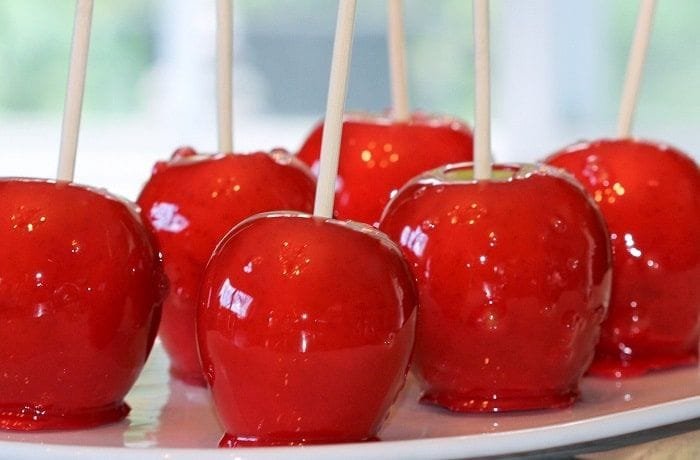
Chilean manzanas confitadas are whole apples on sticks dipped in a hard red candy coating made from sugar, water, lemon juice, and food coloring, then decorated with sprinkles, coconut, or chocolate. They take 30 minutes of preparation plus 10 minutes of cooking and serve 6 people.
They are a classic treat tied to memories of school days, street markets, and children’s birthdays in Chile, with a glassy, crunchy shell that cracks to reveal the juicy, slightly tart fruit.
How to Make Chilean Candy Apples?
Candy apples are very versatile to decorate with sprinkles, chocolate, shredded coconut, or whatever you like. The key is cooking the syrup to the hard crack stage so the coating sets glassy and crunchy.
Nutritional Information
Each candy apple contains approximately 390 kcal, 102 g of carbohydrates, 2 g of fiber, 99 g of sugars, and 5 mg of sodium. These values are estimates and may vary depending on ingredients and portion sizes.
Homemade Chilean Manzanas Confitadas Recipe
Preparation: 30 minutes
Cooking: 10 minutes
Servings: 6 people
Ingredients
- 500 g (2 1/2 cups) of sugar
- 200 ml (7 fl oz) of water
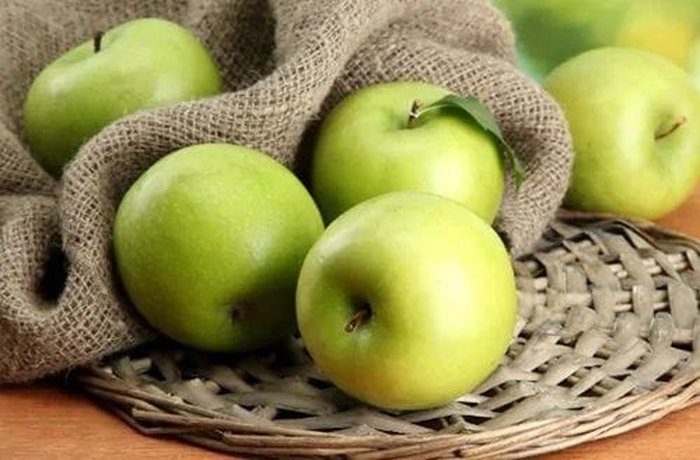
- 6 large apples
- 2 tablespoons of lemon juice
- Red food coloring
- Colored sprinkles
- Shredded coconut
- Chocolate coating
- Wooden popsicle sticks

Instructions
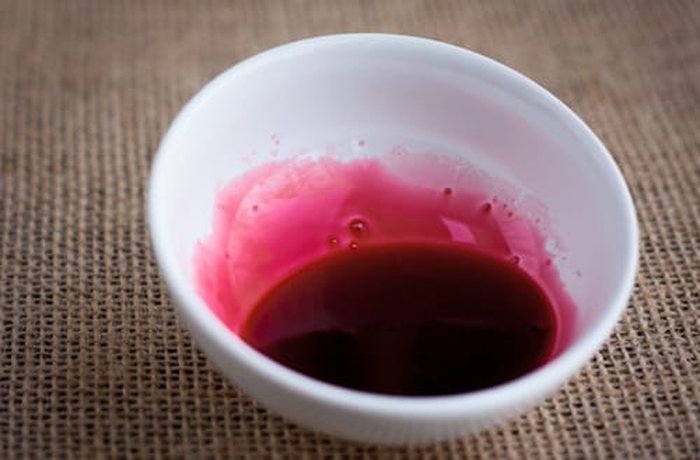
- In a medium pot, combine the sugar, water, and lemon juice and stir until completely dissolved. Heat over medium heat without stirring until the syrup reaches the hard crack stage. Add half a teaspoon of red coloring and stir until you have an intense red.
- Wash and dry the apples, push a popsicle stick firmly into the top of each, and dip them in the red candy, turning to coat. Let the excess drip off and roll them in colored sprinkles or shredded coconut if you like.
- If you like, melt chocolate coating in a water bath and dip the apples to cover at least three quarters of the surface, or drizzle the chocolate over them in thin lines. Let them set in a cool place and eat within 2 days so the fruit does not dry out.
Additional Tips
Do not stir the syrup
For a smooth, shiny candy, stop stirring once the sugar has dissolved and brush down the inside of the pot with a wet pastry brush to dissolve any sugar crystals.
Dry the apples well
Wash and dry the apples thoroughly and make sure they are at room temperature with no trace of moisture, so the candy sticks evenly and sets hard and crunchy.
Work quickly
Hard candy sets fast. Have the apples and decorations ready before the syrup reaches temperature.
| Original ingredient | Substitute | Ratio | Flavor note |
|---|---|---|---|
| Granny Smith | Fuji | 1:1 | Sweeter, still crisp |
| Red coloring | No coloring | Omit | Golden, clear candy |
| Sprinkles | Chopped peanuts | To taste | Crunchier |
| Chocolate coating | White chocolate | 1:1 | Sweeter |
Frequently Asked Questions (FAQs)
1. What precautions should I take with hot candy?
Avoid splashes, since hot syrup can cause severe burns. Keep children away while you cook it and use long handled, heat resistant utensils.
2. How do I make the candy stick?
The apples must be completely dry and at room temperature. If they are wet or cold, the candy will not stick properly.
3. Which apples work best?
Firm, tart varieties such as Granny Smith or Fuji, whose crispness contrasts well with the sweet candy.
4. How do I know the syrup is at hard crack stage?
Drop a little into a glass of cold water: if it hardens immediately and snaps, it is at hard crack, about 150 to 155 C (300 to 310 F). A candy thermometer is ideal.
5. How long does the crunchy coating last?
Ideally eat them within 24 to 48 hours. After that the moisture of the apple softens the candy.
What Are Manzanas Confitadas?
Manzanas confitadas are candy apples, a classic street and fair treat in Chile, sold by vendors near schools and at children’s parties in bright red coatings.
History and Origin of Candy Apples
Candy apples are said to have been first made in the United States in 1908, when William W. Kolb, a candy maker in New Jersey, dipped apples in a red cinnamon candy and sold them in his shop.
Did You Know?
The Spanish word confite comes from the Catalan confit, fruit sweet, which in turn comes from the Latin confectum, meaning made or prepared.
How to adapt this recipe to a vegan or vegetarian version?
How to adapt this recipe to a gluten-free version?
How to adapt this recipe to a keto (ketogenic) version?
Recommended
- Chilean Calugas Recipe
- Chilean Apple Kuchen Recipe
- Chilean Sustancias Dulces Recipe
- Homemade Yoguis Recipe