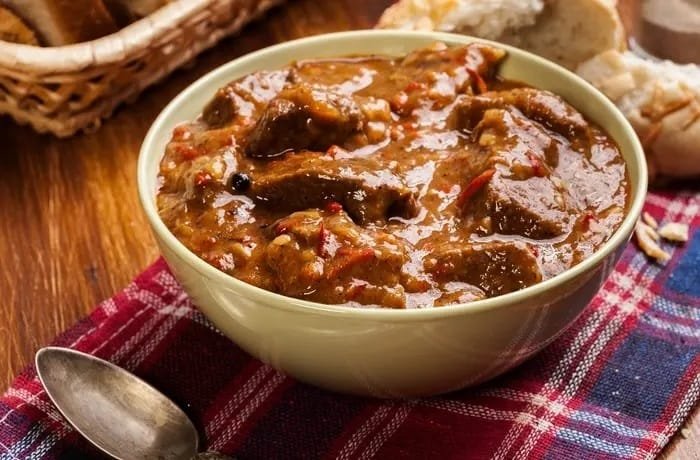
Hungarian beef goulash is made by browning 800 g of cubed beef, sautéing onions, garlic, and red bell peppers, stirring in paprika, cumin, and thyme, then adding the beef back with bay leaves, beef stock, and tomato sauce and simmering it covered for about 2 hours until very tender. It takes 20 minutes of preparation plus 2 hours of cooking and serves 4 people.
Goulash, or gulyás, is Hungary’s national dish, a deeply comforting paprika stew with a bright red, smoky-sweet sauce.
How to Make Beef Goulash?
The key to goulash is slow cooking: letting the beef and vegetables simmer gently in a thick, flavorful sauce until the meat almost falls apart.
Nutritional Information
Each serving of beef goulash contains approximately 450 kcal, 30 g of carbohydrates, 25 g of fat, 35 g of protein, 4 g of fiber, 8 g of sugars, 95 mg of cholesterol, and 780 mg of sodium. These values are estimates and may vary depending on ingredients and portion sizes.
Homemade Hungarian Beef Goulash Recipe
Preparation: 20 minutes
Cooking: 2 hours
Servings: 4 people
Ingredients
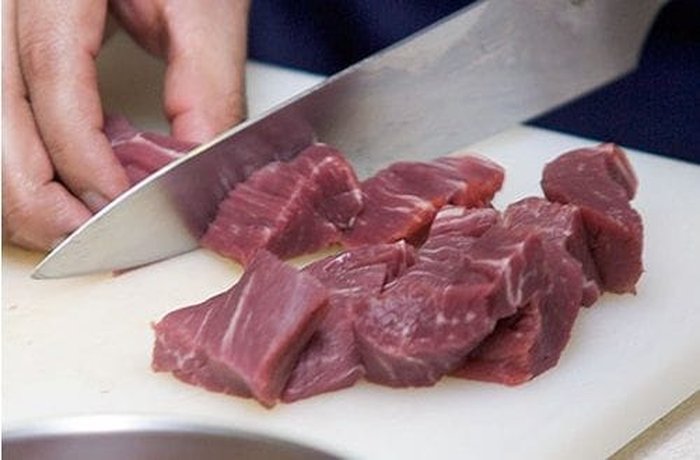
- 800 g (1.8 lb) of beef chuck, cubed
- 3 garlic cloves, minced
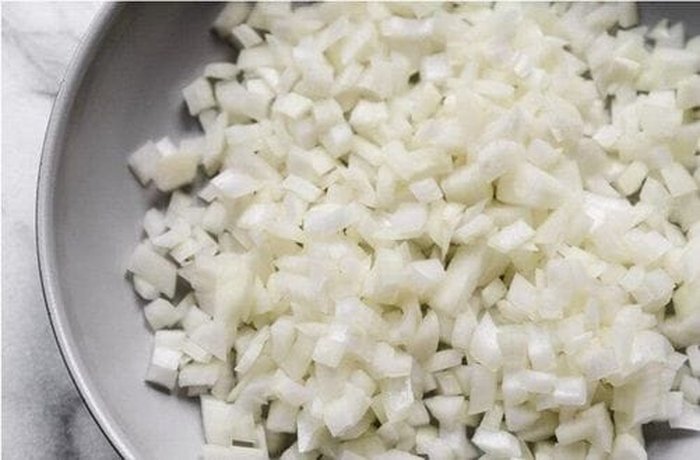
- 2 large onions, chopped
- 2 red bell peppers, chopped
- 2 tablespoons of sweet paprika
- 2 bay leaves
- 2 cups of beef stock
- 1 teaspoon of cumin
- 1 teaspoon of thyme
- 1 cup of tomato sauce
- Vegetable oil
- Fresh parsley, chopped
- Fine salt
- Black pepper

Instructions
- In a large pot, heat a splash of vegetable oil over medium-high heat, add the cubed beef, and brown it on all sides. Remove and set aside. Add a little more oil if needed and the chopped onion.
- Lower to medium heat and sauté the onion until golden and translucent. Add the garlic and bell peppers and cook a few minutes more.
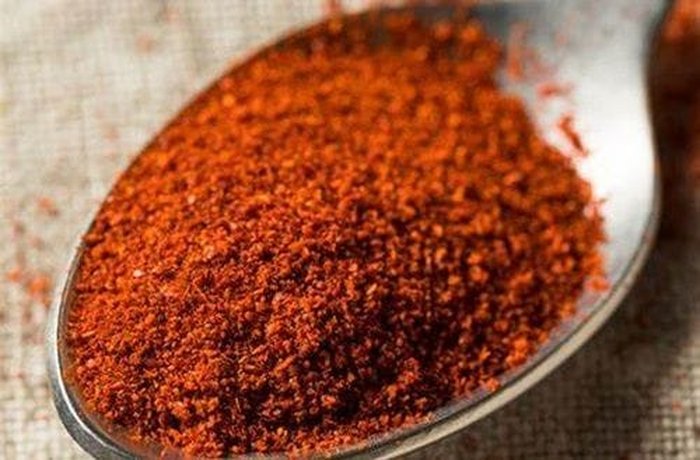
- Stir in the paprika, cumin, and thyme, mixing well so they bloom without burning, then return the beef to the pot and add the bay leaves, beef stock, and tomato sauce.
- Season with salt and pepper, lower the heat, cover, and simmer for about 2 hours, until the beef is very tender. Remove the bay leaves and serve right away, sprinkled with fresh parsley.
Additional Tips
Be generous with onion
In authentic goulash the onion is not just aromatic; it melts into the sauce and thickens it naturally.
Protect the paprika
Paprika burns and turns bitter in seconds, so add it off direct heat or with the moist vegetables.
Use collagen-rich cuts
Chuck, shin, or boneless short rib turn meltingly tender after two hours of gentle simmering.
| Original ingredient | Substitute | Ratio | Flavor note |
|---|---|---|---|
| Beef chuck | Beef shin | 1:1 | More gelatinous |
| Sweet paprika | Half smoked paprika | 1:1 | Smokier |
| Beef stock | Water plus bouillon | 1:1 | Simpler |
| Rice | Nokedli egg dumplings | To serve | Traditional |
Frequently Asked Questions (FAQs)
1. Why is my goulash beef tough?
The cut was too lean or it cooked too fast. Goulash needs collagen-rich cuts and at least two hours at a gentle simmer.
2. What is the difference between goulash and stroganoff?
Goulash is a long-simmered paprika and onion stew; stroganoff is a quick skillet dish of tender beef strips with mushrooms in a sour cream sauce.
3. Which paprika should I use?
Hungarian sweet paprika (édesnemes) is the soul of the dish; add a little hot paprika (erős) for more kick.
4. Can I freeze goulash?
Yes, for up to three months in an airtight container; the flavors deepen when reheated.
What Is Goulash?
Goulash is a Hungarian beef and paprika stew, served in Hungary either as a hearty soup (gulyásleves) or, in its thicker form, closer to pörkölt.
Origin of Goulash
Its name comes from gulyás, the Hungarian word for cattle herdsmen, who cooked meat with onions in a cauldron called a bogrács over open fires.
Did You Know?
Paprika only became part of goulash after peppers arrived in Hungary from the Americas, and it defines the dish today.