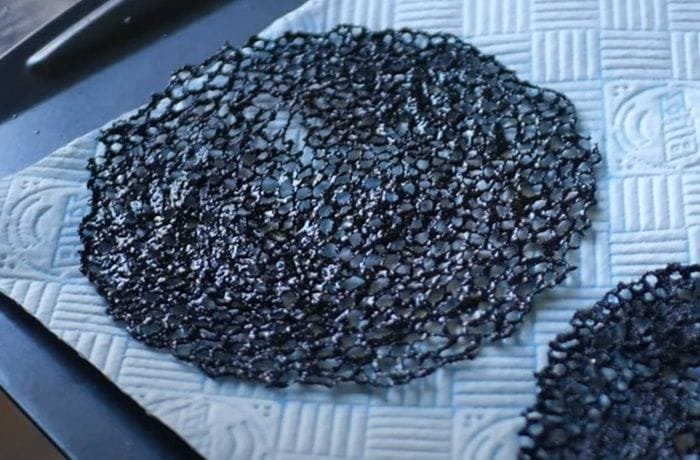
Black olive coral, also called a lace tuile, is a crisp, lacy garnish made by blending black olives with water, straining the juice, mixing it with oil and a little flour, and cooking thin rounds in a hot nonstick pan until the water evaporates. It takes 5 minutes of preparation and about 15 minutes of cooking, and serves 4.
It is a fine dining secret for turning a home cooked plate into something spectacular, adding a salty crunch and a striking look.
How to Make Olive Coral?
Olive coral is surprisingly easy. Blended and strained olive juice is mixed with oil and flour into a thin batter, poured into a hot dry nonstick pan, and cooked until the water evaporates rapidly and leaves a crisp, holey lattice of flour and oil.
Nutritional Information
Each serving of olive coral contains approximately 185 kcal, 1 g of protein, 18 g of total fat (2 g of saturated fat), 0 mg of cholesterol, 5 g of carbohydrates, 0 g of sugars, and 240 mg of sodium. These values are estimates and may vary depending on ingredients and portion sizes.
Homemade Black Olive Coral Recipe
Preparation: 5 minutes
Cooking: 15 minutes
Servings: 4
Ingredients
- 200 ml of water
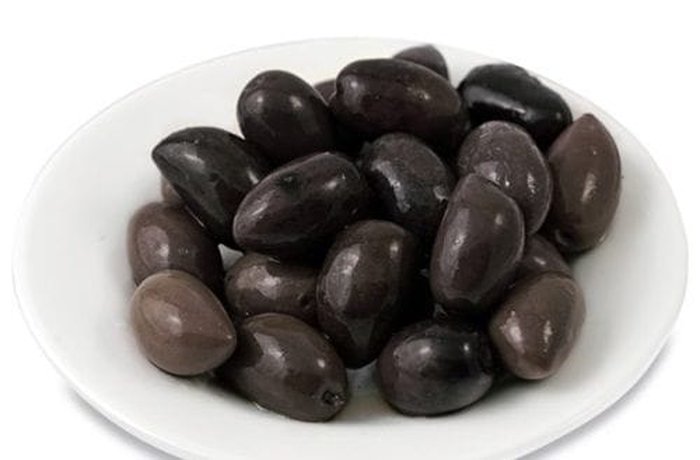
- 100 g of pitted black olives
- 80 ml of vegetable oil
- 20 g of all purpose flour

Instructions
- In a blender, blend the pitted black olives with the water until smooth, then strain through a fine sieve to get a smooth, lump free liquid. Measure 100 ml of the olive juice into a pitcher.
- Add the oil and flour and mix with an immersion blender until combined, then pour into a squeeze bottle. Heat a nonstick skillet for one minute without oil and pour some of the mixture into the center, forming a circle 10 to 15 cm across.
- Cook until all the liquid has evaporated and the mixture sets on the bottom of the pan into a lacy, light crisp. Lift it carefully with a spatula and drain on paper towels. Repeat with the rest of the mixture.
Additional Tips
Strain the olive mixture
Straining through a fine sieve gives a smooth liquid, which is what lets the coral form an even, lacy pattern.
Wait for full evaporation
The coral is ready only when all the water has evaporated and the mixture has set crisp on the bottom of the pan.
Blend right before cooking
The oil and water separate quickly, so blend or shake the squeeze bottle before each pour.
| Original ingredient | Substitute | Ratio | Flavor note |
|---|---|---|---|
| Black olives | Green olives | 1:1 | Brighter color, milder |
| Vegetable oil | Mild olive oil | 1:1 | Fruitier flavor |
| Olive juice | Beet juice | 100 ml | Bright red coral |
| Wheat flour | Rice flour | 1:1 | Gluten free, crisper |
Frequently Asked Questions (FAQs)
1. What nutrients do black olives provide?
They are a good source of vitamin E, an antioxidant, and vitamin K, as well as minerals such as iron, calcium, and magnesium.
2. Which oil is best for this recipe?
The base recipe uses neutral vegetable oil, but a mild olive oil adds a deeper flavor that pairs well with the olives.
3. How does the coral get its holes?
The holes form naturally in the hot pan as the water evaporates quickly, leaving gaps in the net of flour and oil.
4. Can I use other olives?
Yes. The technique is the same, although the flavor and color will vary with the variety, such as Chilean Azapa olives.
How to Use Olive Coral
Olive coral is a garnish for plating. Break it into pieces and stand them on top of fish, grilled meat, salads, or creamy soups for height, crunch, and a touch of salt.
Benefits of Olives
Black olives are rich in monounsaturated fat and vitamin E, an antioxidant, and they also provide vitamin K and minerals such as iron, calcium, and magnesium.
Did You Know?
Chile produces its own distinctive olives in the Azapa Valley near Arica, large purple black olives with a protected denomination that are a staple of Chilean tables.
How to adapt this recipe to a vegan or vegetarian version?
How to adapt this recipe to a gluten-free version?
How to adapt this recipe to a keto (ketogenic) version?
Recommended
- Homemade Oregano Oil Recipe
- Tuna Antipasto Recipe
- Chilean Salmon Tartare Recipe
- Chilean Beef Tartare Recipe