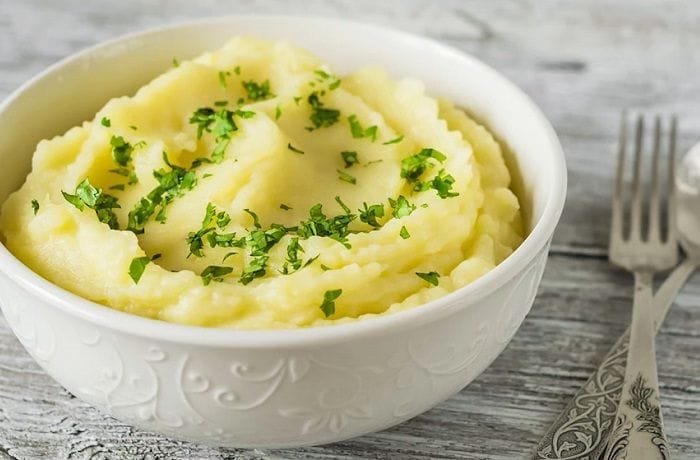
Chilean mashed potatoes, or puré de papas, are a smooth, creamy side made by boiling potatoes in their skins, peeling and pressing them, and mixing in butter and warm milk, with an optional pinch of nutmeg. They take 20 minutes of preparation and 20 minutes of cooking, and serve 8.
Puré is a pillar of Chilean Sunday lunches, the base of pastel de papas, and the perfect partner for a barbecue, carne al jugo, or longanizas.
How to Make Chilean Mashed Potatoes?
The best potatoes for puré are floury varieties such as Pukará, Karú, Yagana, Patagonia, or Desirée. They are boiled whole and unpeeled in salted water, peeled while warm, pressed through a ricer, and mixed with butter, seasoning, and milk added little by little until creamy.
Nutritional Information
Each serving of mashed potatoes contains approximately 200 kcal, 3 g of protein, 8 g of fat, 20 mg of cholesterol, 30 g of carbohydrates, 3 g of sugars, 2 g of fiber, and 150 mg of sodium. These values are estimates and may vary depending on ingredients and portion sizes.
Homemade Chilean Mashed Potatoes Recipe
Preparation: 20 minutes
Cooking: 20 minutes
Servings: 8
Ingredients
- 6 large potatoes
- 250 ml (1 cup) of milk
- 3 tablespoons of butter, at room temperature
- Fine salt
- Pepper (optional)
- Ground nutmeg (optional)
Instructions
- Wash the potatoes well, scrubbing with a brush if needed. Place them unpeeled in a pot, cover with cold water, and add a teaspoon of salt. Bring to a boil and cook for about 20 minutes, until tender when pierced with the tip of a knife.
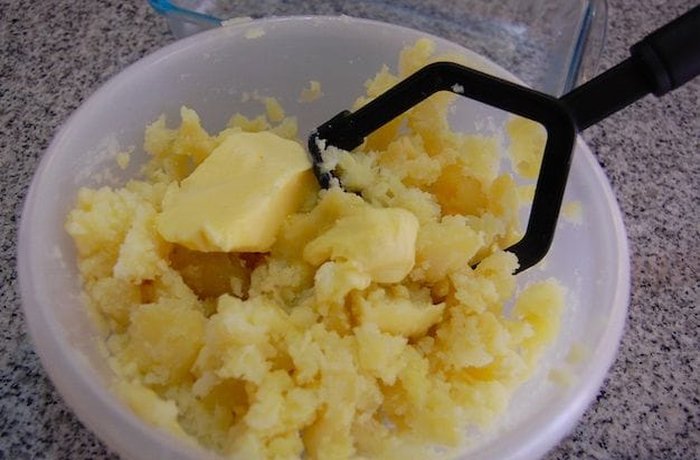
- Drain and carefully peel the potatoes while still warm. Return them to the pot and press them with a potato ricer or masher. Add the room temperature butter, a pinch of salt, and, if you like, a pinch of pepper and nutmeg, and mix well.
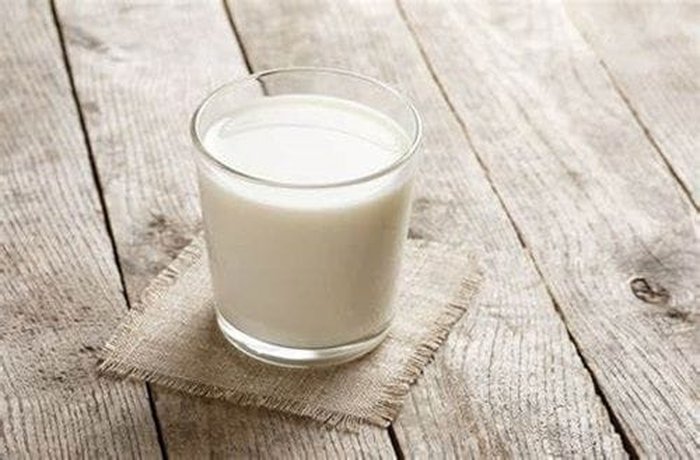
- Add the milk little by little, stirring with a wooden spoon until you reach the consistency you like. Taste and adjust the seasoning, cover the pot, and let it rest for 5 minutes. Serve right away as a side for countless main dishes, or use it as the base for pastel de papas or duchess potatoes.
Additional Tips
Flavor the water or the purée
Add a bundle of herbs to the cooking water, or stir fresh chopped chives and parsley, a pinch of merkén, or a spoonful of chili cream into the finished purée.
Keep everything warm
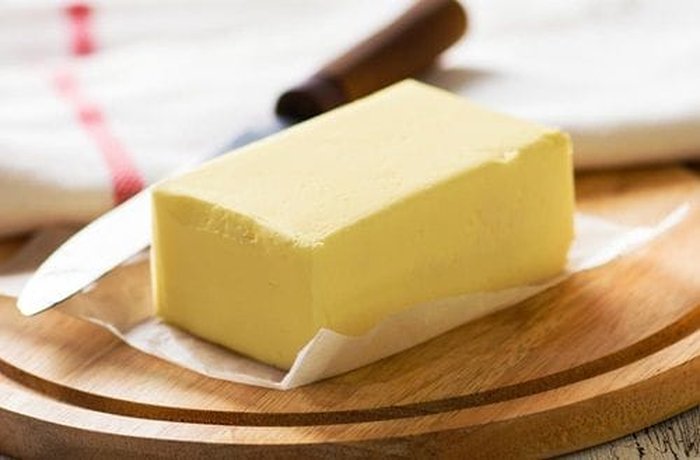
Lumps and gluey texture often come from mixing cold ingredients. Warm the milk and use butter at room temperature so they blend in smoothly.
Never use a blender
A blender overworks the starch and turns the potatoes sticky. A ricer or a hand masher gives the light, airy texture of a good puré.
| Original ingredient | Substitute | Ratio | Flavor note |
|---|---|---|---|
| Milk | Hot vegetable broth | 1:1 | Lighter, savory |
| Milk | Unsweetened almond drink | 1:1 | Dairy free |
| Butter | Extra virgin olive oil | 2 tablespoons | Fruity, dairy free |
| Nutmeg | Merkén | A pinch | Smoky and spicy |
Frequently Asked Questions (FAQs)
1. What type of potato is best?
Floury varieties such as Pukará, Karú, or Desirée are the most recommended, because their high starch content and dry texture absorb the milk and butter well. Waxy potatoes tend to turn sticky and have less body.
2. Why does my purée sometimes turn out lumpy?
There are three main reasons. The potatoes were not fully cooked, they were mashed with the wrong tool, such as a blender instead of a ricer, or they were overmixed, which activates too much starch. Temperature also matters, since everything should be warm when mixed.
3. What alternatives are there to milk?
Hot vegetable broth, unsweetened coconut milk, unsweetened almond drink, or even some of the potato cooking water all work well. To replace the butter, use extra virgin olive oil or a good quality vegetable margarine.
4. How do I get different textures?
For a firmer purée, use less liquid and more butter. For a creamier one, add hot milk little by little. For an extra smooth, silky purée, push the mash through a fine sieve after pressing.
5. Can I freeze mashed potatoes?
Yes. Cool completely, divide into portions, and store in airtight containers. Thaw in the fridge and add a little milk or broth when reheating to restore the texture. The quality may drop slightly, but it is still a good option.
What Is Puré de Papas?
Puré de papas is the Chilean name for mashed potatoes. It is one of the most common sides in the country, served with fried fish, meat in its juices, sausages, and stews, and it is also the base of pastel de papas and papas duquesas.
Benefits of Potatoes
Potatoes are a good source of carbohydrates and fiber, which help with satiety and digestion, and they also contain vitamin C, potassium, and iron. Cooking them in their skins helps preserve more of these nutrients.
Did You Know?
Chile is one of the centers of origin of the potato, and the island of Chiloé alone preserves more than 200 native varieties, while most of the potatoes sold in Chilean markets belong to a handful of improved commercial varieties.
How to adapt this recipe to a vegan or vegetarian version?
How to adapt this recipe to a gluten-free version?
How to adapt this recipe to a keto (ketogenic) version?
Recommended
- Chilean Papas con Luche Recipe
- Chilean Potato Chupe Recipe
- Chilean Rosemary Native Potatoes Recipe
- Chilean Roasted Beef Tenderloin Recipe