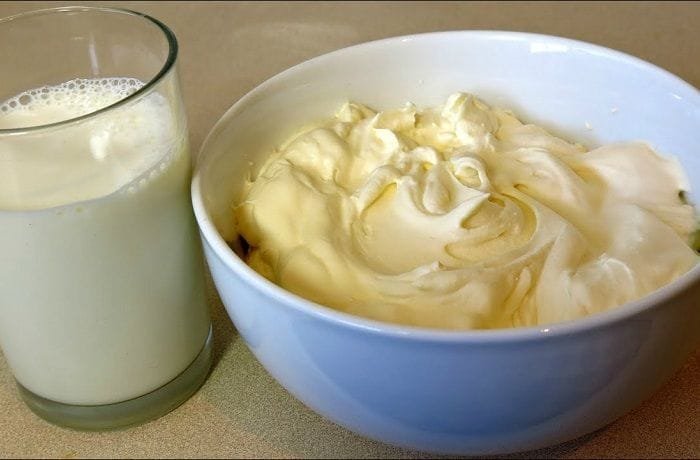
Homemade heavy cream, or crema de leche casera, is made by gently heating whole milk with unsalted butter without boiling, beating the mixture until fully emulsified, and chilling it for at least 4 hours or overnight. It takes 40 minutes of preparation and 5 minutes of cooking, plus chilling, and makes 4 servings.
Use it just like store bought cream, to whip, cook, or prepare all kinds of sweet and savory dishes.
How to Make Heavy Cream at Home?
You only need two ingredients: whole milk and a fat to bring it up to cream level, in this case unsalted butter. The butter melts into the warm milk, the mixture is beaten so the fat emulsifies, and the cold rest gives it body.
Nutritional Information
Each serving of homemade heavy cream contains approximately 390 kcal, 2 g of protein, 42 g of fat (27 g of saturated fat), 110 mg of cholesterol, 2 g of carbohydrates, 2 g of sugars, and 85 mg of sodium. These values are estimates and may vary depending on ingredients and portion sizes.
Homemade Heavy Cream Recipe
Preparation: 40 minutes (plus 4 hours chilling)
Cooking: 5 minutes
Servings: 4
Ingredients
- 200 ml (¾ cup + 1 tablespoon) of whole milk
- 200 g (¾ cup + 2 tablespoons) of unsalted butter

Instructions
- In a medium pot, combine the milk and butter and heat over medium heat until the butter melts and blends in. Keep it on the heat for about 5 minutes, stirring constantly and never letting it boil. Remove from the heat and let rest at room temperature for 20 minutes.
- Beat the cream with a mixer at medium speed for about two minutes, until the butter and milk are fully combined.
- Transfer the cream to a bowl and let it cool completely. Cover with plastic wrap and chill for at least 4 hours, ideally overnight.
- Use the homemade cream in any recipe that calls for it, thick to serve with desserts or make ice cream, or thinner for savory dishes.
Additional Tips
Use whole milk
Skim milk has too little fat, which hurts the texture and the emulsion. Whole milk gives the best result.
Choose good unsalted butter
Quality unsalted butter keeps the flavor clean. Margarine is not recommended, since it has less fat and a different composition.
Shake before using
Keep it in an airtight container in the fridge for up to 5 days and stir or shake it if it separates slightly.
| Original ingredient | Substitute | Ratio | Flavor note |
|---|---|---|---|
| More than 50% fat | Double cream | Use directly | Very rich |
| 30 to 50% fat | Whipping cream | Whips well | Desserts and toppings |
| Less than 20% fat | Cooking cream | Does not whip | Sauces and soups |
| Butter | Margarine | Not recommended | Less fat, poor emulsion |
Frequently Asked Questions (FAQs)
1. What is nata in Chile?
In Chile, nata is the fat that separates from whole milk when it is boiled. It is similar to cream and used the same way, although strictly speaking they are not the same. When a foreign recipe asks for nata, it usually means cream.
2. Which cream do I use for whipping or for cooking?
It depends on the fat. Cream with 30 to 50% fat whips well, below 20% it is only good for cooking, and above 50% it is called double cream and is used as is.
3. Can I whip this cream into chantilly?
Only if the final fat content is 30% or more. Increase the butter to reach that level and chill the cream well before whipping.
4. How long does homemade cream need to rest?
At least 4 hours in the fridge, ideally overnight. Let it cool completely and cover it with plastic wrap first. The rest gives it the body to use thick in desserts or thinner in savory dishes.
Can I Use It in Savory Dishes?
Yes. It works perfectly in sauces, cream soups, gratins, and stews, thanks to its smoothness and neutral flavor.
Origin of Cream in Cooking
Today’s uses of cream date back to the 18th century, when French court cooks stopped using it only for butter and began to value its smooth, light character as a basic ingredient.
Did You Know?
Cream is often called nata, although strictly they differ, since nata is the fat that rises when whole milk is boiled. Their uses are, of course, very similar.
How to adapt this recipe to a vegan or vegetarian version?
How to adapt this recipe to a gluten-free version?
How to adapt this recipe to a keto (ketogenic) version?
Recommended
- Homemade Chantilly Cream Recipe
- Homemade Sour Cream Recipe
- Homemade Irish Cream Liqueur Recipe
- Chilean Poppy Seed Cake Recipe