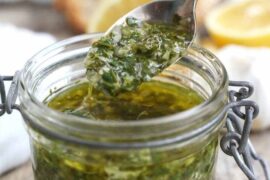
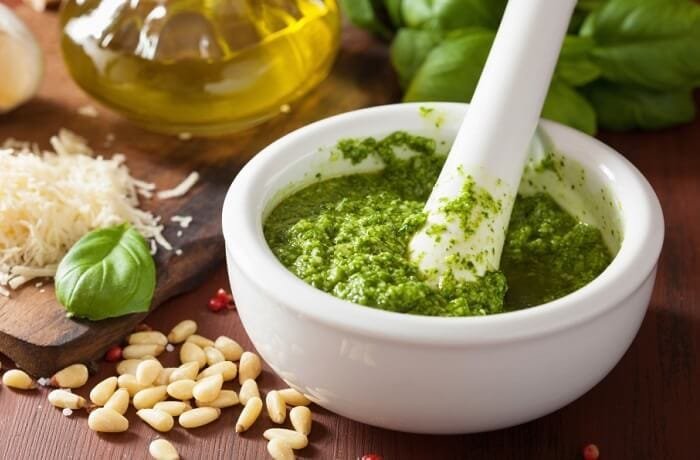
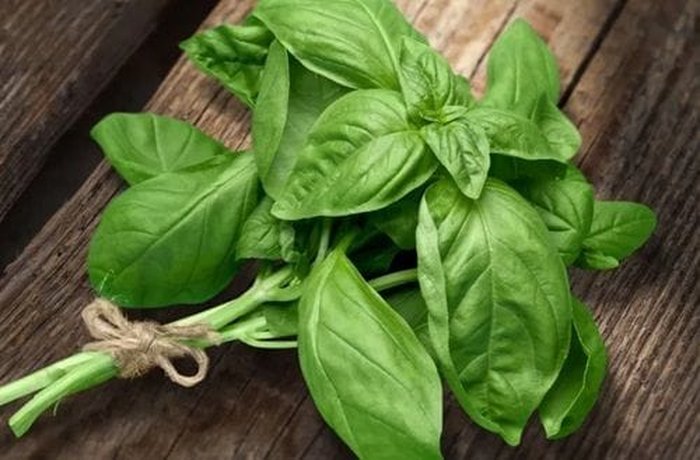
Homemade basil pesto, or salsa pesto, is fresh basil pounded in a mortar with garlic and pine nuts or walnuts, then mixed with grated parmesan and olive oil and seasoned with salt. It takes 15 minutes to prepare, needs no cooking, and serves 6.
A classic of Italian cooking, it is very aromatic and easy to make, and in Chile you can even make it with Mapuche piñones, the seeds of the araucaria tree.
How to Make Basil Pesto?
The original pesto uses European stone pine nuts, often replaced with walnuts. The garlic, nuts, and basil are pounded into a paste, the cheese and oil are worked in, and the sauce is seasoned with salt. It can also be made quickly in a food processor.
Nutritional Information
Each serving of basil pesto contains approximately 200 kcal, 3 g of protein, 20 g of total fat (3 g of saturated fat), 5 mg of cholesterol, 2 g of carbohydrates, 1 g of sugars, and 150 mg of sodium. These values are estimates and may vary depending on ingredients and portion sizes.
Homemade Basil Pesto Recipe
Preparation: 15 minutes
Servings: 6
Ingredients
- 3 cups of fresh basil leaves
- 70 ml (about ⅓ cup) of extra virgin olive oil
- 2 garlic cloves
- ½ cup of grated parmesan or pecorino
- ¼ cup of pine nuts or walnuts
- Fine salt
Instructions
- In a large mortar, pound the garlic, pine nuts, and basil leaves carefully until you have an even paste.
- Add the freshly grated parmesan or pecorino, the olive oil, and a little water if needed to adjust the consistency.
- Add a pinch of salt and keep pounding until everything is perfectly combined. Serve right away, chill, or freeze until needed.
Additional Tips
Make it in a food processor
Pulse the basil, garlic, nuts, and cheese at medium speed until chopped, then add the oil little by little on low speed so the blades do not heat and darken the basil.
Use a mortar when you can
Pounding by hand releases all the aromas of the garlic and basil without the heat of an electric processor.
Remove the garlic germ
To keep the pesto from repeating on you, split the garlic cloves and remove the green center with the tip of a knife.
| Original ingredient | Substitute | Ratio | Flavor note |
|---|---|---|---|
| Pine nuts | Walnuts or cashews | 1:1 | Earthier or creamier |
| Pine nuts | Chilean araucaria piñones, cooked | 1:1 | Larger, starchier, local |
| Parmesan | Pecorino | 1:1 | Saltier, sharper |
| Basil | Half basil, half spinach | 1½ + 1½ cups | Milder, greener |
Frequently Asked Questions (FAQs)
1. Why can a food processor cook the basil?
A processor heats up by friction at high speed, which can oxidize the basil and turn it dull olive green or brown, and it also evaporates some aromatic oils.
2. What nuts can I use instead of pine nuts?
Walnuts add an earthier, slightly bitter flavor and cashews a creamy, mild one. Toast them lightly first to boost their flavor.
3. Can I use frozen or dried basil?
You can, but the result is lower in quality. Dried basil loses the freshness of classic pesto and needs more oil.
4. How do I freeze pesto?
Fill an ice cube tray with pesto, freeze for two hours, then store the cubes in a freezer bag. Thaw in the fridge and bring to room temperature before using.
History of Pesto
The word pesto comes from the Italian pestare, to pound in a mortar. The basil version, pesto alla genovese, comes from Genoa, the capital of Liguria, where basil grows abundantly along the coast.
Pesto with Chilean Piñones
In Chile, the seeds of the araucaria, known as piñones and traditionally eaten by the Pehuenche people, can replace pine nuts in pesto. They belong to a related family but are larger and starchier, and should be cooked first.
Did You Know?
Besides classic basil pesto, Italy has other versions such as pesto rosso with sun dried tomatoes and pesto alla trapanese, made with fresh tomatoes and almonds.
How to adapt this recipe to a vegan or vegetarian version?
How to adapt this recipe to a gluten-free version?
How to adapt this recipe to a keto (ketogenic) version?
Recommended
- Homemade Oregano Oil Recipe
- Chilean Pine Nuts in Syrup Recipe
- Homemade Chilean Pebre Recipe
- Chilean Pasta with Avocado Sauce Recipe