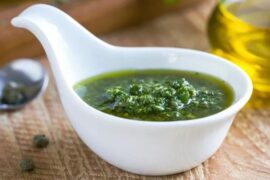
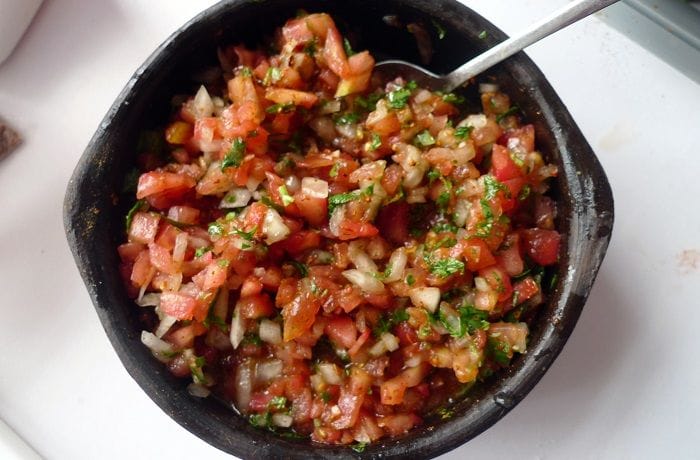
Chilean pebre is a traditional recipe that is a must-have for barbecues and grills or as an accompaniment to typical Chilean dishes. It’s simple and delicious, whether ground or finely chopped.
Nutrition Facts
Each serving of pebre contains approximately 70 kcal, 5 g of carbohydrates, 5 g of fat (1 g of saturated fat), 1 g of protein, 2 g of sugars, and 150 mg of sodium.
How to Make Homemade Chilean Pebre
Making Chilean pebre is a perfect combination of ingredients, including tomatoes, onions, garlic, chili peppers, cilantro, and parsley, creating an unmistakable symphony of Chilean flavors, perfect for any season.
Preparation: 20 minutes
Servings: 4 people
Ingredients
- 3 tablespoons of chopped parsley
- 3 tablespoons of chopped cilantro
- 2 cloves of garlic, chopped
- 2 tablespoons of sunflower oil
- 1 large tomato, diced
- 1 medium onion, diced
- 1 green chili pepper, chopped
- 1 tablespoon of red chili paste
- Salt
- Black pepper
Instructions
- In a large bowl, combine the tomato, onion, garlic, parsley, cilantro, green chili pepper, chili paste (if using), and oil, and season with salt and pepper to taste. Gently mix everything together and let it rest for about 30 minutes.
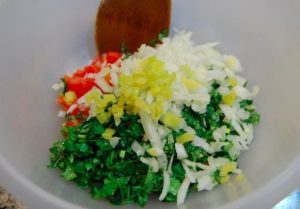
- Optionally, process the mixture in a blender or with an immersion blender, adjusting the seasoning if necessary. Serve the pebre in a medium-sized clay dish, accompanied by buttered homemade bread or various types of empanadas.
Extra Tips for a Perfect Pebre
- Roasting the garlic cloves before adding them to the pebre softens their flavor and adds a sweet, smoky touch that brings greater depth and complexity to the final result.
- A hint of acidity balances the flavors of the pebre and enhances the freshness of the ingredients, especially when served as a side dish with grilled meats.
Frequently Asked Questions (FAQ)
1. What does the word “pebre” actually mean?
The word derives from the Latin “piper,” which means “pepper.” It reflects the early influence of Spanish cuisine that evolved into the rustic, fresh salsa we know today.
2. How can I make the onion flavor less intense?
You can “mellow” the onion by letting the diced pieces soak in warm water with a pinch of sugar and salt for about 10 minutes. Rinse them well with cold water before adding them to the mix.
3. Can I make pebre without garlic?
Yes, you can omit it if you have dietary restrictions or prefer a milder taste, though it will slightly change the characteristic flavor profile.
4. How long does it last in the fridge?
Store it in an airtight glass jar. It stays fresh for 3 to 4 days. In fact, it often tastes better on the second day as the flavors continue to integrate.
5. Can I use other types of herbs?
While cilantro and parsley are the traditional duo, some regions add a touch of fresh oregano for an earthier flavor.
History and Origin of Pebre
Pebre has its roots in the rural traditions of central and southern Chile, where it emerged as a rustic condiment prepared with fresh, readily available ingredients. Its name derives from the Latin piper (“pepper”), reflecting the early influence of Spanish cuisine during the colonial period.
Did You Know?
Mapuche communities have added elements from their own cuisine, such as cochayuyo, cuye, vinagrillo, or nalca, to accompany catutos, meats, and potatoes.