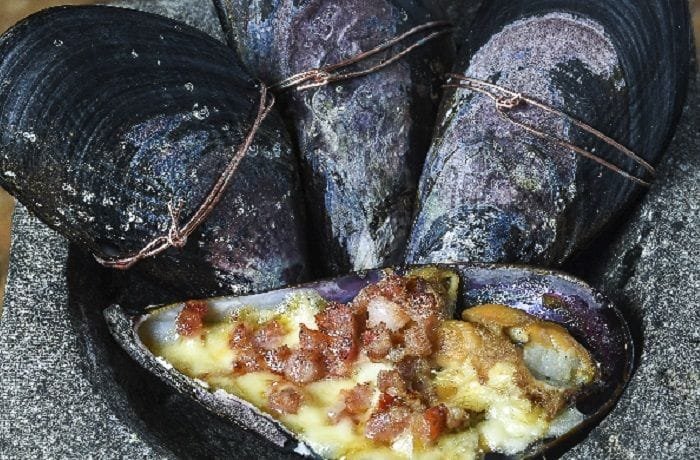
Choritos al alicate is a distinctive way of cooking mussels in which a pair of pliers becomes an actual kitchen tool, used to seal the shells shut with wire. Each mussel is stuffed with a bit of sausage and cheese, wired closed, and baked, so the shell traps every drop of juice inside until it’s cracked open at the table.
Nutritional Information
Each serving of choritos al alicate contains approximately 350 kcal, 25 g of protein, 20 g of total fat (8 g saturated fat), 60 mg of cholesterol, 10 g of carbohydrates, 1 g of sugars, and 600 mg of sodium. (*)
(*) Values may vary depending on ingredients and portion sizes.
How to Make Mussels al Alicate?
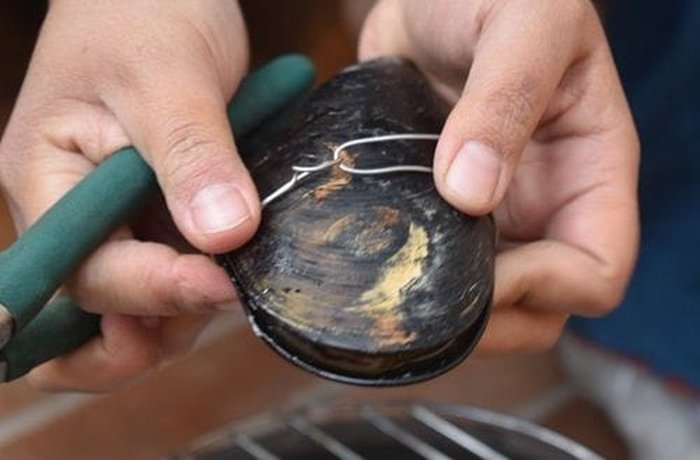
The whole point of sealing the shells with pliers is to keep the mussels from opening during baking, so they hold onto every bit of their juices inside.
Prep time: 45 minutes
Cook time: 20 minutes
Servings: 6 people
Ingredients
- 1.5 kg (3.3 lb) mussels
- 450 g (1 lb) chanco cheese
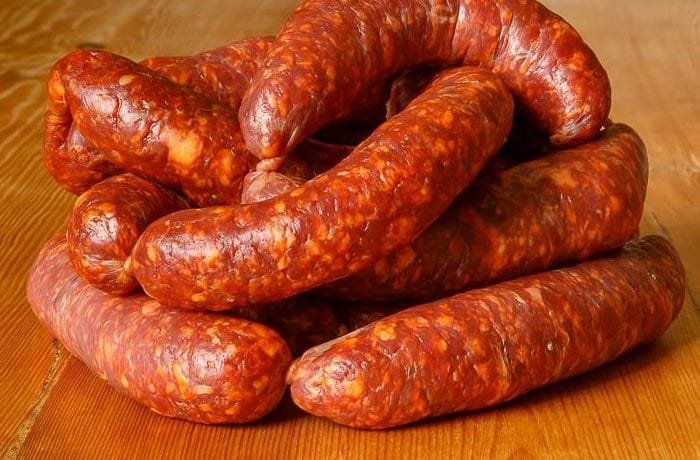
- 250 g (9 oz) longaniza sausage
- Fine sea salt
- Black pepper
Instructions
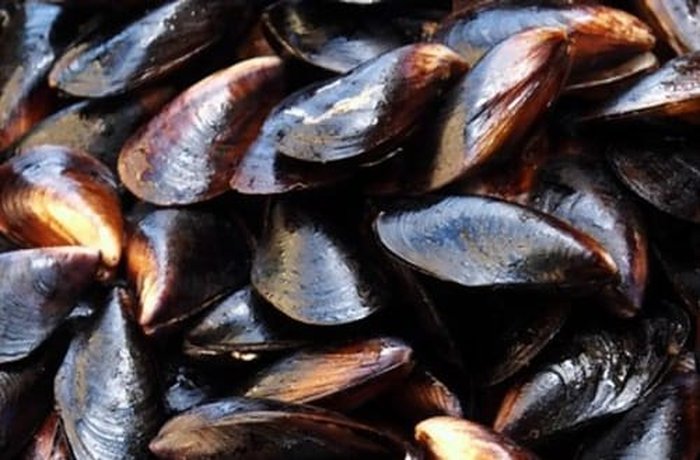
- On a cutting board, chop the chanco or another semi-firm melting cheese and the longaniza sausage into small pieces. Set aside. Wash the mussels very well in cold water, pry the shells open without fully detaching them, and use a thin, sharp knife to loosen the meat from the inner walls.
- Turn on the oven and preheat to a medium 180°C (356°F) for at least 10 minutes. Tuck a piece of longaniza or bacon and a piece of melting cheese into each mussel, season with salt and pepper to taste, close the shell by hand, tie it firmly with wire, and twist it tight with pliers so it can’t open during cooking.
- Arrange the mussels on a baking sheet and cook for 15 to 20 minutes. You can also cook them over a grill instead. Serve the choritos al alicate with a pair of pliers on the table so guests can snip the wire open themselves.
Additional Tips
Buy from trusted sources
Make sure to buy shellfish from established vendors, since these are typically inspected by Ministry of Health officials and market and fishing terminal authorities.
| Substitution | Use instead of | Effect |
|---|---|---|
| Chorizo or smoked bacon | Longaniza | Different smoky, savory notes |
| Mozzarella | Chanco cheese | Milder, stretchier melt |
| Kitchen twine + pliers-like clamp | Thin wire + pliers | Less secure seal, watch closely while baking |
Frequently Asked Questions (FAQs)
1. Can I substitute the longaniza?
You can swap the longaniza for chorizo or smoked bacon, depending on which flavor you’d like to bring out in the dish.
2. Do I really need actual pliers?
Using pliers, or a similarly firm clamping tool, is essential to this technique, since it lets you twist the wire tightly around the shells so they can’t pop open during baking.
3. Can I make this with frozen mussels?
It’s not recommended, since frozen mussels tend to open more easily and can release their juices before the wire seal has a chance to work.
Health Benefits of Mussels
- Mussels are an excellent source of vitamin B12, essential for the nervous system and red blood cells, as well as vitamin A, which supports eye health.
- They’re rich in essential minerals like iron, zinc, and selenium, which support a healthy immune system and provide antioxidant protection.
Did You Know?
Choritos or cholgas al alicate are typical of the Aysén region and have been prepared this way for around 50 years; they’re usually a festive dish shared among family and friends, made at home or on a countryside outing, and rarely found in restaurants.
How to adapt this recipe to a vegan or vegetarian version?
How to adapt this recipe to a gluten-free version?
How to adapt this recipe to a keto (ketogenic) version?
Recommended
- Traditional Chilean Seafood Pulmay
- Chilean Crab Claws with Mayonnaise
- Chilean Longanizas de Chillán
- Chilean Spicy Limpets (Picante de Lapas)