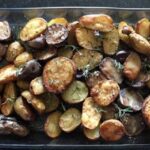
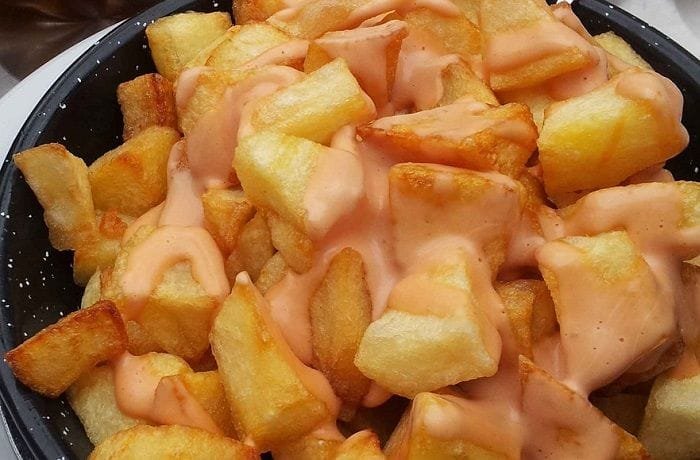
Papas bravas is a dish that originated in Spain and became hugely popular across the Americas, with each country developing its own version of the spicy brava sauce. This Chilean take swaps the classic cayenne heat for merkén, the country’s most iconic smoky chili seasoning, folded into a rich, creamy sauce.
Nutritional Information
Each serving of papas bravas al merkén contains approximately 450 kcal, 40 g of carbohydrates, 30 g of fat, 4 g of protein, 5 g of fiber, 2 g of sugars, 25 mg of cholesterol, and 400 mg of sodium. (*)
(*) Values may vary depending on ingredients and portion sizes.
How to Make Papas Bravas al Merkén?
The base of traditional papas bravas, ideally made with native Chilote potatoes, paired here with a brava sauce built around the most iconic of Chile’s spicy ingredients, merkén.
Prep time: 15 minutes
Cook time: 30 minutes
Servings: 4 people
Ingredients
- 6 large Chilote potatoes
- 200 ml (7 oz) heavy cream
- 200 ml (7 oz) mayonnaise
- 1 tablespoon merkén
- 1 tablespoon chives
- 1 teaspoon garlic powder
- 1 teaspoon dill
- Fine salt
- Black pepper
Instructions
- Wash the potatoes very well, peeled or unpeeled as you prefer, cover with cold water in a large pot, and boil for about 20 minutes, until cooked through but still firm. Drain and set aside.
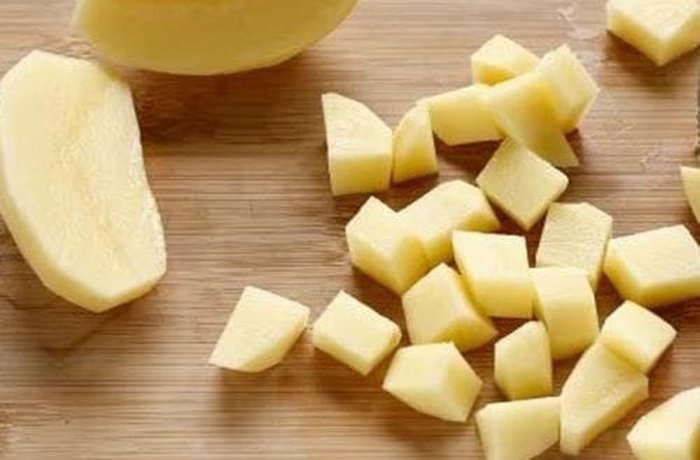
- Dice the potatoes into roughly 3-centimeter (1-inch) cubes. Heat olive oil over high heat in a large skillet and sauté the potatoes for about 5 minutes, or until well browned. Drain on paper towels and season with salt and pepper to taste. Set aside.
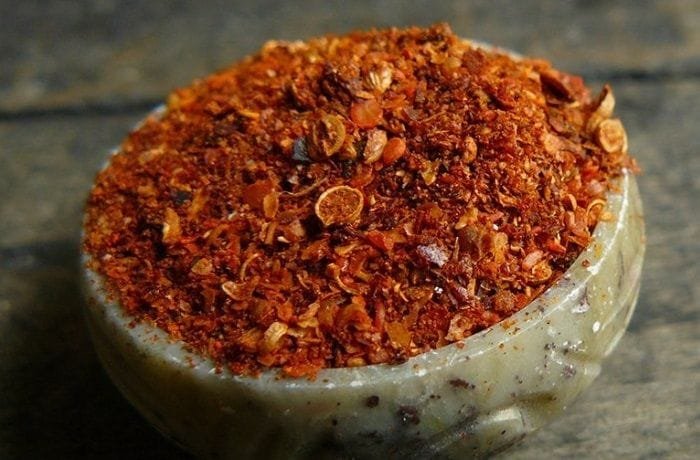
- In a medium bowl, combine the mayonnaise, heavy cream, finely chopped chives, garlic powder, dill, and merkén, season with salt and pepper, and stir until fully blended. Taste and adjust the seasoning and heat as needed. Serve the potatoes immediately, either with the brava sauce on the side or poured directly over them.
Additional Homemade Tips
Finish in the oven for extra crunch
After pan-frying, if you’d like an even crispier texture, transfer the potatoes to a preheated oven at 200°C (392°F) for 5 to 7 minutes to finish drying out and caramelizing the outside.
Make the sauce ahead
If you prepare the sauce in advance, store it in the fridge in an airtight container. It’s best to add the chives right before serving so they keep their fresh color and flavor.
| Substitution | Use instead of | Effect |
|---|---|---|
| Evaporated milk | Heavy cream | Lighter, less rich sauce |
| Plain yogurt | Heavy cream | Tangier, lower-fat sauce |
| Smoked paprika | Merkén | Milder heat, similar smokiness |
| Any frying potato | Native Chilote potatoes | Slightly less firm texture |
Frequently Asked Questions (FAQs)
1. What type of potato works best for this recipe?
Native Chilote potatoes are recommended for their firm texture and stronger flavor, though any potato suitable for frying or sautéing will also work well.
2. Can I substitute the heavy cream?
Yes, you can use plain yogurt, a plant-based cream, or even evaporated milk if you’d like a lighter or dairy-light version of the sauce.
3. How spicy is merkén?
Merkén has a moderate, smoky heat. You can adjust the amount to your spice tolerance, or add a bit of green chili sauce for more intensity.
History and Origin of Papas Bravas
Papas bravas, or patatas bravas as they’re known in Spain, is a dish whose invention is claimed by two now-closed Madrid restaurants, La Casa Perico and La Casona, an argument that has never been fully settled, though as early as 1960 both spots drew endless lines of people waiting to try them.
Did You Know?
The original Spanish patatas bravas are made with a cayenne-based hot sauce that gives them their signature kick, and are traditionally served fried, boiled, or even roasted.
How to adapt this recipe to a vegan or vegetarian version?
How to adapt this recipe to a gluten-free version?
How to adapt this recipe to a keto (ketogenic) version?
Recommended
- Chilean Papas Chilotas al Romero
- Chilean Loaded Fries (Papas Supremas)
- Homemade Mapuche Merkén
- Chilean French Fries in Lard