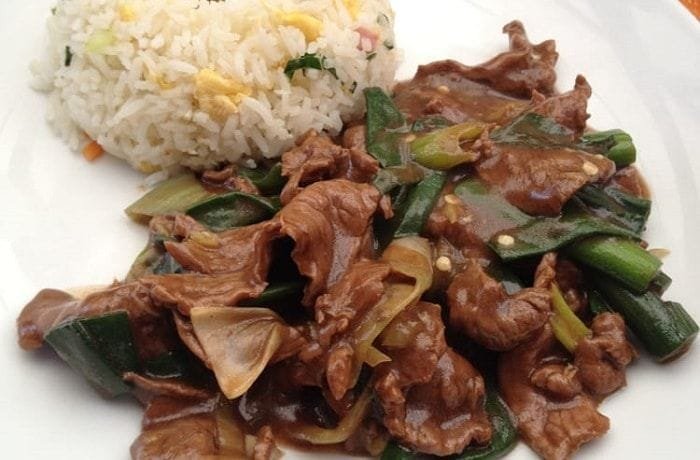
Mongolian beef, or carne mongoliana, is the Chinese-Chilean stir-fry of beef strips marinated in soy sauce and cornstarch, then seared over high heat with spring onions, garlic, and pickled aji oro peppers. It takes 15 minutes of preparation plus 15 minutes of cooking and serves 2 people.
It is one of the most widely eaten dishes in Chilean Chinese restaurants, ordered at lunch counters, family dinners, and home deliveries across the country, and it is served immediately alongside chaufan rice, french fries, or spring vegetable rice.
How to Make Mongolian Beef?
The dish is a straightforward combination of beef round and spring onions seared with garlic and soy sauce, usually finished with sliced pickled aji oro peppers that give the sweet, salty sauce a sharp counterpoint.
Nutritional Information
Each serving of Mongolian beef with rice contains approximately 400 kcal, 25 g of carbohydrates, 15 g of fat, 30 g of protein, 2 g of fiber, 5 g of sugars, 70 mg of cholesterol, and 800 mg of sodium. These values are estimates and may vary depending on ingredients and portion sizes.
Homemade Chilean Mongolian Beef Recipe
Preparation: 15 minutes
Cooking: 15 minutes
Servings: 2 people
Ingredients
- 500 g (1.1 lb) of beef round
- 2 whole spring onions
- 2 pickled aji oro peppers, sliced
- 2 tablespoons of oil
- 2 tablespoons of soy sauce
- 1 tablespoon of cornstarch
- 1 garlic clove
- 1 tablespoon of sugar
- Half a cup of water

Instructions
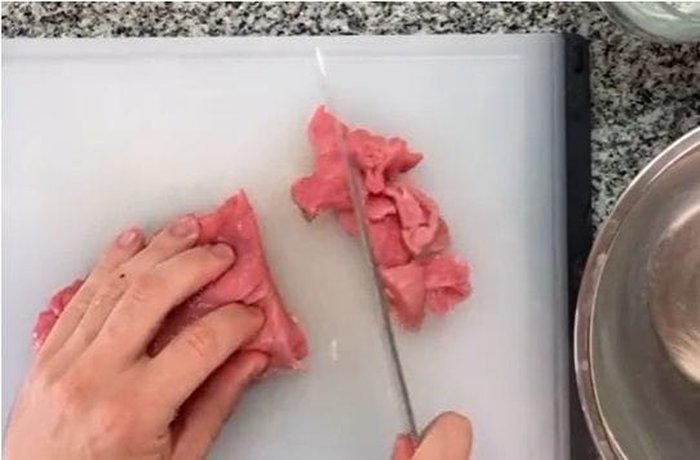
- On a cutting board, slice the beef into strips about 2 centimeters wide and set them aside in a large bowl. Add the soy sauce, the water, the cornstarch, and the sugar, mix everything so the flavors combine, and let it rest while you prepare the rest.
- Wash the spring onions thoroughly in cold water, drain them, and cut the white part into thin rounds and the green part into diagonal pieces. Set aside. In a wok or a large frying pan, heat the oil over high heat.
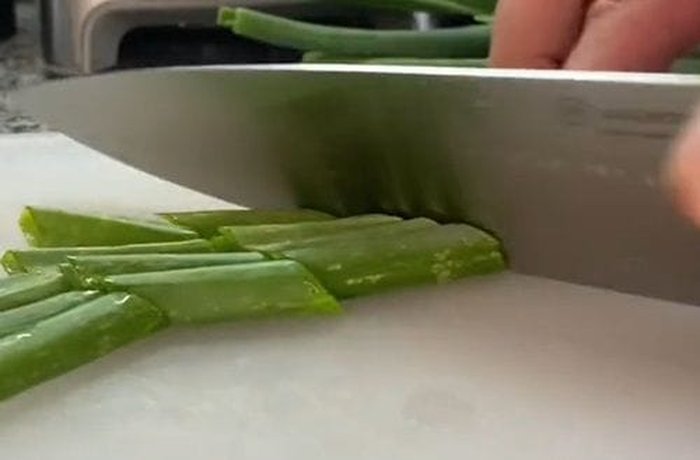
- Add the beef and cook until browned. Stirring constantly, add the spring onions, the garlic, and the sliced peppers, and cook for a couple of minutes more. Serve right away, piping hot, on a wide plate alongside chaufan rice, spring vegetable rice, or french fries.
Additional Tips
Coat the beef properly
The cornstarch and soy marinade is what makes the meat tender, so check that every strip is fully covered by the mixture before it hits the pan.
Get the oil really hot
For true wok flavor the oil has to be smoking before the beef goes in. Cooking over high heat while stirring constantly gives a fast sear instead of letting the meat steam in its own juices.
Slice against the grain
Cutting perpendicular to the muscle fibers shortens them, which is the difference between strips that stay tender and strips that turn chewy after two minutes in the wok.
| Original ingredient | Substitute | Ratio | Flavor note |
|---|---|---|---|
| Beef round | Sirloin or flank steak | 1:1 | Richer, slightly fattier |
| Regular soy sauce | Low-sodium soy sauce | 1:1 | Milder, less salty |
| Aji oro peppers | Pickled yellow chili or fresh chili | 1:1 | Sharper, less vinegary |
| Spring onions | Leek plus a little chive | 1:1 | Sweeter, less pungent |
Frequently Asked Questions (FAQs)
1. Which cut works best instead of posta de res?
Sirloin, flank, or top sirloin cap all work well. What matters is choosing a tender cut with little visible fat and slicing it against the grain, perpendicular to the muscle fibers.
2. How can I lower the sodium in this recipe?
Use low-sodium soy sauce, or use only half the soy sauce called for and make up the savory note with a tablespoon of vegetable stock or water plus a little extra garlic or grated ginger.

3. What does the cornstarch actually do?
It does two jobs. It seals the beef during high-heat stir-frying, which keeps it tender and juicy inside, and it thickens the sauce naturally, giving it the glossy, slightly dense texture that defines the dish.
4. What should I serve with Mongolian beef?
In Chile it is almost always served with chaufan rice, but french fries and spring vegetable rice are equally common choices in Chinese-Chilean restaurants.
5. Can I make it without a wok?
Yes. A wide, heavy frying pan works as long as you heat it thoroughly and cook in batches, since crowding the pan drops the temperature and steams the beef instead of searing it.
What Is Mongolian Beef?
Mongolian beef is a stir-fry of thin beef strips in a sweet and salty soy-based sauce thickened with cornstarch, cooked quickly over very high heat with spring onions and garlic. In Chile it belongs to the Chinese-Chilean repertoire rather than to Chinese home cooking, and it is eaten as a main course with rice or fries.
Chinese Food in Latin America
Chinese cooking has become one of the favorite cuisines of South American countries, leaving its deepest mark on Peruvian food and remaining very popular in Bolivia, Chile, Colombia, and Ecuador. In Chile the influence arrived through restaurants that adapted the recipes to local produce and to a palate used to milder heat and generous portions.
Did You Know?
Mongolian beef is the Americanized version of a Chinese dish called Mongolian barbecue, which dates back to the 1950s and originated in Taiwan rather than Mongolia.
How to adapt this recipe to a vegan or vegetarian version?
How to adapt this recipe to a gluten-free version?
How to adapt this recipe to a keto (ketogenic) version?
Recommended
- Chilean Mongolian Chicken Recipe
- Homemade Sweet and Sour Sauce for Sushi
- Chilean Pollo al Cognac Recipe
- Chilean French Fries in Lard Recipe