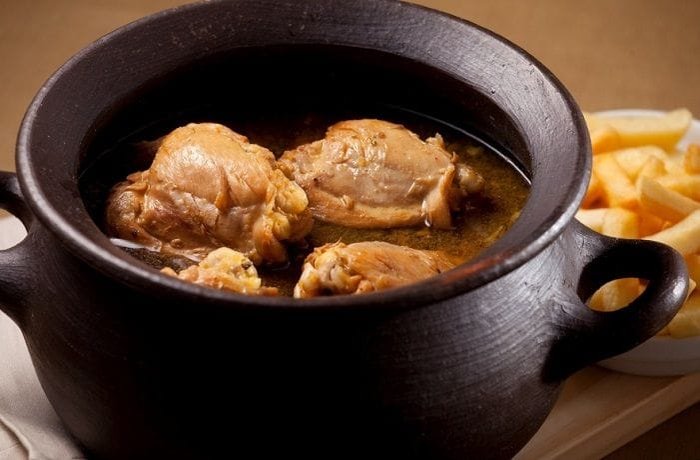
Pollo al coñac (chicken in cognac) is a French-born recipe that is deceptively simple to prepare despite its elegant name, ideal alongside french fries or steamed rice, and a great way to surprise family with a dish that feels far more sophisticated than the effort it takes.
Browning the chicken and building the sauce take about 20 minutes of prep and 50 minutes of cooking, filling the kitchen with the toasted aroma of flambeed brandy along the way.
Nutritional Information
Each serving of Chilean pollo al coñac contains approximately 350 kcal, 10 g of carbohydrates, 18 g of fat, 26 g of protein, 1 g of fiber, 2 g of sugars, and 350 mg of sodium. (*)
(*) Values may vary depending on ingredients and portion sizes.
How to Make Authentic Pollo al Coñac?
Pollo al coñac is one of those dishes that is pure flavor, an easy homemade recipe built on chicken, white wine, cognac, and broth that has been a staple of Chilean home cooking for decades.
Prep time: 20 minutes
Cook time: 50 minutes
Servings: 6 people
Ingredients
- 8 chicken pieces (bone-in)
- 400 ml white wine
- 200 ml chicken broth
- 180 ml cognac (brandy)
- 2 tablespoons butter
- 1 onion, sliced into strips
- 1 teaspoon minced garlic
- 1 teaspoon dried oregano
- 1 lemon
- Aji de color (Chilean paprika) or sweet paprika
- Fine salt
- Black pepper

Instructions
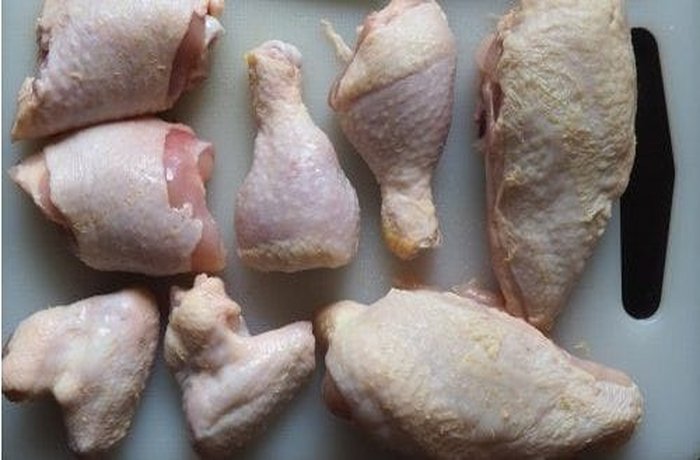
- In a medium bowl, season the chicken pieces with lemon juice, salt, pepper, garlic, and oregano to taste, distributing evenly. In a large skillet, melt a tablespoon of butter and brown the chicken pieces on both sides over medium-high heat for 6 to 8 minutes.
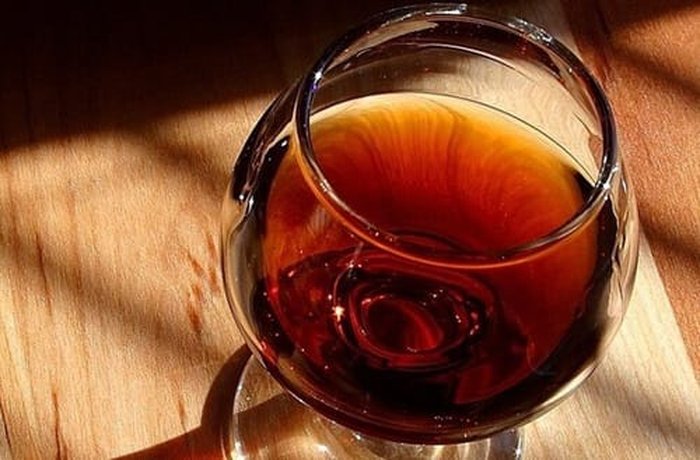
- In a large pot, melt 1 tablespoon of butter, add the sliced onion, and sauté for a couple of minutes; add the chicken and stir to combine. Make sure the extractor fan is off, add the cognac, ignite the alcohol, and flambé (*) until the flame dies out on its own.
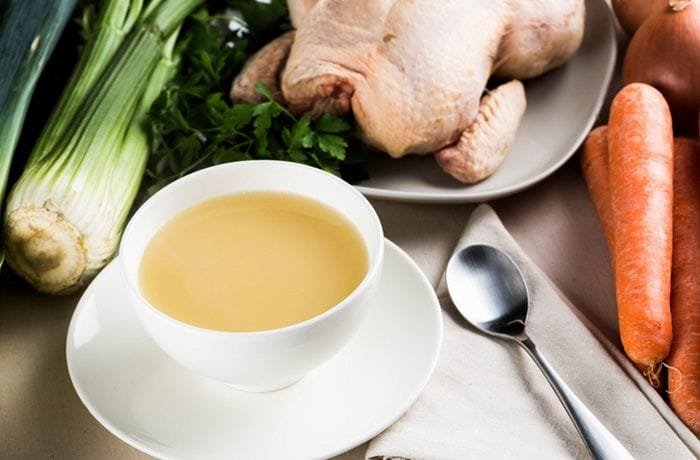
- Pour in the white wine and the chicken broth, and cook over high heat with the pot uncovered for another 10 minutes. Lower the heat to medium, partially cover the pot, and continue cooking for another 15 to 20 minutes.
- Once the liquid has reduced and the chicken is fully cooked, serve immediately, straight from the pot at the center of the table, hot and dusted with a little aji de color, alongside french fries or steamed rice.
(*) A flambe technique in which alcohol is ignited once hot to burn off the alcohol content while preserving the dish’s aroma and flavor.
Expert Tips
Thicken the Sauce for Better Cling
If you want a thicker sauce that clings better to the chicken, dissolve a teaspoon of cornstarch in 2 tablespoons of cold water and add it to the pot in the last minute of cooking, stirring until it thickens.
Flambe Safely and Quickly
For the cognac to ignite and burn off quickly, the liquor should be at room temperature, and the skillet should be hot over medium-high heat before pouring it in. Never pour directly from the bottle into an open flame.
Choose the Right Substitute if You’re Out of Cognac
The best substitute is another good-quality brandy. Armagnac also works, and an aged rum or malt whisky can be used for a more affordable option, though the final flavor will be slightly different.
| Substitution | Use instead of | Effect |
|---|---|---|
| Armagnac | Cognac | Very close flavor profile, same grape brandy family |
| Aged rum or malt whisky | Cognac | More affordable, slightly different final flavor |
| Chicken thighs and breast, boneless | Bone-in pieces | Cooks faster, needs shorter simmering time |
| Cornstarch slurry | Extra reduction time | Thickens the sauce quickly without extra cooking |
Frequently Asked Questions (FAQs)
1. Is it safe to flambe chicken in a home kitchen?
Yes, it is safe as long as you follow basic precautions. Turn off the extractor fan, since alcohol vapors can ignite inside it, remove the pot from the heat before adding the cognac, and pour the measured liquor in before bringing it slowly to the flame or using a kitchen lighter.
2. Can the flambe step be skipped?
Yes. If you don’t want to flambé, simply add the cognac and wine together and cook over high heat for 5 minutes, uncovered. This slow evaporation removes most of the alcohol while keeping the cognac’s aroma and flavor.
3. What liquor can I use if I don’t have cognac?
The best substitute is another good-quality brandy. Armagnac also works, or, for a more affordable option, an aged rum or malt whisky, though the final flavor will be slightly different.
4. Does the alcohol taste come through strongly in the sauce?
No. The flambe step and the following simmer with wine and broth are designed to evaporate the alcohol completely. What remains in the sauce is only the concentrated essence, aroma, and flavor of the cognac.
5. Can I use chicken breast instead of bone-in pieces?
Yes, but adjust the cooking time. Breast meat is leaner and cooks much faster, about 15-20 minutes. If using breast, cut it into cubes or thick strips so it doesn’t dry out.
What Is Cognac?
Cognac is a variety of brandy produced in a specific region of France of the same name, an alcoholic beverage made from white grapes such as Ugni Blanc, Folle Blanche, and Colombard, which are then distilled and aged in oak barrels.
History of Pollo al Coñac
The origin of pollo al coñac traces back to a recipe attributed to Napoleon’s personal chef, Duman, who reportedly improvised it on the battlefield with whatever ingredients he could find. He cut up a chicken found on site, dredged it in flour, and fried it until golden, then flambeed it in cognac, added a glass of white wine and some chopped tomatoes, a couple of crushed garlic cloves, and thyme and rosemary picked from the same field.

Did You Know?
Cognac is a type of spirit classified as brandy, made from white grape wine, originally from vines grown around the city of Cognac, France.
How to adapt this recipe to a vegan or vegetarian version?
How to adapt this recipe to a gluten-free version?
How to adapt this recipe to a keto (ketogenic) version?
Recommended
- Chilean Pollona Los Angeles
- Chilean Shoestring Fries Papas al Hilo
- Chilean Beef Cazuela
- Chilean Roasted Plateada