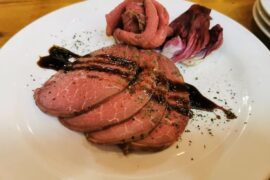
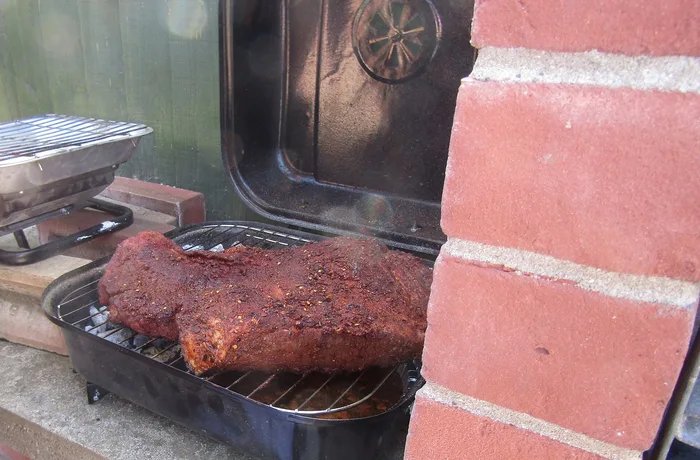
Chilean grilled beef brisket, or tapapecho a la parrilla, is a cut from the beef chest cooked for several hours over indirect heat, between 140 and 150°C (284 and 302°F), until its collagen softens and the meat turns tender. Plan on about 40 minutes of prep and 6 hours of cooking for 6 servings.
It stands out for its dark spice crust and an inside that pulls apart easily when sliced. In Chile tapapecho usually ends up in the pot, but on a covered grill it turns out very well if it is cooked low and slow, which makes it a good plan for a long December lunch. Serve it in thin slices with pebre, a fresh Chilean salsa, with Chilean tomato and onion salad or inside a pan amasado, a dense Chilean country bread.
How to Make Grilled Beef Brisket?
Indirect heat means the coals sit on one side and the meat on the other, with the lid closed so the heat circulates as it does in an oven. That way the brisket cooks without burning while the fat melts and the collagen softens, the same effect you get at home with oven-braised tapapecho or pressure cooker tapapecho.
Nutritional Information
Each serving of Chilean grilled beef brisket (one 200 g / 7 oz serving) contains approximately 550 kcal, 56 g of protein, 36 g of total fat (14 g of saturated fat), 180 mg of cholesterol, 1 g of carbohydrates, 0 g of sugars and 900 mg of sodium. These values are estimates and may vary depending on ingredients and portion sizes.
Homemade Grilled Beef Brisket Recipe
Preparation: 40 minutes
Cooking: 6 hours
Servings: 6 servings
Ingredients
- 1 beef brisket (tapapecho) of 2 kg (4.4 lb) in one piece
- 2 tablespoons coarse salt
- 1 tablespoon ground black pepper
- 1 tablespoon ají de color (Chilean sweet paprika)
- 1 teaspoon merkén (a smoked Mapuche chili powder)
- 1 teaspoon garlic powder
- ½ cup (125 ml) beef broth
- 4 kg (about 9 lb) charcoal
- 1 chimney starter

Instructions
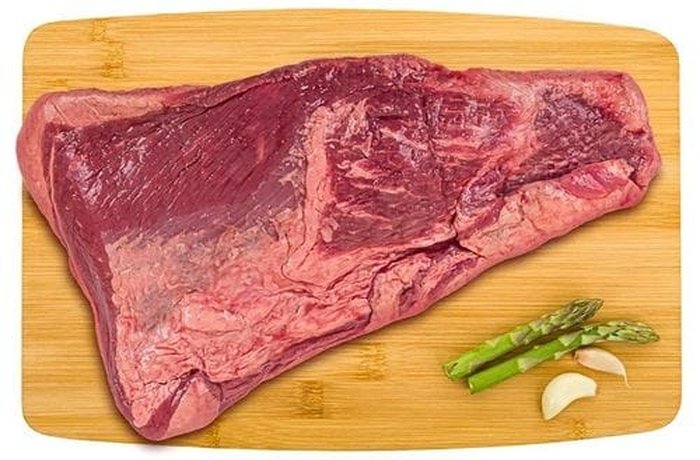
- Pat the brisket dry with paper towels and trim the outer fat down to a layer about 0.5 cm (¼ inch) thick, which protects the meat while it cooks. Mix the coarse salt, pepper, ají de color, merkén and garlic powder, and rub the mixture over every side. Leave the meat at room temperature while you prepare the fire, about 30 minutes.
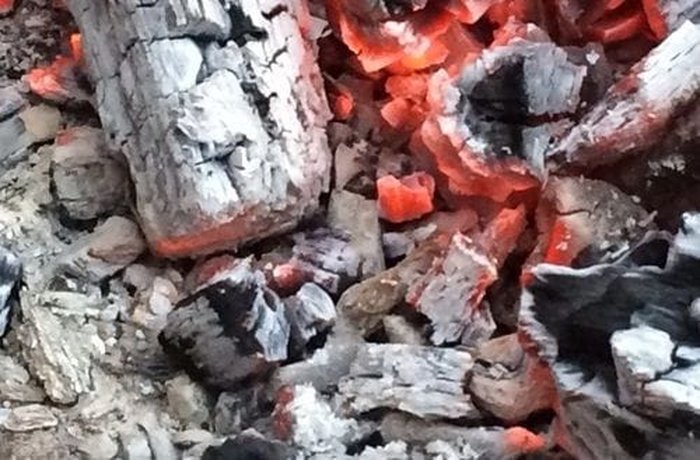
- Light about 2 kg (4.4 lb) of the charcoal and, once it is covered in white ash, pile it on one side of the grill. Set an empty aluminum tray under the side without coals to catch the dripping fat. Close the lid and adjust the vents until the grill thermometer reads between 140 and 150°C (284 and 302°F).
- Place the brisket on the side without coals, fat side up, and close the lid. Cook for 3 hours unwrapped, adding 8 to 10 coals lit separately in the chimney starter every hour to keep the temperature steady. By the end of this stage the meat should have a dark crust and read about 70°C (158°F) in the center of the thickest part.
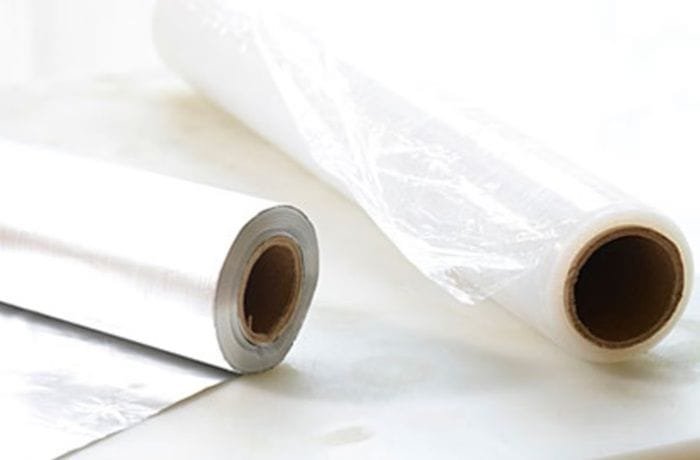
- Wrap the brisket in a double layer of aluminum foil together with the beef broth, sealing the edges well so the liquid does not escape. Return it to the side without coals and cook for another 2 to 2½ hours, still adding charcoal, until the center reaches 92 to 95°C (198 to 203°F) and a thermometer slides in with no resistance, like going into soft butter.
- Take the package off the grill and let it rest, still wrapped, for 30 minutes on a cutting board. Open it carefully, save the juices and slice the meat against the grain into slices 0.5 cm (¼ inch) thick. Drizzle the slices with the saved juices and serve right away with pebre or chimichurri.
Additional Tips
Why Brisket Does Not Go Over Direct Heat
Brisket is a hard-working muscle, so it has thick fibers and plenty of collagen. That tissue only softens after several hours of moderate heat, and directly over the coals the surface burns long before that happens. Cooked fast like a tenderloin, the result is tough meat that is hard to chew. Indirect heat keeps the meat at the right temperature for as long as it needs.
When the Temperature Stalls
Around the two or three hour mark it is normal for the internal temperature to stop between 65 and 75°C (149 and 167°F) and not rise for quite a while. Do not raise the heat to hurry it, because the edges will dry out. Wrapping the brisket in aluminum foil, as in step 4, reduces evaporation from the surface and lets the temperature climb again to the slicing point.
Keep the Grill Between 140 and 150°C (284 and 302°F)
A thermometer in the lid, or an oven thermometer set on the grate next to the meat, is the most useful tool in this recipe. To raise the temperature, open the bottom vents or add lit charcoal, and to lower it, close them halfway. Open the lid only when necessary, because every time you lift it the grill takes several minutes to recover its heat.
Reference times for a 2 kg (4.4 lb) piece on a covered grill between 140 and 150°C (284 and 302°F).
| Stage | Approximate time | Internal temperature |
|---|---|---|
| Crust, unwrapped | 3 hours | Up to about 70°C (158°F) |
| Wrapped in aluminum foil with broth | 2 to 2½ hours | 92 to 95°C (198 to 203°F) |
| Resting, wrapped | 30 minutes | Drops slowly while the meat reabsorbs its juices |
| 3 kg (6.6 lb) piece, for reference | 7 to 8 hours in total | Same final point of 92 to 95°C (198 to 203°F) |
Frequently Asked Questions (FAQs)
1. How Long Does Grilled Brisket Take?
A 2 kg (4.4 lb) piece cooked over indirect heat between 140 and 150°C (284 and 302°F) needs about 5½ hours on the grill plus 30 minutes of resting, around 6 hours in total. Larger pieces or a cooler grill stretch the time, which is why doneness is decided by the thermometer and not the clock.
2. Can You Grill Brisket Without a Lid?
You can, but holding the temperature is harder. One option is to cover the meat with an upside-down aluminum tray or a dome of aluminum foil, with the coals on one side. In that case, wrap the brisket earlier, at around 2 hours, and check the internal temperature often.
3. What Internal Temperature Should Brisket Reach?
For it to turn tender and slice into pieces that separate easily, the center must reach 92 to 95°C (198 to 203°F). At 70 or 80°C (158 or 176°F) the meat is already cooked and safe to eat, but the collagen has not softened yet and it stays firm to chew.
4. Why Did My Grilled Brisket Turn Out Tough?
The most common causes are taking it off before 92°C (198°F), cooking it over heat that is too high or slicing it with the grain. Skipping the rest also plays a part. If it still feels firm when you test it, wrap it again and leave it 30 to 60 minutes more on the indirect side.
What Is Grilled Beef Brisket?
Tapapecho a la parrilla is Chilean beef brisket rubbed with coarse salt, black pepper, ají de color, merkén and garlic powder, then cooked on a covered grill over indirect heat at 140 to 150°C (284 to 302°F). It cooks unwrapped for 3 hours to form a crust, then wrapped in foil with beef broth until the center reaches 92 to 95°C (198 to 203°F), and is sliced thin against the grain.
History of Grilled Beef Brisket in Chile
Tapapecho comes from the chest of the steer, and in Chile it has traditionally been used in long-cooked preparations such as pot roast and stews.
Cooking it on the grill over indirect heat is more recent and resembles American barbecue, where an equivalent cut, brisket, is cooked for hours with gentle heat and smoke.
Did You Know?
When a large piece of meat cooks slowly, its internal temperature often stalls for a while between 65 and 75°C (149 and 167°F). It happens because the moisture evaporating from the surface cools the meat, an effect similar to sweat on skin. Wrapping it in aluminum foil reduces that evaporation and lets the temperature rise again.
How to adapt this recipe to a vegan or vegetarian version?
How to adapt this recipe to a gluten-free version?
How to adapt this recipe to a keto (ketogenic) version?
Recommended
- Chilean tapapecho al horno, brisket braised in red wine
- Tender Chilean tapapecho in the pressure cooker
- Chilean grilled short ribs, another fatty cut for the asado
- Chilean shallot pebre to serve with grilled meat