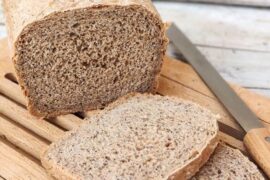
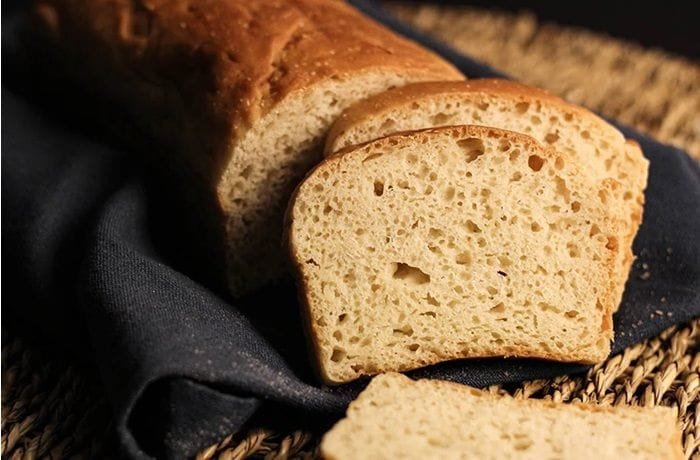
Homemade gluten free sandwich bread is rice flour, cornstarch, almond flour, xanthan gum, and salt mixed with eggs, olive oil, warm water, and activated gluten free yeast, poured into a loaf pan, risen for 60 minutes, and baked at 180°C (356°F) for 40 minutes. It takes 80 minutes of preparation, mostly rising, and 40 minutes of baking, and serves 4.
A soft, easy alternative to regular sandwich bread for gluten free or low gluten diets.
How to Make Gluten Free Bread?
As expected, it takes special flours and certified gluten free yeast, which together make a soft, fluffy homemade loaf. Xanthan gum does part of the work gluten would.
Nutritional Information
Each serving of homemade gluten free sandwich bread contains approximately 520 kcal, 10 g of protein, 22 g of fat (3 g saturated), 93 mg of cholesterol, 68 g of carbohydrates, 3 g of sugars, and 680 mg of sodium. These values are estimates and may vary depending on ingredients and portion sizes.
Homemade Gluten Free Sandwich Bread Recipe
Preparation: 80 minutes (including rising)
Cooking: 40 minutes
Servings: 4
Ingredients
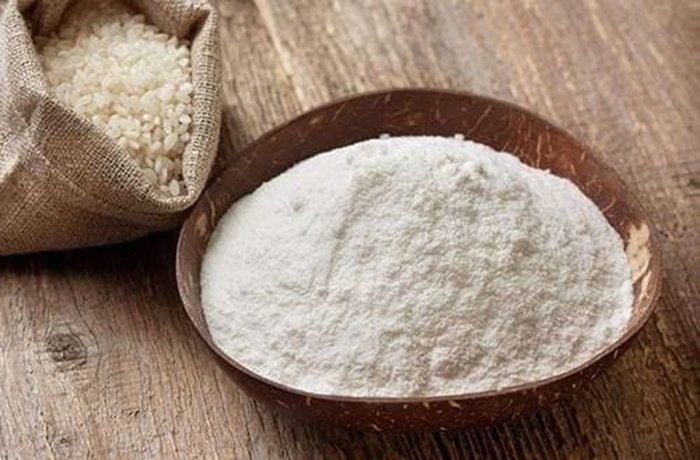
- 250 g (2 cups) of rice flour
- 250 ml (1 cup) of warm water
- 50 ml (3½ tablespoons) of olive oil
- 60 g (½ cup) of cornstarch
- 60 g (½ cup) of almond flour
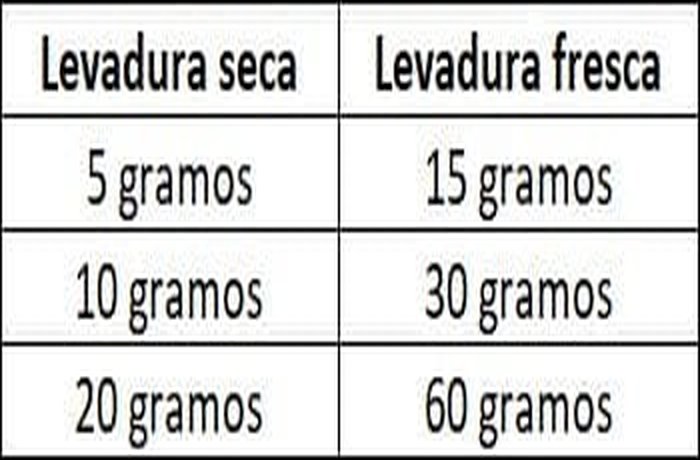
- 2 teaspoons of gluten free yeast
- 2 eggs
- 1 teaspoon of xanthan gum
- 1 teaspoon of salt
- 1 teaspoon of sugar
Instructions
- In a cup, mix the yeast and sugar with 50 ml of the warm water until dissolved and let stand for 10 minutes, until foamy.
- In a large bowl, combine the rice flour, cornstarch, almond flour, xanthan gum, and salt, mix lightly, and set aside.
- In a medium bowl, beat the eggs and add the activated yeast, olive oil, and the remaining 200 ml of warm water. Pour over the dry ingredients and stir into an even batter.
- Grease a loaf pan and pour in the batter, tap it gently on the counter to settle, cover with a clean kitchen towel, and let rise for 60 minutes or until doubled.
- Preheat the oven to 180°C (356°F). Bake the risen loaf for about 40 minutes, until golden on top, and let cool a few minutes before unmolding.
- Serve warm or cold, ideally the same day it is made, on its own or with other gluten free foods.
Additional Tips
Add seeds
Make a whole grain style loaf by adding chia, sunflower, or pumpkin seeds to the batter before baking.
Check the yeast
If the yeast does not foam after 10 minutes, it is not active; replace it.
Toast leftovers
Gluten free bread dries quickly; toasting day old slices restores their texture.
Watch for cross contamination
Use clean utensils and certified gluten free ingredients for celiac guests.
| Original ingredient | Substitute | Ratio | Flavor note |
|---|---|---|---|
| Almond flour | More rice flour | 60 g | Less rich |
| Cornstarch | Tapioca starch | 60 g | Chewier crumb |
| Xanthan gum | Psyllium husk | 2 tsp | More fiber |
| Olive oil | Sunflower oil | 50 ml | Neutral flavor |
Frequently Asked Questions (FAQs)
1. What does xanthan gum do in gluten free bread?
It partly replaces gluten, giving elasticity and holding the dough together. Without it, the rice and almond flours and cornstarch make a crumbly bread. One teaspoon is enough for 250 g of rice flour.
2. Which yeast should I use?
A certified gluten free yeast, because some may contain traces. The recipe uses 2 teaspoons dissolved with 1 teaspoon of sugar in 50 ml of warm water. If it does not foam in 10 minutes, replace it.
3. How long does it take?
About two hours in total: 10 minutes to activate the yeast, about 60 minutes of rising in the pan, and around 40 minutes in the oven at 180°C.
4. Why eat it the same day?
Gluten free bread dries faster than wheat bread and loses softness overnight. If you have leftovers, toast them.
Benefits of Avoiding Gluten
For people with celiac disease, a strict gluten free diet is the treatment, and for those with dermatitis herpetiformis, a skin condition associated with celiac disease, avoiding gluten can improve the skin.
Did You Know?
Dutch physician Willem Dicke was key to understanding celiac disease: during World War II he observed that deaths among children with celiac disease fell, and he linked it to the shortage of bread and wheat during the war.
How to adapt this recipe to a vegan or vegetarian version?
How to adapt this recipe to a gluten-free version?
How to adapt this recipe to a keto (ketogenic) version?
Recommended
- Gluten Free Chilean Pan de Pascua Recipe
- Homemade Whole Wheat Sandwich Bread Recipe
- Chilean White Sandwich Bread Recipe
- Homemade Potato Bread Rolls Recipe